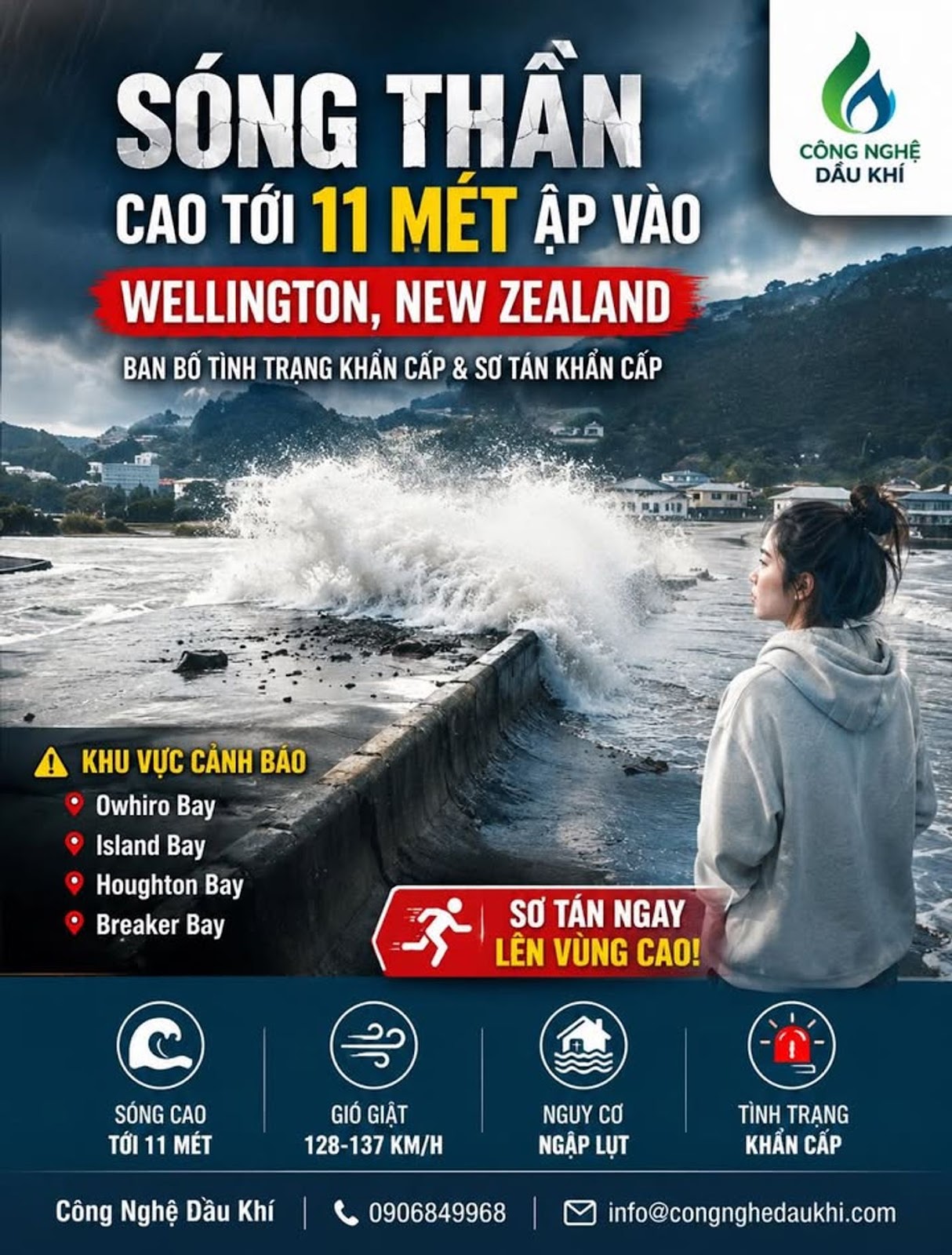
## Emergency Situation Unfolds
Wellington, the capital city of New Zealand, has been struck by an extraordinary tsunami event with waves reaching unprecedented heights of up to 11 meters, prompting local authorities to declare a state of emergency. The devastating natural disaster has severely impacted coastal areas in the southern part of the city, forcing immediate evacuations of residents to higher ground. This significant weather event has demonstrated the vulnerability of even well-developed coastal urban centers to extreme meteorological phenomena.
## Affected Areas and Evacuation Orders
The Wellington City Council has issued mandatory evacuation orders for several coastal communities deemed to be in immediate danger. These areas include:
* Owhiro Bay
* Island Bay
* Houghton Bay
* Breaker Bay
Mayor Andrew Little has issued a stern warning to residents, emphasizing the extreme danger posed by the tsunami conditions. "People must stay completely away from the southern coast," the mayor stated emphatically. "Emergency services will not attempt to rescue anyone who deliberately remains in these hazardous areas." The evacuation orders represent one of the most significant emergency responses in Wellington's recent history, reflecting the severity of the situation.
## Dangerous Conditions and Widespread Impacts
The tsunami has created a multitude of dangerous conditions throughout the affected region:
* Massive waves have inundated streets and beaches, causing widespread flooding in low-lying coastal areas
* Extreme winds reaching velocities of 128-137 km/h have been recorded across multiple coastal locations
* Transportation disruptions have been extensive, with numerous flights at Wellington Airport canceled
* Ferry services across the Cook Strait have been suspended indefinitely
* Law enforcement has established barricades to prevent civilians from approaching the coastline
The combination of these factors has created a complex emergency scenario that is challenging first responders and emergency management personnel.
## Initial Damage Assessment
Early reports from the scene indicate several incidents of injuries and property damage:
* Two women were reportedly knocked down by powerful waves and swept across a road in Island Bay
* Multiple coastal neighborhoods have experienced flooding, with debris and litter scattered across affected areas
* Structural damage to buildings near the coastline has been reported
* No fatalities have been confirmed at this time, though emergency agencies maintain a high-level alert
The Wellington Emergency Management Office has established incident command centers to coordinate response efforts and provide regular updates to the public.
## Comparison with Previous Events
This tsunami event stands out as particularly severe when compared to similar occurrences in recent years. The following table illustrates the stark difference between the current event and a significant tsunami that affected the region in 2021:
| Year | Maximum Wave Height | Areas Affected | Evacuation Orders |
|---|---|---|---|
| 2021 | Approximately 6.5 meters | Limited coastal areas | Voluntary in some locations |
| Current (2023) | Up to 11 meters | Multiple coastal communities | Mandatory across southern coast |
## Broader Implications for Coastal Cities
This event serves as a stark reminder of the increasing risks faced by coastal urban centers worldwide. Despite advanced infrastructure and emergency preparedness systems, cities remain vulnerable to extreme weather events and rising sea levels. Wellington's experience highlights several critical considerations:
* The growing frequency and intensity of extreme weather events due to climate change
* The limitations of existing infrastructure in protecting against such phenomena
* The importance of comprehensive evacuation planning and public compliance
* The need for ongoing investment in coastal protection measures
Mayor Little emphasized that "this event demonstrates that no matter how developed a coastal city may be, the risks from extreme weather and sea-level rise remain significant. We must continue to invest in both immediate response capabilities and long-term resilience planning."
## Emergency Response and Recovery Efforts
In response to the crisis, Wellington authorities have mobilized comprehensive emergency resources:
* Emergency shelters have been established in community centers and schools in safer areas
* Search and rescue teams are conducting thorough searches of affected neighborhoods
* Utility companies are working to restore essential services where safe to do so
* Public health officials are monitoring for potential waterborne diseases in flooded areas
* Transportation authorities are coordinating alternative routes for residents unable to use coastal roads
The New Zealand government has indicated that additional resources may be deployed to support local efforts, depending on the evolving situation.
## Looking Forward
As the immediate threat begins to subside, attention is shifting to recovery efforts and long-term planning. Wellington officials have pledged to conduct thorough reviews of both the city's tsunami preparedness measures and its response to this event. The experience will likely inform updates to emergency protocols, building codes in coastal areas, and early warning systems.
This extraordinary event serves as both a warning and a learning opportunity for Wellington and other coastal cities worldwide. As climate change continues to intensify extreme weather events, the ability to prepare for, respond to, and recover from such disasters will become increasingly critical for urban centers around the globe.