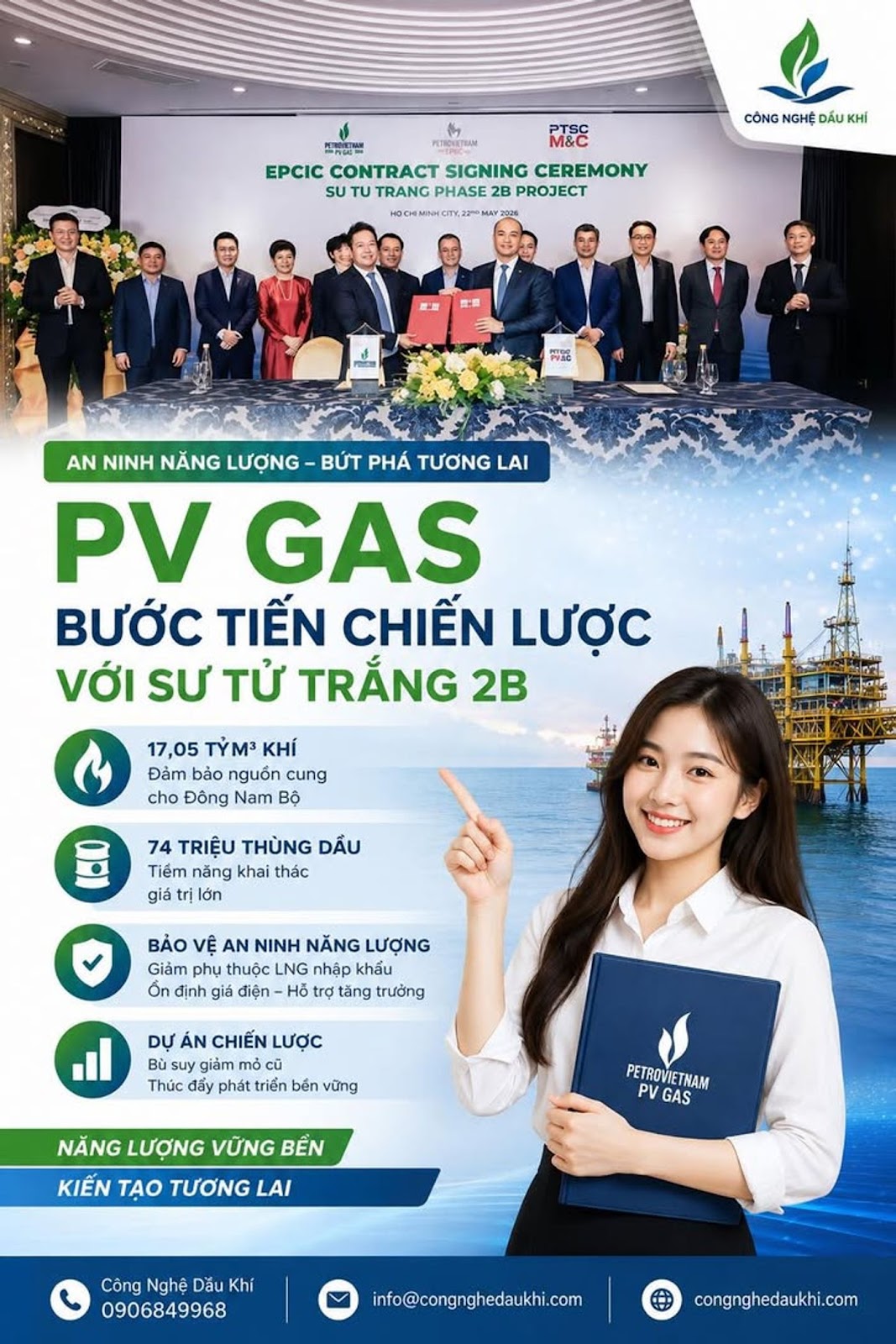
Strategic Move by PV GAS Sparks Industry Interest in Sư Tử Trắng 2B Project
On May 22, 2026, Petrovietnam Gas Corporation (PV GAS) officially approved the crucial connection and operation contract for Phase 2B of the Sư Tử Trắng (White Tiger) project in Block 15-1. This decision marks a pivotal moment in Vietnam's energy landscape, potentially safeguarding the Southeast region against impending gas shortages as domestic production from major fields continues to decline.
Far from being a routine technical contract, this agreement represents a critical component in maintaining energy security for the Southeast region, where domestic gas production is experiencing rapid annual declines. The timing of this strategic move has drawn significant attention from industry observers and stakeholders.
Project Overview and Scale
The Sư Tử Trắng 2B project, developed by PV GAS in collaboration with Petrovietnam, is expected to play a vital role in offsetting the declining output from Vietnam's mature gas fields. According to Petrovietnam's assessment, the project will deliver approximately 17.05 billion cubic meters of gas and 74 million barrels of oil and condensate throughout its operational lifetime.
| Project Parameter | Specification |
|---|---|
| Total gas production | 17.05 billion m³ |
| Oil and condensate | 74 million barrels |
| Impact area | Southeast region |
| Implementing group | PV GAS - Petrovietnam |
| Strategic role | Offset declining legacy gas fields |
Urgent Need for Strategic Intervention
What particularly concerns market analysts is the timing of this accelerated development. Vietnam's major gas fields are entering natural decline phases after years of production, while demand for gas-powered electricity, industrial applications, and petrochemicals in the southern region continues to rise sharply.
The energy supply pressure in Southern Vietnam has been intensifying, creating a challenging scenario for energy planners. The following table illustrates the changing dynamics:
| Factor | Previous Period | Current Situation |
|---|---|---|
| Domestic gas supply | Abundant | Significant decline |
| Electricity from LNG | Low dependency | Rapidly increasing |
| LNG import pressure | Minimal | Extremely high |
| Risk of electricity shortage | Moderate | High during peak seasons |
Critical Role as an Energy Bridge
Many industry experts view the Sư Tử Trắng 2B project as an essential "energy bridge" that will maintain supply stability until Vietnam's imported LNG infrastructure and new gas power projects achieve full operational capacity.
Should this project experience delays, Vietnam would likely face substantial increases in LNG imports at significantly higher costs. This scenario would directly impact electricity pricing and industrial production competitiveness, potentially undermining the country's economic growth trajectory.
Regional Context and Competitive Landscape
The challenges facing Vietnam's gas sector are not isolated. Across Southeast Asia, several nations are confronting similar issues with declining natural gas production from traditional fields. This regional trend has intensified global competition for LNG resources.
| Country | Current Trend |
|---|---|
| Vietnam | Increasing LNG imports |
| Thailand | Domestic gas shortage |
| Indonesia | Gradually declining production |
| Malaysia | Focusing on LNG exports |
Economic Implications and Market Response
The strategic move by PV GAS has reignited optimism among investors regarding Vietnam's oil and gas sector. Market participants anticipate that this development could trigger a new growth cycle for the national oil and gas group, potentially unlocking a series of stalled gas power projects.
The critical question facing Vietnam's energy planners is no longer whether to develop these resources, but whether the country can accelerate development rapidly enough to match the escalating energy demand before supply constraints create a crisis scenario.
Future Outlook and Strategic Imperatives
As Vietnam continues its economic development, maintaining energy security remains a top national priority. The Sư Tử Trắng 2B project represents not just an energy development but a strategic imperative for the nation's industrial future.
Success in this endeavor will depend on multiple factors: maintaining project timelines, optimizing technical execution, securing financing, and ensuring smooth integration with Vietnam's broader energy infrastructure. The stakes are high, as the project's timely completion could determine whether Vietnam avoids a potential energy crisis in the coming decade.
For PV GAS and Petrovietnam, this project represents both a significant responsibility and an opportunity to demonstrate Vietnam's capabilities in managing complex energy developments in an increasingly competitive global market.