Global Energy Markets at Critical Juncture: Navigating Hormuz, AI, and Geopolitical Tensions
The global energy market appears to be entering its most dangerous period of "data blindness" in years as oil tankers disappear from tracking systems amid unresolved Middle East tensions. This unprecedented situation is creating significant challenges for market analysts and potentially signaling extreme volatility ahead.
Today's international energy landscape continues to revolve around several critical issues: the Strait of Hormuz, global oil prices, energy security, artificial intelligence applications, geopolitical conflicts, and large-scale oil and gas projects worldwide. These interconnected factors are reshaping energy markets in ways that could have profound implications for global economic stability.
The Strait of Hormuz: A New Flashpoint in Energy Markets
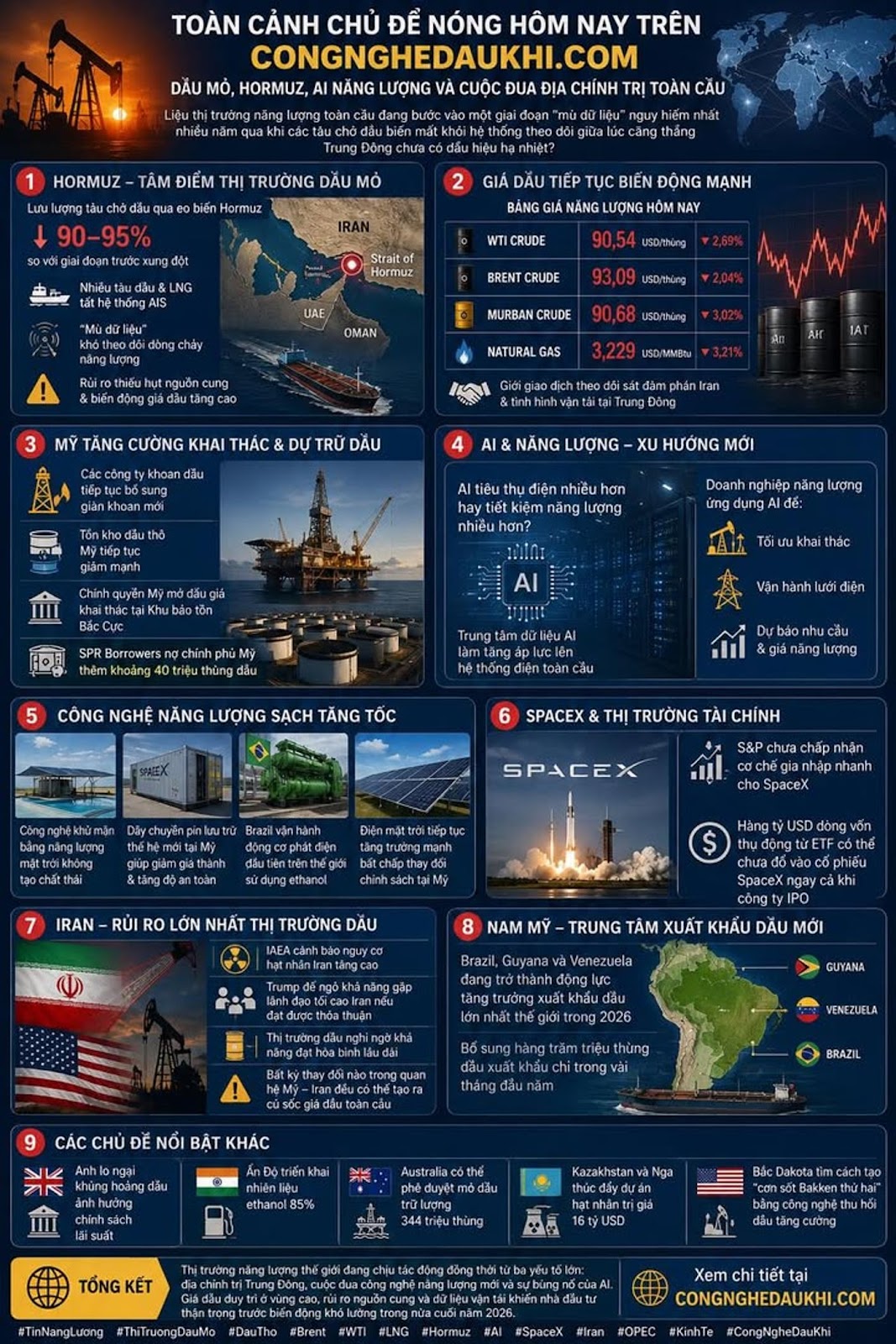
Perhaps the most concerning development is the reported 90-95% reduction in oil tanker traffic through the Strait of Hormuz compared to pre-conflict levels. What makes this situation particularly alarming is that numerous oil and LNG carriers are now deactivating their Automatic Identification Systems (AIS), creating a "black box" scenario for energy flow tracking.
This deliberate obsuration of shipping data is fueling concerns about potential sudden supply shortages and extreme oil price volatility in the coming months. The Strait of Hormuz remains a critical chokepoint, with approximately 20% of global oil supplies passing through its waters daily.
Market Implications of Disrupted Tracking Systems
The disappearance of vessels from tracking systems creates multiple layers of risk:
- Supply Uncertainty: Without accurate tracking, it becomes nearly impossible to assess actual supply volumes
- Price Volatility: Market participants may overreact to unconfirmed rumors about supply disruptions
- Insurance Challenges: Increased risk premiums for vessels transiting high-risk areas
- Logistical Complications: Difficulty in coordinating global supply chains
Oil Prices Continue Volatile Trajectory
Energy markets remain on edge as prices fluctuate amid heightened geopolitical tensions and supply uncertainties. The current price environment reflects a delicate balance between concerns over potential supply disruptions and questions about global demand growth.
| Commodity | Price |
|---|---|
| WTI Crude | $90.54/barrel |
| Brent Crude | $93.09/barrel |
| Murban Crude | $90.68/barrel |
| Natural Gas | $3.229/MMBtu |
Market participants are closely monitoring negotiations involving Iran and assessing transportation conditions in the Middle East. The current price levels suggest that markets are pricing in significant geopolitical risk premiums, but the extent of actual physical supply constraints remains unclear.
US Expands Oil Production and Reserves
A series of significant developments has emerged from the United States as it continues to position itself as a dominant force in global energy markets:
- Oil drilling companies continue to add new rigs to their fleets
- US crude inventories have been declining sharply
- The US government has opened bidding for drilling rights in the Arctic National Wildlife Refuge
- Entities borrowing oil from the Strategic Petroleum Reserve (SPR) now owe the US government approximately 40 million barrels
These developments indicate that while the US is increasing production capabilities, the strategic reserve is being utilized more extensively, potentially signaling concerns about maintaining adequate global supply buffers.
AI and Energy: The Emerging Paradigm
One of the most debated questions in energy technology circles is whether artificial intelligence consumes more energy than it saves. This critical question is gaining urgency as AI applications proliferate across the energy sector.
Industry experts are assessing the actual impact of AI data centers on global power systems. Simultaneously, numerous energy companies are implementing AI technologies to optimize extraction operations, manage electrical grids, and forecast consumption patterns more accurately.
Dual-Edged Impact of AI on Energy Markets
The relationship between AI and energy presents both challenges and opportunities:
| Energy Consumption Concerns | Energy Efficiency Opportunities |
|---|---|
| Rising demand from AI data centers | Optimized production processes |
| Increased cooling requirements | Predictive maintenance reducing waste |
| Grid stability challenges | Smart grid management systems |
| Resource-intensive training models | Demand forecasting accuracy improvements |
Clean Energy Technology Acceleration
The clean energy sector continues to demonstrate remarkable innovation despite policy uncertainties in various markets. Several technological breakthroughs have recently been announced:
- Solar-powered desalination technology that produces zero waste
- Next-generation battery storage manufacturing lines in the US reducing costs while enhancing safety
- Brazil operating the world's first electricity generator powered by ethanol
- Solar energy maintaining strong growth momentum despite policy changes in the US
These developments indicate that clean energy technologies are becoming increasingly competitive with traditional fossil fuels, even in policy-challenged environments.
SpaceX and Financial Market Implications
In the investment world, significant attention has focused on the revelation that S&P has not yet approved the fast-track entry mechanism for SpaceX. This development means that billions of dollars in passive capital from ETF funds may not flow into SpaceX shares even when the company proceeds with its anticipated IPO.
This regulatory consideration could impact SpaceX's valuation and market reception when it eventually goes public, potentially creating a unique situation in the technology investment landscape.
Iran: The Persistent Market Wildcard
Recent developments indicate that Iran remains the single largest risk factor in global oil markets:
- The International Atomic Energy Agency (IAEA) has warned of increasing nuclear risks from Iran
- President Trump has left open the possibility of meeting with Iran's supreme leader if an agreement can be reached
- Oil markets are beginning to doubt the possibility of lasting peace in the region
- Any changes in US-Iran relations could create global oil price shocks
The unpredictable nature of Iran's nuclear program and its potential impact on oil supplies continues to create significant uncertainty for energy markets worldwide.
South America Emerges as New Oil Export Hub
Brazil, Guyana, and Venezuela are becoming the world's fastest-growing oil export centers, with significant implications for global energy maps. This region has added hundreds of millions of barrels of export capacity in just the first few months of the year, contributing to the reshaping of global energy flows.
The rise of South American oil exports is creating new dynamics in international energy trade and potentially reducing dependence on traditional supply routes.
Additional Notable Developments
Several other significant developments are shaping the energy landscape:
- The UK is expressing concerns that oil crises could impact interest rate policies
- India is implementing 85% ethanol fuel programs
- Australia may approve an oil field with 344 million barrels of reserves
- Kazakhstan and Russia are advancing a $16 billion nuclear project
- North Dakota is attempting to create a "second Bakken boom" through enhanced oil recovery technologies
Conclusion: A Convergence of Critical Factors
Overall, today's global energy picture reveals a market simultaneously affected by three major factors: Middle East geopolitics, the race for new energy technologies, and the explosion of AI applications. While oil prices remain at elevated levels, risks regarding supply and transportation data are making investors increasingly cautious about the unpredictable second half of 2026.
The convergence of these factors creates an unprecedented environment for energy markets, where traditional analysis methods may be insufficient to navigate the complex interplay of technological innovation, geopolitical tensions, and evolving supply chain dynamics. Market participants will need to develop new frameworks for understanding and responding to these emerging challenges.