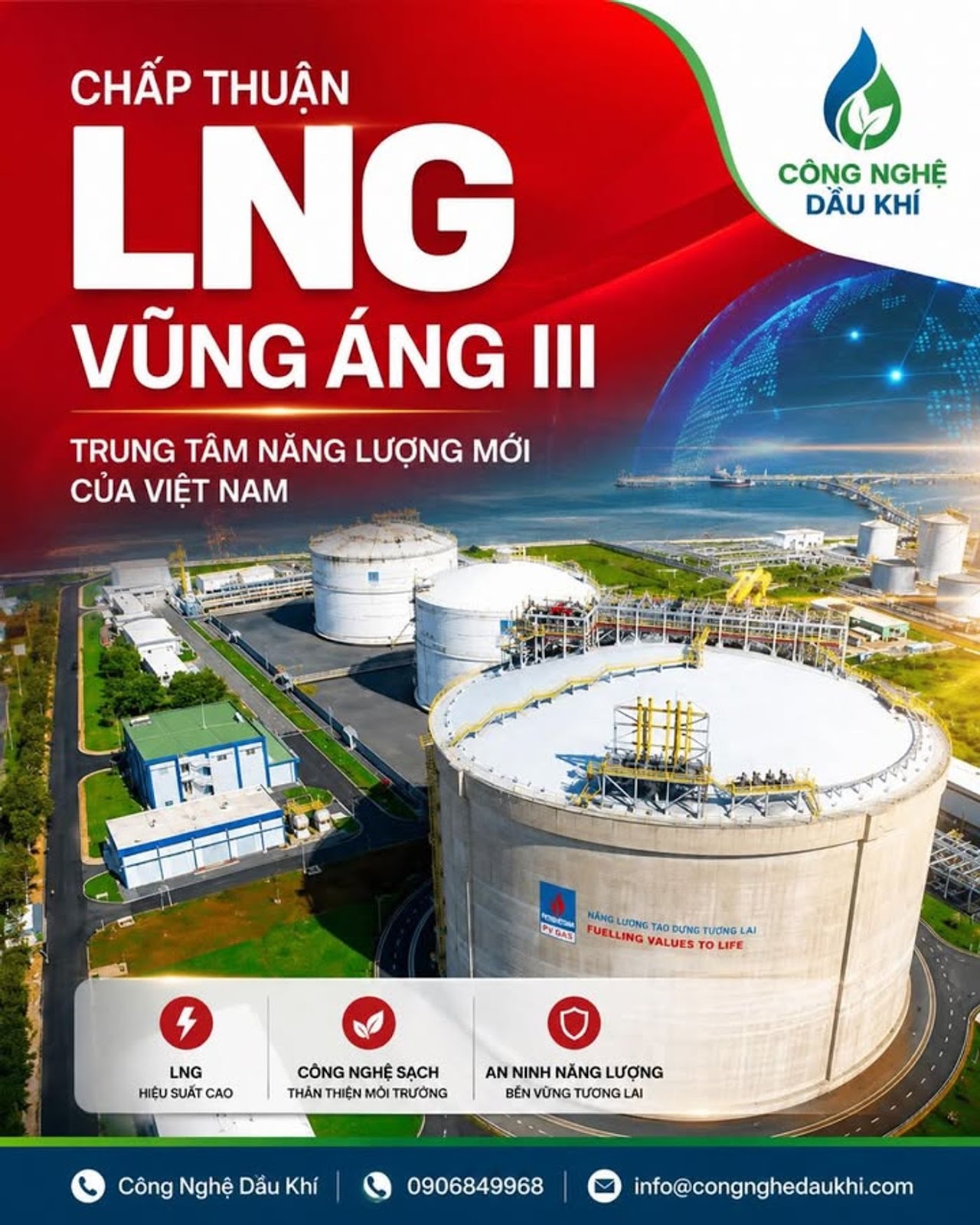
LNG Vũng Áng III: Vietnam's Next Energy Megaproject Set to Transform Central Region
In a significant development for Vietnam's energy landscape, the provincial People's Committee of Hà Tĩnh has officially approved the investment policy for the LNG Vũng Áng III Power Plant project. With a total investment of 51,430 billion VND, this 1,500 MW facility represents one of the largest energy projects approved in Vietnam in recent years and is poised to establish Hà Tĩnh as a new energy hub for the nation.
Project Overview
The LNG Vũng Áng III Power Plant will be located in Hoành Sơn Ward within the Vũng Áng Economic Zone. The project represents a strategic joint venture between three major energy companies:
- PV Power - Vietnam's leading power generation company
- Lilama - Vietnam's leading mechanical engineering and construction firm
- B.Grimm Power Public Company Limited - Thailand's prominent energy company
This collaboration brings together Vietnamese expertise with international technology and investment capabilities, positioning the project for successful implementation and operation.
Investment Scale and Significance
The 51,430 billion VND investment (approximately $2.1 billion USD) represents a substantial commitment to Vietnam's energy infrastructure. This level of funding is comparable to constructing multiple large industrial parks or dozens of modern hospitals, highlighting the project's magnitude.
The investment encompasses not only the power plant itself but also includes:
- Technical infrastructure systems
- Transmission grid connections
- Supporting facilities
- Related logistics development
When completed, the plant will play a crucial role in Vietnam's energy transition, providing large-scale power to the national grid and alleviating electricity shortages in the North Central region and numerous developing industrial centers.
Technical Specifications
The LNG Vũng Áng III Power Plant will be a state-of-the-art facility designed for efficiency and reliability. Below are the key specifications:
| Parameter | Details |
|---|---|
| Project Name | LNG Vũng Áng III Power Plant |
| Location | Hoành Sơn Ward, Hà Tĩnh Province |
| Total Capacity | 1,500 MW |
| Number of Units | 2 |
| Capacity per Unit | 750 MW |
| Total Area | 67.67 ha |
| Land Area | 51.71 ha |
| Sea Area | 15.96 ha |
| Total Investment | 51,430 billion VND |
| Operation Period | 50 years |
| Unit 1 Operation | Q1 2031 |
| Unit 2 Operation | Q2 2032 |
Comparison with Other Major LNG Projects
The LNG Vũng Áng III project stands among Vietnam's largest LNG initiatives. When compared to other major LNG projects in the country, its scale and strategic importance become evident:
| Project | Capacity (MW) |
|---|---|
| LNG Vũng Áng III | 1,500 |
| LNG Nhơn Trạch 3 and 4 | 1,624 |
| LNG Quảng Ninh | 1,500 |
| LNG Hải Lăng | 1,500 |
Advantages of the LNG Vũng Áng III Project
The implementation of LNG Vũng Áng III offers numerous advantages for Vietnam's energy sector and regional development:
- Cleaner Energy Source: LNG produces fewer emissions than coal-fired power plants, contributing to Vietnam's environmental goals.
- High Efficiency: Modern LNG power plants achieve higher efficiency rates compared to traditional thermal power plants.
- Grid Stability: The plant will help stabilize Vietnam's national electricity grid, supporting the integration of renewable energy sources.
- Industrial Attraction: The project will enhance the appeal of the Vũng Áng Economic Zone for foreign direct investment.
- Employment Opportunities: The construction and operation phases will create thousands of jobs for local workers.
- Revenue Generation: Increased tax revenues will benefit the provincial and national budgets.
Challenges and Considerations
Despite its significant potential, the LNG Vũng Áng III project faces several challenges that require careful management:
- LNG Import Dependence: The plant will rely on imported LNG, creating vulnerability to global supply chain disruptions.
- Price Volatility: International LNG prices can fluctuate significantly, affecting the project's economic viability.
- Large Capital Requirements: The substantial investment requires careful financial planning and risk management.
- Extended Construction Timeline: The project's multi-year construction timeline increases exposure to potential delays and cost overruns.
- Infrastructure Coordination: Synchronized development of supporting infrastructure is essential for the project's success.
Economic Impact Projections
The implementation of LNG Vũng Áng III is expected to generate wide-ranging economic impacts across multiple sectors:
| Sector | Expected Impact |
|---|---|
| Energy Supply | Increased stable power supply to national grid |
| Logistics | Growth in port operations and related services |
| Industry | Attraction of new FDI projects |
| Employment | Creation of thousands of direct and indirect jobs |
| Industrial Real Estate | Increased demand for industrial land leasing |
| Support Services | Development of maintenance, technical, and professional services |
Transformative Potential for Vũng Áng
The LNG Vũng Áng III project, when combined with the North Central LNG Terminal project valued at over 26,700 billion VND and the planned 500kV transmission line system, will create a complete energy value chain from LNG import, storage, power generation to transmission.
This integrated approach will position Vũng Áng as a leading energy, logistics, and heavy industrial center in Central Vietnam. The development aligns with Vietnam's broader strategy to diversify its energy mix and reduce dependence on coal while transitioning toward cleaner energy sources.
Strategic Vision for Vietnam's Energy Future
In the context of Vietnam's rapidly growing electricity demand and the commitment to achieve net-zero emissions by 2050, LNG is emerging as a crucial transitional solution between coal-fired power and renewable energy.
If completed according to schedule, LNG Vũng Áng III could become a new symbol of Vietnam's energy industry in the coming decade, similar to the role that major gas power centers play in Japan, South Korea, and Singapore. The project represents a significant step toward Vietnam's energy transition while ensuring reliable power supply to support economic growth.
The successful implementation of this project would not only address immediate energy needs but also establish a foundation for sustainable development in the region, positioning Vietnam as an emerging player in the Asian energy landscape.