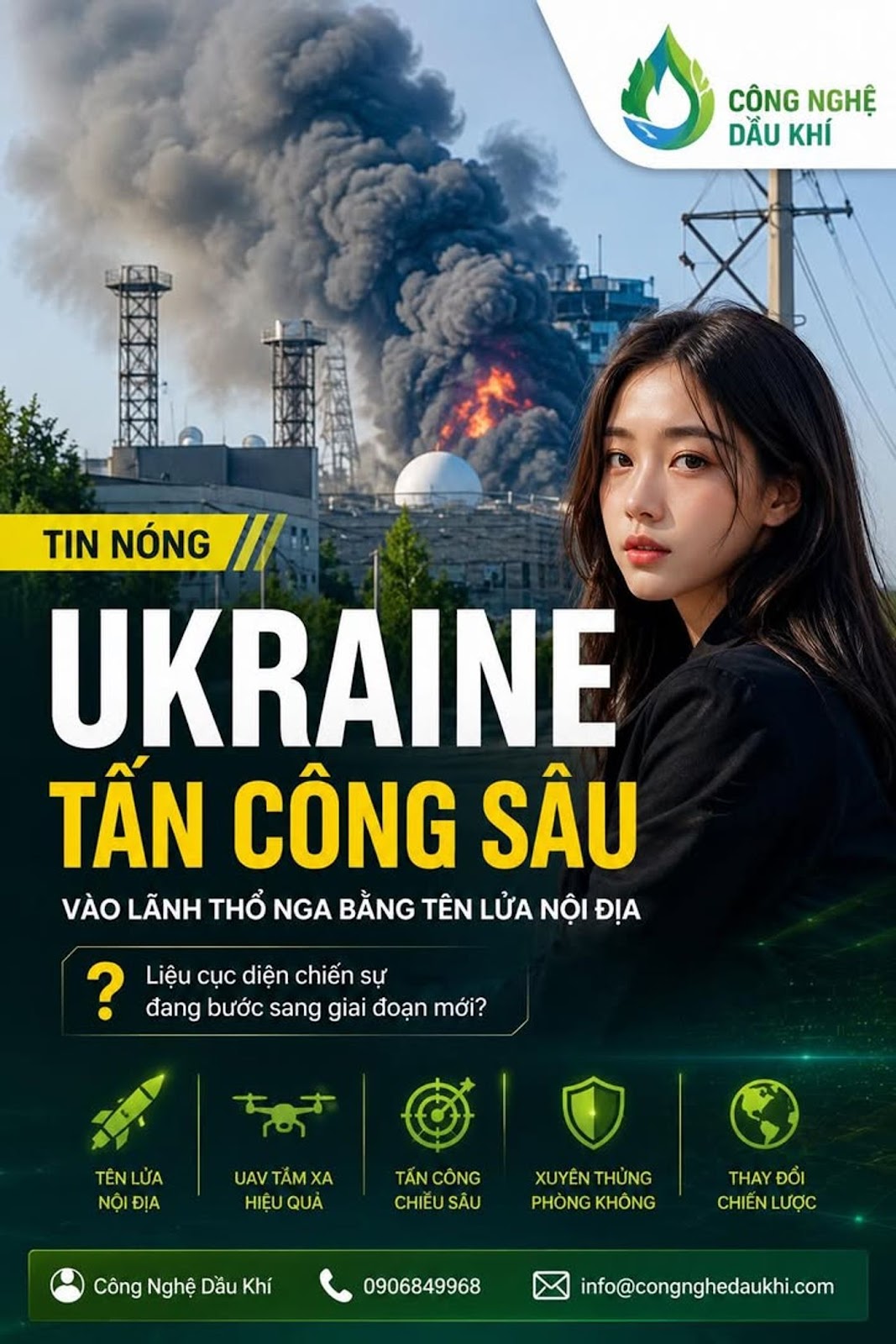
Ukraine Launches Deep Strikes into Russian Territory: A Turning Point in the Conflict?
The escalating military confrontation between Russia and Ukraine has entered a new phase as Ukraine increasingly conducts deep strikes into Russian territory using domestically developed weapon systems. This development raises critical questions about the evolving conflict dynamics and changing military landscape in the region, potentially marking a significant turning point in the ongoing war that has now entered its fourth year.
A New Dimension to the Conflict
International observers report a significant increase in long-range attacks by Ukraine, specifically targeting military installations, energy infrastructure, and logistical hubs deep inside Russian territory. Particularly noteworthy is the growing deployment of domestically developed and produced rockets and unmanned aerial vehicles (UAVs), rather than relying entirely on Western weapon systems.
Recent satellite imagery and open-source intelligence analysis have confirmed strikes on facilities hundreds of kilometers from the front lines, including military bases, fuel depots, and communication centers. These attacks have demonstrated Ukraine's growing capability to project power beyond traditional battlefield boundaries.
Widespread images showing smoke plumes rising over military bases in Russia following explosions have sparked intense debates among military analysts about Ukraine's ability to penetrate one of the most heavily defended airspaces in the world. The effectiveness of these strikes has forced a reassessment of Russia's air defense capabilities and strategic vulnerabilities.
| Summary of Notable Developments | Details |
|---|---|
| Attacker | Ukraine |
| Targets | Military installations, energy infrastructure, logistical hubs, communication centers |
| Weapon Type | Domestically developed long-range rockets and UAVs |
| Range of Effect | Deep within Russian territory (up to 700+ km) |
| Strategic Impact | Increased pressure on Russia's rear infrastructure, disruption of supply chains, degradation of combat capabilities |
Paradigm Shift on the Battlefield
Military analyses indicate that Ukraine is significantly expanding its production of UAVs and domestic rockets to reduce dependence on foreign military aid. This development enables Ukraine to continue long-range attacks even when Western weapon deliveries fluctuate or face political obstacles.
The initial phase of the conflict was characterized by artillery duels, tank battles, and ground combat along the front lines. However, the battlefield has now evolved to focus on asymmetric warfare and strategic targeting beyond traditional frontlines.
This shift represents a fundamental transformation in military strategy, moving from attrition-based warfare to precision strikes against critical infrastructure and military assets. The Ukrainian military has demonstrated increasing sophistication in coordinating these operations, combining intelligence gathering with strike capabilities to maximize impact while minimizing losses.
Key developments in this new phase of warfare include:
- Long-range UAVs capable of penetrating deep into enemy territory
- Domestically produced ballistic and cruise missiles with extended range
- Enhanced electronic warfare capabilities to disrupt enemy communications and guidance systems
- Coordinated attacks on energy infrastructure to degrade military logistics
- Strikes against rear objectives to disrupt command and control functions
Military experts view this as a trend toward modern warfare where the battlefield extends hundreds of kilometers from physical front lines. This approach allows Ukraine to compensate for numerical disadvantages in traditional military hardware by focusing on technological innovation and precision targeting.
| Comparison of Long-Range Strike Capabilities | Russia | Ukraine |
|---|---|---|
| Cruise missiles | Extensive inventory with global reach | Limited but growing domestic production |
| Long-range UAVs | Advanced systems with stealth capabilities | Rapidly expanding fleet with increasing range |
| Military industrial capacity | Large-scale production but facing sanctions | Small but agile with rapid innovation cycles |
| Deep strategic strikes | Frequent but often indiscriminate | Targeted with increasing precision |
| Technological adaptation | Slower bureaucratic processes | Rapid field modifications and improvements |
Psychological and Strategic Implications
Beyond material damage, the psychological impact of these deep strikes is particularly noteworthy. When facilities deep within Russian territory become repeated targets, the concept of "safe zones behind the front lines" is being fundamentally challenged. This psychological effect extends beyond military personnel to impact civilian populations and political decision-making.
The strikes have forced a reassessment of Russia's security calculus, potentially altering calculations about the conflict's duration and acceptable costs. For Ukrainian citizens, these operations demonstrate the military's ability to project power and retaliate against Russian aggression, boosting domestic morale and international support.
These developments raise three central questions that military strategists and political analysts are grappling with:
- Can Ukraine maintain its domestic rocket production at scale while facing resource constraints and technological challenges?
- Will Russia respond with even more extensive aerial bombardments of Ukrainian civilian infrastructure, further escalating the conflict?
- Will the conflict enter a new phase with increasingly deep targets on both sides, potentially drawing in other regional actors?
Future Implications
Recent statements from both Ukrainian and Russian military leadership indicate that both sides are preparing to expand their long-range strike capabilities. Developments in the coming months could determine the strategic balance of the entire conflict, now in its fourth year.
If Ukraine successfully develops and deploys more sophisticated long-range systems, this could fundamentally shift global perceptions of the country's military strength and technological capabilities. Such a transformation would have implications beyond the immediate conflict, potentially altering regional power dynamics and security arrangements.
The international community is watching these developments with great concern, as they carry the potential for further escalation of the conflict and expansion of the war into civilian infrastructure in both countries. Diplomatic efforts to de-escalate the situation become increasingly complex as both sides demonstrate growing capabilities to strike deep into enemy territory.
Whether Ukraine can transform its technological advances into sustainable military superiority remains one of the decisive questions for the future of European security architecture. The outcome of this technological arms race could influence military doctrines worldwide, particularly for smaller nations facing larger adversaries.
As the conflict continues to evolve, the ability of Ukraine to maintain its momentum in developing and deploying advanced weapon systems while managing resource constraints will be a critical factor in determining the conflict's ultimate trajectory and resolution.