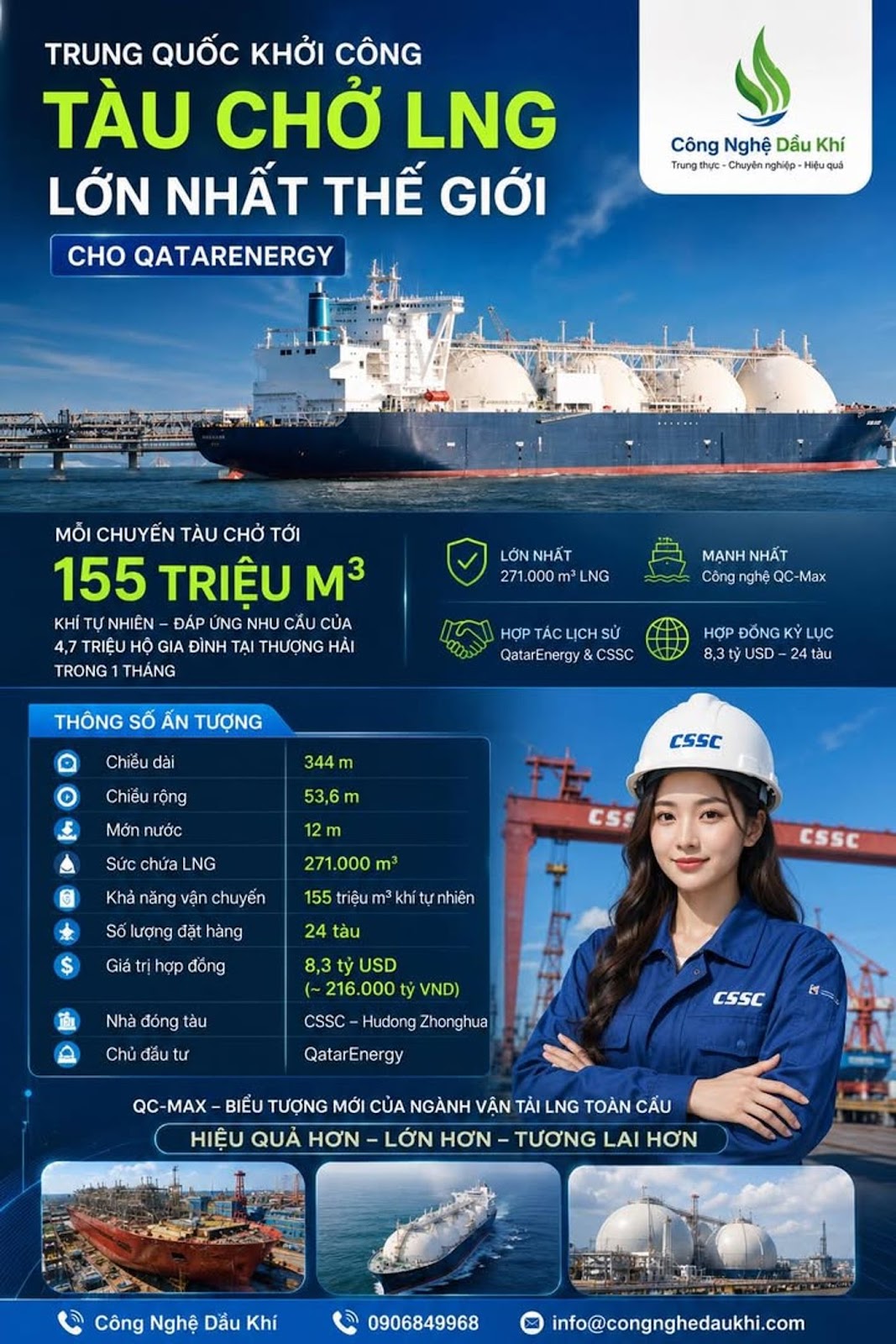
China Building World's Largest LNG Carriers for Qatar: A Game-Changer in Global Energy Supply Chain
In a move that could reshape the global energy transportation landscape, China's State Shipbuilding Corporation (CSSC) has officially commenced construction of the first QC-Max LNG carrier for QatarEnergy on June 10, 2026. This unprecedented project, valued at approximately 216,000 billion VND (about $8.3 billion), represents not only a technological milestone but also a significant shift in the global maritime and energy sectors.
The QC-Max: Engineering Marvel of Maritime Technology
The QC-Max class LNG carriers are designed to become the largest and most powerful vessels of their type ever constructed, setting new standards in the global liquefied natural gas transportation industry. These massive ships incorporate cutting-edge engineering solutions to maximize efficiency and capacity in the increasingly competitive LNG market.
| Technical Specifications of QC-Max LNG Carrier | |
|---|---|
| Length | 344 m |
| Width | 53.6 m |
| Draft | 12 m |
| LNG Capacity | 271,000 m³ |
| Natural Gas Transport Capacity | 155 million m³ per trip |
| Ordering Country | Qatar |
| Builder | CSSC - Hudong Zhonghua |
| Number Ordered | 24 vessels |
To put the scale in perspective, a single QC-Max vessel can transport enough natural gas in one trip to meet the monthly consumption needs of approximately 4.7 million households in Shanghai. This unprecedented transport capability addresses the growing global demand for LNG, particularly in Asia, Europe, and the Middle East, which has intensified following recent geopolitical shifts and global energy transitions.
Historic Contract: Largest in Commercial Shipbuilding History
The contract between QatarEnergy and CSSC represents a watershed moment in the maritime industry. With a total value of approximately 216,000 billion VND (8.3 billion USD), this deal stands as the largest commercial shipbuilding contract ever recorded on a global scale.
| Contract Details | Information |
|---|---|
| Total Number of Vessels | 24 ships |
| Total Contract Value | Approximately 216,000 billion VND (8.3 billion USD) |
| Contracting Party | QatarEnergy |
| Contractor | CSSC |
| Contract Signing | 2024 |
Quantum Leap in LNG Transportation Capacity
The QC-Max class represents a significant advancement over traditional LNG carriers. With a capacity of 271,000 m³, these vessels boast 57% more storage capacity than conventional LNG tankers, which typically hold around 174,000 m³ of liquefied natural gas.
| Carrier Comparison | LNG Capacity |
|---|---|
| Traditional LNG Carriers | Approximately 174,000 m³ |
| QC-Max Class | 271,000 m³ |
| Capacity Increase | +57% |
This substantial increase in capacity translates to significant economies of scale, reducing the logistics cost per unit of LNG transported. The enhanced efficiency comes at a critical time when global LNG demand continues to rise, driven by countries seeking to reduce coal dependency and transition toward cleaner energy sources.
Strategic Partnership: Why Qatar Chose China
The collaboration between QatarEnergy and CSSC creates a powerful synergy in the global energy sector. As one of the world's largest LNG exporters, Qatar requires a modern, efficient fleet to maintain and expand its market presence. Meanwhile, China has rapidly developed its shipbuilding industry into the most advanced and productive globally.
This partnership delivers mutual benefits:
- Qatar gains: Access to the world's most advanced LNG transportation fleet, enhancing its competitive position in the global energy market.
- China demonstrates: Its technological capability in high-value ship construction, moving beyond basic manufacturing to advanced engineering.
- Global LNG supply chain: Becomes more diversified and efficient, with increased capacity to serve growing markets.
- Operational efficiency: Larger vessel sizes reduce per-unit transportation costs, benefiting the entire LNG value chain.
Impact on Global Energy Markets
The introduction of 24 QC-Max vessels will significantly enhance Qatar's LNG export capabilities to European and Asian markets. This capacity expansion comes amid a global energy transition where many countries are reducing coal dependency and seeking cleaner alternatives.
LNG has emerged as a crucial transitional fuel as the world moves toward achieving Net Zero emissions targets. The ability to transport larger quantities of LNG more efficiently supports this transition by making natural gas more accessible and economically viable as a bridge fuel until renewable energy infrastructure becomes more widespread.
Implications for the Maritime Industry
The QC-Max project exemplifies several emerging trends in the global maritime industry:
| Industry Trend | Strategic Objective |
|---|---|
| Larger vessels | Reduced transportation costs per unit |
| Greener technology | Lower emissions and environmental impact |
| Higher automation | Improved operational efficiency and safety |
| Global supply chain optimization | Enhanced competitive positioning |
Industry experts suggest that if the QC-Max vessels meet their design specifications and delivery timelines, they could establish a new standard for LNG transportation throughout the coming decade. This development may accelerate the trend toward larger, more efficient carriers across the maritime industry.
Summary: A Transformative Development in Global Energy Transportation
| Key Feature | Significance |
|---|---|
| World's largest LNG carrier (QC-Max) | Technological advancement in maritime engineering |
| LNG capacity of 271,000 m³ | 57% increase over traditional carriers |
| Contract value of 216,000 billion VND | Largest commercial shipbuilding contract in history |
| 24 vessels ordered | Significant expansion of global LNG transport capacity |
| QatarEnergy as client | Strategic partnership between energy producer and shipbuilder |
| Capacity to serve 4.7 million households monthly | Addresses growing global energy demand |
As China continues to secure such mega-contracts in the maritime sector, questions arise about the future of global shipbuilding leadership. Will China's dominance in commercial shipbuilding face challenges, or is the global industry entering a new era led by Beijing? The QC-Max project for QatarEnergy suggests that China's technological capabilities and production efficiency are reshaping traditional power dynamics in both maritime and energy sectors.
This development comes amid broader geopolitical shifts in energy markets, where countries are reassessing supply chain vulnerabilities and seeking strategic partnerships. The CSSC-QatarEnergy collaboration represents not just a business transaction but potentially a template for future international cooperation in critical energy infrastructure.
As the world continues to grapple with energy security, climate change, and economic transitions, the maritime industry's evolution—exemplified by vessels like the QC-Max—will play an increasingly crucial role in shaping how energy is transported and consumed globally.