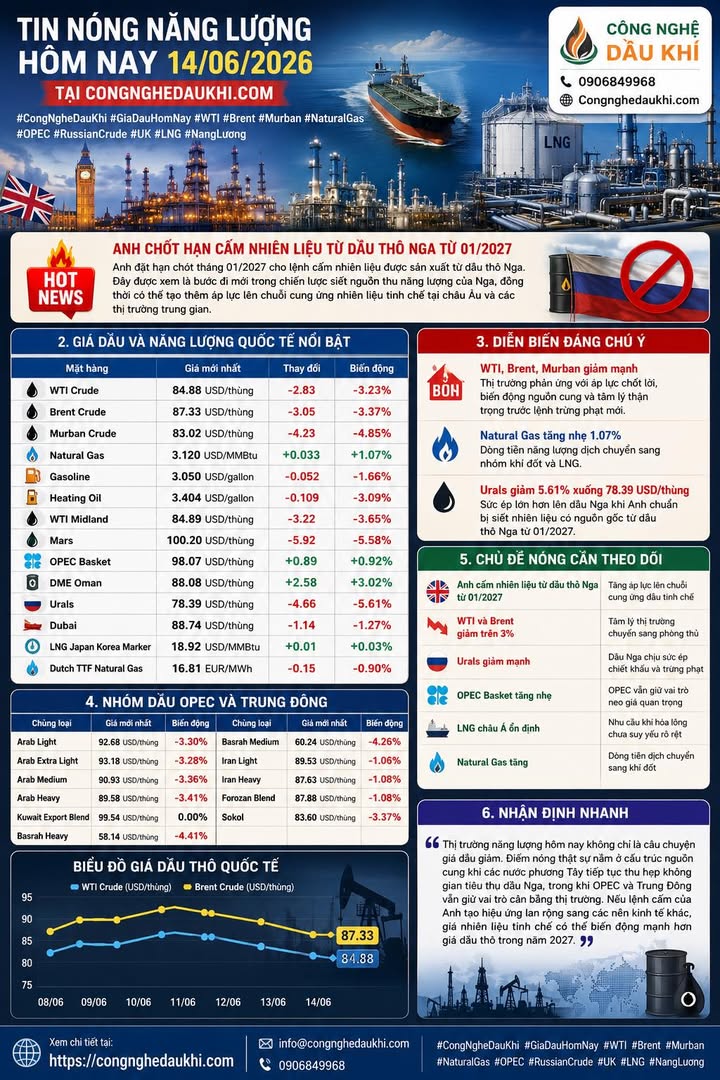
Global Energy Markets React to UK's Russian Fuel Ban: Market Analysis & Price Trends
The global energy landscape is facing significant shifts as the United Kingdom implements a landmark ban on fuels produced from Russian crude oil, effective January 2027. This strategic move, part of broader efforts to restrict Russia's energy revenue streams, threatens to introduce new volatility to already complex energy markets, potentially leading to more dramatic price fluctuations than currently anticipated.
UK's Groundbreaking Russian Fuel Ban
In a decisive policy shift, the UK has set January 2027 as the deadline for prohibiting the import and use of refined petroleum products derived from Russian crude oil. This measure represents a significant escalation in Western efforts to diminish Russia's financial capabilities through energy sector restrictions.
The ban targets specifically refined fuels that have been processed from Russian crude, creating a complex compliance challenge for global refiners and traders. This regulatory approach goes beyond previous sanctions that primarily targeted Russian crude exports directly, instead focusing on the downstream products.
Industry analysts suggest this move could create substantial pressure on the global refined fuel supply chain, particularly affecting European markets and intermediary trading hubs that have become increasingly dependent on Russian-origin products following the initial crude sanctions.
International Energy Price Overview
Today's energy markets show a mixed picture with crude oil prices experiencing significant declines while natural gas demonstrates modest gains. The following table presents the latest price movements across key energy commodities:
| Commodity | Latest Price | Change | Volatility |
|---|---|---|---|
| WTI Crude | $84.88/barrel | -$2.83 | -3.23% |
| Brent Crude | $87.33/barrel | -$3.05 | -3.37% |
| Murban Crude | $83.02/barrel | -$4.23 | -4.85% |
| Natural Gas | $3.120/MMBtu | +$0.033 | +1.07% |
| Gasoline | $3.050/gallon | -$0.052 | -1.66% |
| Heating Oil | $3.404/gallon | -$0.109 | -3.09% |
| WTI Midland | $84.89/barrel | -$3.22 | -3.65% |
| Mars | $100.20/barrel | -$5.92 | -5.58% |
| OPEC Basket | $98.07/barrel | +$0.89 | +0.92% |
| DME Oman | $88.08/barrel | +$2.58 | +3.02% |
| Urals | $78.39/barrel | -$4.66 | -5.61% |
| Dubai | $88.74/barrel | -$1.14 | -1.27% |
| LNG Japan Korea Marker | $18.92/MMBtu | +$0.01 | +0.03% |
| Dutch TTF Natural Gas | €16.81/MWh | -€0.15 | -0.90% |
Notable Market Developments
The energy markets today reveal several significant trends worth monitoring:
- Sharp declines in WTI, Brent, and Murban crude oil prices suggest the market is responding to profit-taking pressures, supply fluctuations, and cautious sentiment ahead of new energy sanctions.
- While crude oil prices fall, natural gas has experienced a modest increase of 1.07%, indicating that capital within the energy sector is not entirely exiting but rather shifting toward natural gas and LNG segments.
- The dramatic 5.61% drop in Urals crude to $78.39 per barrel reflects heightened pressure on Russian oil in the context of the UK's impending restrictions on refined fuels originating from Russian crude.
OPEC and Middle Eastern Oil Performance
The OPEC and Middle Eastern oil markets show varied performance across different crude blends:
| Crude Blend | Latest Price | Change |
|---|---|---|
| Arab Light | $92.68/barrel | -3.30% |
| Arab Extra Light | $93.18/barrel | -3.28% |
| Arab Medium | $90.93/barrel | -3.36% |
| Arab Heavy | $89.58/barrel | -3.41% |
| Kuwait Export Blend | $99.54/barrel | 0.00% |
| Basrah Heavy | $58.14/barrel | -4.41% |
| Basrah Medium | $60.24/barrel | -4.26% |
| Iran Light | $89.53/barrel | -1.06% |
| Iran Heavy | $87.63/barrel | -1.08% |
| Forozan Blend | $87.88/barrel | -1.08% |
| Sokol | $83.60/barrel | -3.37% |
Key Market Themes to Monitor
Several critical developments are shaping the current energy landscape and warrant close attention:
| Theme | Primary Impact |
|---|---|
| UK ban on Russian refined fuels (2027) | Increased pressure on refined fuel supply chains |
| WTI and Brent decline >3% | Market sentiment shifting to defensive positioning |
| Sharp Urals decline | Russian oil facing discount and sanction pressures |
| OPEC Basket slight increase | OPEC maintaining crucial price anchor role |
| Stable Asian LNG | Liquefied natural gas demand showing resilience |
| Natural Gas increase | Capital shifting toward gas and LNG segments |
Market Analysis & Future Outlook
Today's energy market developments extend beyond simple crude oil price declines. The true focal point lies in the evolving supply structure as Western nations continue to restrict Russian oil consumption space, while OPEC and Middle Eastern producers maintain their market-balancing roles.
If the UK's ban triggers similar measures from other economies, refined fuel prices could experience more dramatic fluctuations than crude oil prices in 2027. This potential divergence stems from the complex nature of refined product markets, which face additional logistical and refining capacity constraints beyond those affecting crude oil.
The current market dynamics suggest several potential scenarios:
- Short-term: Continued volatility as markets adjust to the UK's announcement, with refined product spreads potentially widening.
- Medium-term: Increased investment in refining capacity outside traditional Russian supply chains, potentially benefiting Middle Eastern and Asian refiners.
- Long-term: Accelerated diversification of energy sources and supply routes, potentially strengthening positions for alternative suppliers and renewable energy sources.
The energy markets stand at a critical juncture where policy decisions are directly translating into market mechanisms. The UK's refined fuel ban represents not just a regulatory change but a potential catalyst for restructuring global energy flows and pricing mechanisms in the coming years.
Market participants should prepare for increased complexity in energy trading, particularly in the refined products sector, as compliance requirements evolve and supply chains reorganize around the new regulatory landscape.