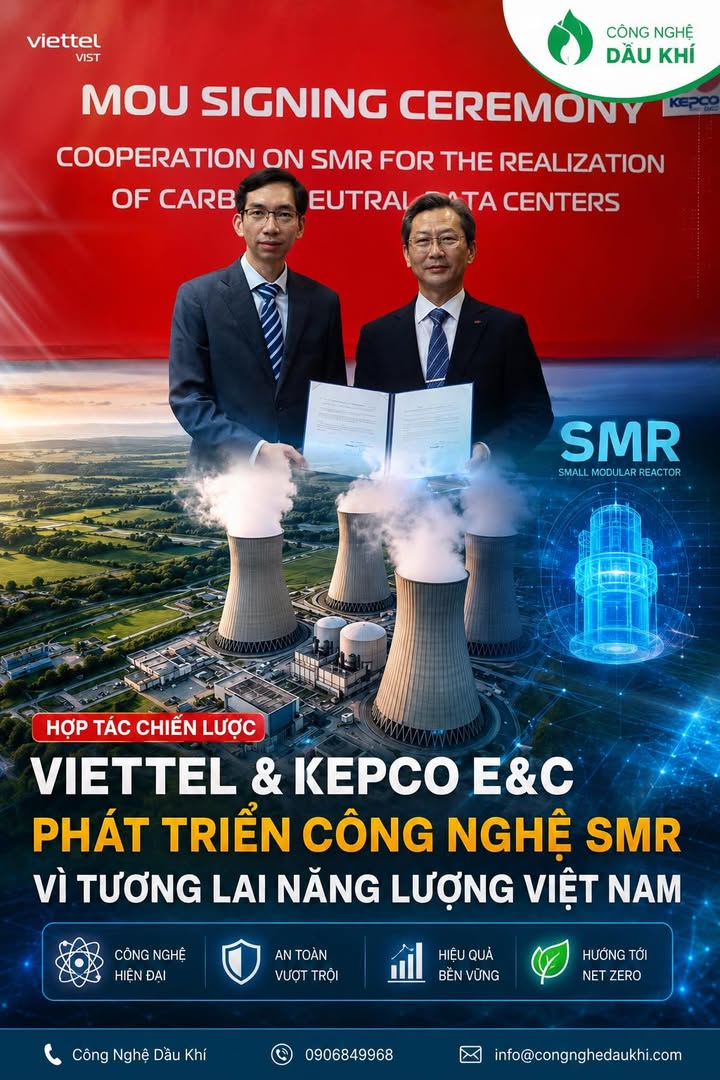
South Korean Corporation Partners with Viettel to Advance SMR Technology as Vietnam Accelerates Nuclear Power Plans
In a strategic move that could reshape Southeast Asia's energy landscape, the Korea Electric Power Corporation Engineering & Construction (KEPCO E&C) has signed a Memorandum of Understanding (MoU) with Viettel, Vietnam's largest technology conglomerate, to jointly research and develop Small Modular Reactor (SMR) technology. This collaboration, announced on June 15, 2026, comes as Vietnam is reviving its nuclear power program and accelerating preparations for the Ninh Thuan 2 Nuclear Power Plant project.
Strategic Partnership in Vietnam's Nuclear Renaissance
The partnership between KEPCO E&C and Viettel represents more than a business opportunity; it signals South Korea's strategic interest in Vietnam's emerging nuclear sector. According to the agreement, KEPCO E&C aims to participate not only in construction contracts for nuclear power plants but also to collaborate with Vietnam across the entire value chain—from policy development and human resource training to technological research and development.
The selection of Viettel as a partner is deliberate and strategic. As Vietnam's leading technology corporation with extensive experience in core technology research, artificial intelligence (AI), data centers, cloud computing, and large-scale control systems, Viettel brings crucial technological capabilities to the partnership. This is particularly relevant given SMR technology's potential integration with AI data centers, smart grid systems, and high-tech industrial zones.
| Partnership Overview: KEPCO E&C & Viettel | |
|---|---|
| Vietnamese Partner | Viettel |
| Korean Partner | KEPCO E&C |
| Announcement Date | June 15, 2026 |
| Cooperation Field | SMR Technology |
| Objective | Research and Development |
| Related Project | Ninh Thuan 2 Nuclear Power Plant |
| Application Focus | Electric Power, AI, Data Centers |
Understanding Small Modular Reactor (SMR) Technology
Small Modular Reactors (SMRs) represent a paradigm shift in nuclear power generation. Unlike traditional nuclear power plants with capacity ranging from 1,000 MW to over 1,600 MW per unit, SMRs typically have capacities ranging from several dozen to approximately 300 MW. These reactors are characterized by their smaller size, factory fabrication, and potential for modular deployment.
The global interest in SMR technology stems from several key advantages:
- Faster Construction Timeline: SMRs can be built in 3-5 years compared to 7-12 years for traditional plants
- Lower Initial Investment: Reduced capital requirements make nuclear power more accessible
- Enhanced Safety Features: Modern passive safety systems reduce accident risks
- Scalability: Capacity can be easily expanded to meet growing demand
- AI Data Center Compatibility: Ideal for providing stable 24/7 power to energy-intensive AI facilities
- Net Zero Support: Provides reliable baseload power to complement intermittent renewables
| Comparison: SMR vs. Traditional Nuclear Power Plants | ||
|---|---|---|
| Criteria | SMR | Traditional Plant |
| Capacity | 50 - 300 MW | 1,000 - 1,600 MW |
| Construction Time | 3 - 5 years | 7 - 12 years |
| Initial Capital Investment | Lower | Very High |
| Capacity Expansion | Flexible | Difficult |
| Data Center Suitability | Very High | Moderate |
South Korean Interest in Ninh Thuan 2 Intensifies
The KEPCO E&C-Viettel partnership builds on earlier South Korean interest in Vietnam's nuclear ambitions. During a recent visit by the South Korean President, KEPCO and Doosan Enerbility established a "Team Korea" alliance to participate in the bidding process for the Ninh Thuan 2 Nuclear Power Plant project.
South Korea brings substantial nuclear expertise to the table:
- KEPCO operates approximately 25 commercial nuclear reactors
- Doosan Enerbility has participated in manufacturing key equipment for more than 30 nuclear power units globally
"The coordination between businesses and governments of both countries can create significant advancements in the energy sector," stated Mr. Park Ji-won, Chairman of Doosan Enerbility, highlighting the potential of this strategic cooperation.
The AI-Nuclear Power Nexus
One of the most compelling aspects of SMR technology is its alignment with the artificial intelligence revolution. AI data centers consume enormous amounts of electricity, requiring reliable, round-the-clock power sources. Globally, technology corporations are exploring the integration of data centers with SMRs to ensure energy stability for AI operations.
The relative electricity demand across different sectors illustrates the growing importance of AI infrastructure:
| Relative Electricity Demand by Sector | |
|---|---|
| AI Data Centers | ███████████████████ |
| Industrial Zones | ██████████████ |
| Smart Cities | ███████████ |
| Residential Use | ██████ |
In this context, Viettel's involvement in SMR research represents a forward-looking preparation for Vietnam's future digital ecosystem and data infrastructure. The integration of nuclear power with digital infrastructure could position Vietnam as a regional leader in both energy technology and AI development.
Potential Impacts for Vietnam
The successful implementation of nuclear power projects, particularly SMR technology, could yield significant benefits for Vietnam:
- Long-term Energy Security: Reduced dependence on imported fossil fuels
- Economic Diversification: Development of high-tech industrial capabilities
- AI Infrastructure Enablement: Reliable power for data centers and computing facilities
- Carbon Reduction: Low-carbon electricity to meet climate commitments
- High-Tech Industry Growth: Enhanced technological capabilities and human capital
- International Investment: Attraction of foreign capital and expertise
Despite challenges including substantial capital investment, workforce development needs, and regulatory framework establishment, the KEPCO E&C-Viettel collaboration indicates that Vietnam's SMR technology race is entering a more substantive phase. Notably, this has evolved beyond merely constructing power plants to competing for leadership in the energy and high-tech industries for decades to come.
If Vietnam can master SMR technology ahead of other regional countries, it could fundamentally rewrite Southeast Asia's energy map within the next decade, positioning the nation as a regional energy and technology hub.