Americas' Oil Exports Hit Record Highs as Global Energy Powershift Accelerates
The global energy landscape is undergoing a historic transformation as oil exports from the Americas, led by the United States, reach unprecedented levels. Meanwhile, traffic through the Strait of Hormuz—the world's most crucial maritime oil artery—has plummeted to unprecedented lows. This dramatic shift raises a critical question: Is the United States positioning itself to become the new "oil king" in a potential long-term replacement of Middle Eastern dominance?
The Record-Breaking Export Surge from the Americas
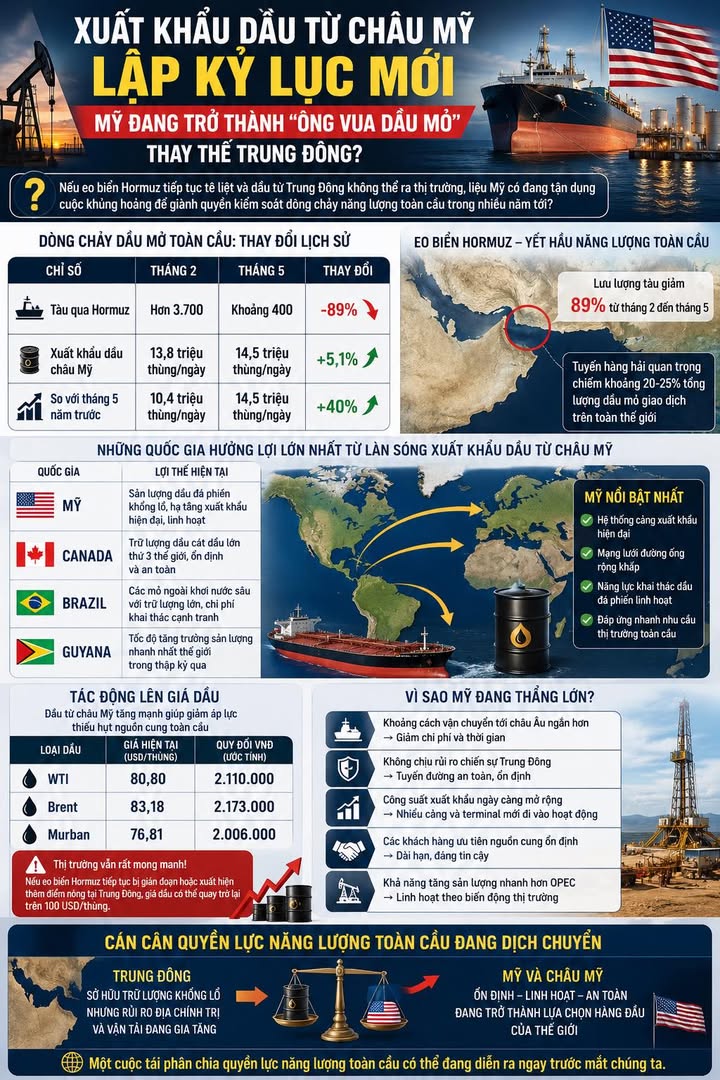
Data from the maritime transport industry reveals that oil exports from the Americas region reached approximately 14.5 million barrels per day in May, an increase from 13.8 million barrels per day in April and roughly 40% higher than the same period last year. This surge represents a significant milestone in the region's energy production and export capabilities.
The United States, Canada, Brazil, and Guyana have emerged as the primary beneficiaries of this trend, with each country contributing to the growing export volumes. Among these, the United States stands out due to its massive shale oil reserves, advanced export infrastructure, and flexible production capabilities.
The Declining Strait of Hormuz
In stark contrast to the Americas' export boom, traffic through the Strait of Hormuz has experienced a dramatic decline. According to maritime shipping data, the number of vessels transiting this critical waterway decreased by 89% between February and May. The total number of ship transits dropped from over 3,700 to approximately 400 during this period.
The Strait of Hormuz has long been the chokepoint through which a significant portion of the world's oil supplies pass. This sudden reduction in traffic reflects heightened geopolitical tensions, increased security concerns, and potential disruptions to oil supplies originating from the Middle East.
| Global Oil Flow Changes Comparison | |||
|---|---|---|---|
| Indicator | February | May | Change |
| Vessels through Hormuz | Over 3,700 | Approx. 400 | -89% |
| Americas oil exports (million barrels/day) | 13.8 | 14.5 | +5.1% |
| Compared to May previous year | 10.4 million barrels/day | 14.5 million barrels/day | +40% |
Key Beneficiaries of the Energy Shift
Several nations in the Americas region are capitalizing on the changing dynamics of global energy markets. Each possesses distinct advantages that position them favorably in this evolving landscape:
| Country | Current Advantage |
|---|---|
| United States | Massive shale oil reserves |
| Canada | Large oil sands reserves |
| Brazil | Deepwater offshore fields |
| Guyana | Fastest-growing production globally |
Impact on Global Oil Prices
The increased oil exports from the Americas have helped alleviate global supply pressures, contributing to relatively stable oil prices despite the disruptions in Middle Eastern supplies. However, the market remains fragile with significant potential for volatility.
Current benchmark prices reflect this delicate balance:
| Benchmark | Current Price (USD/barrel) | Equivalent (VND/barrel) |
|---|---|---|
| WTI | 80.80 | Approx. 2,110,000 |
| Brent | 83.18 | Approx. 2,173,000 |
| Murban | 76.81 | Approx. 2,006,000 |
Despite recent declines from peak levels, energy analysts caution that the market remains vulnerable to sudden shocks. If the Strait of Hormuz experiences prolonged disruptions or additional geopolitical hotspots emerge in the Middle East, oil prices could easily surge back above $100 per barrel.
Why America is Winning the Energy Race
Several key factors have positioned the United States as the primary beneficiary of the current shift in global energy dynamics:
- Shorter shipping distances to Europe compared to Middle Eastern sources
- Exemption from Middle Eastern conflict risks that affect supply reliability
- Continuously expanding export capacity through modernized ports and infrastructure
- Preference from international customers seeking more stable supply sources
- Greater production flexibility compared to OPEC nations, allowing quicker response to market changes
Broader Implications and Future Outlook
This shift in global oil flows represents more than just a temporary market adjustment. It signals a potential long-term redistribution of energy power that could reshape geopolitical alliances and economic dependencies for decades to come.
While the Middle East still possesses the world's largest proven oil reserves, the advantages of geographic stability and supply reliability are increasingly becoming decisive factors in global energy trade. The United States, with its technological prowess, flexible production capabilities, and strategic positioning, appears well-positioned to capitalize on this changing landscape.
The critical question now is not whether the Americas can partially replace Middle Eastern oil supplies, but rather how long the United States can maintain this advantageous position if strategic shipping lanes like the Strait of Hormuz return to normal operations. The answer may determine the future balance of power in global energy markets for the coming decades.
A redistribution of global energy power may be unfolding before our very eyes, with potentially profound implications for international relations, economic development, and energy security worldwide.