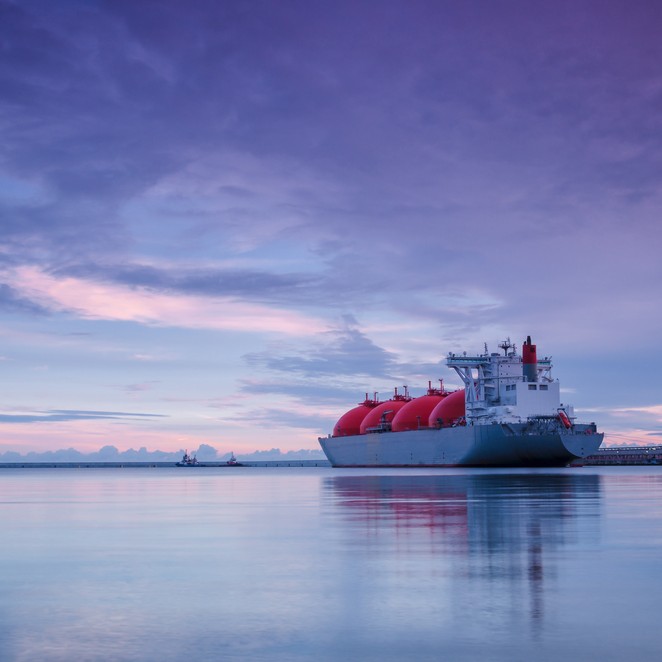
Australian LNG Strike at Inpex Facilities to Cause Significant Disruptions to Global Gas Supply Chain
A senior executive from Japanese energy giant Inpex has announced to Bloomberg on Tuesday that the ongoing strike at Inpex's LNG facilities in Australia is expected to cause significant disruptions to production operations.
Workers at Inpex's Ichthys LNG facilities voted last week to escalate industrial action at all three sites, increasing from 4 hours per day to 8 hours per day. This represents a significant escalation in the ongoing labor dispute.
Statement from Inpex Leadership
"We expect immediate disruption to production at both the onshore and offshore facilities of the Ichthys LNG project," Bill Townsend, Inpex's senior vice president of corporate affairs, said in comments emailed to Bloomberg.
"In the context of current global fuel supply constraints, this disruption is expected to be very significant," the executive added.
Background of the Strike
The industrial action, which began on June 3, has disrupted some LNG loading at the Ichthys LNG project in recent days, raising market concerns that supplies from Australia—the world's second-largest LNG exporter after Qatar—could decrease in the coming days and weeks.
Earlier this week, Australia's Fair Work Commission rejected Inpex's request to terminate the strike at the Ichthys facility, which will impact production and exports at the 9.2 million tons per annum facility.
Impact on Global Markets
The disruption in LNG supplies from Australia could add further price burdens for energy importers in Asia—the world's largest LNG market.
European and Asian benchmark gas prices fell sharply at the beginning of this week following the announcement of the US-Iran agreement, but flows from Qatar have not yet resumed, pending the safe reopening of the Strait of Hormuz.
This reopening could begin on Friday, when the US and Iran are expected to sign an agreement in Switzerland. However, LNG supplies from the Middle East will begin flowing again several weeks later, if the agreement holds and the Strait of Hormuz is safely reopened to traffic.
QatarEnergy's Production Plans
State-owned QatarEnergy, which suspended LNG production in early March, has informed customers that it could restore approximately 50% of production capacity within one month after safe passage through the Strait of Hormuz is restored, sources familiar with the plan told Bloomberg on Tuesday.
Within two months, Qatar could restore 80% of capacity, according to Bloomberg sources.
Strike Information Summary
| Information | Details |
|---|---|
| Corporation | Inpex (Japan) |
| Project | Ichthys LNG |
| Location | Australia |
| Start Date | June 3 |
| Initial Strike Duration | 4 hours/day |
| Current Strike Duration | 8 hours/day |
| Facility Capacity | 9.2 million tons/year |
Market Impact Comparison
| Supply Source | Current Status | Future Outlook |
|---|---|---|
| Australia (Inpex) | Currently disrupted by strike | Continued disruption until strike concludes |
| Qatar | Suspended production since early March | 50% recovery in 1 month, 80% in 2 months after Strait of Hormuz reopening |
| US-Iran | Announcement made | LNG flows may begin after Strait of Hormuz safely reopens |
| Asia | World's largest LNG market | Facing potential supply shortages |
Expert Analysis
According to energy industry experts, the disruption at Inpex's LNG facilities comes at a sensitive time when the global market is already facing supply constraints due to Qatar's production halt and other geopolitical factors.
"Given that global LNG supply has been significantly reduced due to Qatar's production suspension, any disruption from Australia will have a major impact on prices and supply stability," an energy market analyst stated.
LNG importers in Asia, particularly countries like Japan, South Korea, and China, are likely to face short-term price pressures as supplies from Australia are affected and supplies from Qatar cannot be restored immediately.
Meanwhile, the agreement between the US and Iran could bring some hope to the market in the long term, but the time for actual supply improvement could extend for weeks or even months.
Conclusion
The escalating strike at Inpex's LNG facilities in Australia presents a new challenge to the global energy market, which is already strained by limited supply and geopolitical factors. This disruption could exacerbate the global LNG shortage and push prices higher, particularly in Asia—the world's largest LNG consuming market.
Meanwhile, the prospect of recovering production volumes from Qatar after the reopening of the Strait of Hormuz offers some hope for the market in the long term, but in the short term, energy importers should prepare for a period of high price volatility.