#Maersk #Hormuz #Logistics #VanTaiBien #ChuoiCungUng #XuatNhapKhau #DauMo #HangHai #KinhTe #TimKiemTop
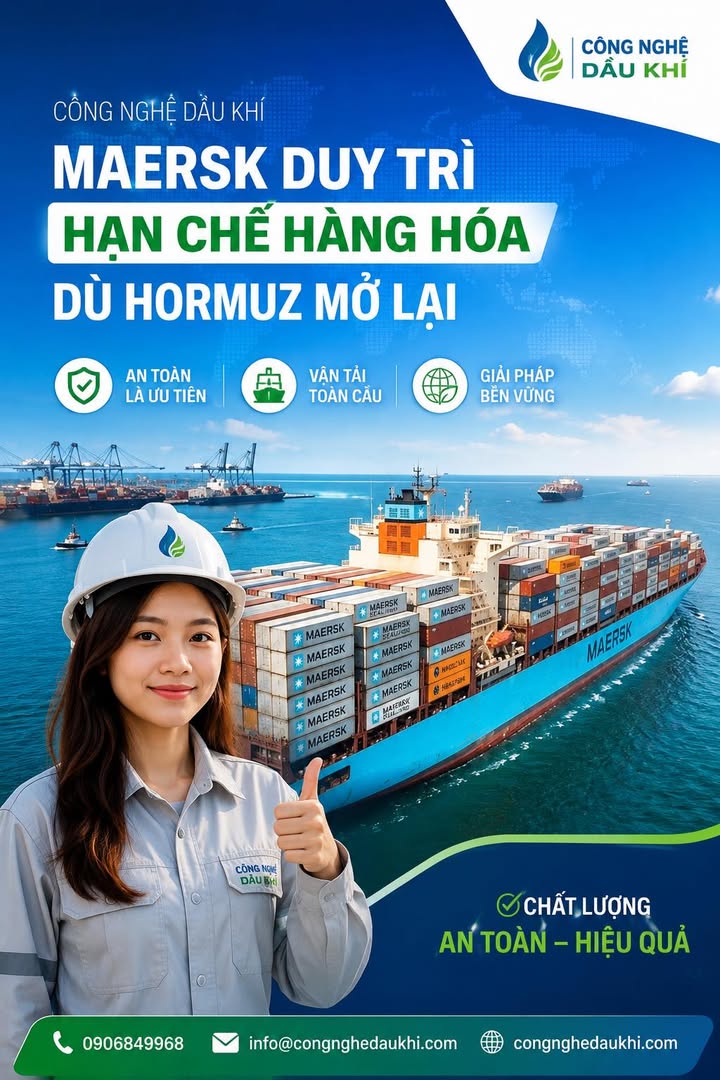
The Strait of Hormuz has reopened but Maersk still restricts goods passing through. Are large shipping corporations holding risky information that the rest of the market has not yet realized?
On June 17, 2026 at 13:00 Vietnam time, the global logistics industry continues to pay attention to a new decision from Maersk when the world's largest container shipping company still maintains many restrictions on goods passing through the Strait of Hormuz even though this strategic maritime route has reopened.
Maersk's move shows that shipping businesses are still not completely confident in the safety of the Middle East after many consecutive weeks of geopolitical tensions, directly threatening the transportation of oil, liquefied petroleum gas and international trade goods.
WHY HORMUZ IS SO IMPORTANT THAT IT MAKES THE WHOLE WORLD WORRIED
The Strait of Hormuz is considered one of the most strategic shipping routes on the planet.
Hormuz's role in global trade
Value Index
The amount of oil transported each day is about 20 million barrelsg
Global oil share Nearly 20%
Global LNG ratio Around 25%
Largely dependent countries are China, Japan, Korea, and India
Containerized cargo passes through millions of TEUs each year
Just an incident lasting a few days at Hormuz can cause oil prices, freight rates and global logistics costs to increase sharply.
WHAT IS MAERSK DOING
According to sources in the shipping industry, Maersk still applies many risk control measures for goods traveling through the Persian Gulf region.
Measures include
✔ Check the itinerary more closely
✔ Flexible train schedule adjustment
✔ Re-evaluate transit routes
✔ Limit receiving certain types of sensitive goods
✔ Strengthen maritime security monitoring
This shows that the company still evaluates the area as potentially risky even though the situation is more stable than during the peak tension period.
IMPACT ON GLOBAL SUPPLY CHAIN
Field of Influence
Oil Risk of price fluctuations
LNG Gas Import costs increase
Logistics Increase insurance surcharges
Consumer goods Long delivery times
Industry Higher raw material costs
Import businesses in Asia are still closely monitoring all developments related to Hormuz because any disruption could have an impact.ng to production and distribution plans of goods.
COST PROBLEMS ARE MAKING BUSINESSES WORRIED
One of the most notable factors is war insurance premiums for ships.
For example, costs incurred
Item Estimated Increase
Large container ship war insurance Hundreds of millions of VND per trip
Fuel due to itinerary changes Billions of VND per month
Storage costs and delayed delivery increased significantly
This is the reason why many shipping companies, not just Maersk, still maintain a cautious mentality.
WHAT IS THE MARKET WAITING FOR
Investors are currently focusing on three factors
1. The real level of stability in the Strait of Hormuz
2. Maersk's continued operating policy
3. Reactions of major carriers such as MSC, CMA CGM and Hapag-Lloyd
If companies simultaneously restore normal operations, the market will consider this a positive signal for the global supply chain. Conversely, continued restrictions may indicate that risks have not been completely eliminated.
CONCLUSION
Maersk's decision on June 17, 2026 shows that the world shipping industry is still putting safety first. Even though the Strait of Hormuz has reopened, major logistics corporations are still not ready to return to normal operations.h is usually completely.
With more than 20% of global oil passing through this route every day, any change from Maersk could become an important signal for the entire energy market, shipping and international supply chains.
#Maersk #Hormuz #Logistics #SupplyChain #ContainerShipping #MSC #CMACGM #HapagLloyd #DauMo #NangLuong #VanTaiBien #XuatNhapKhau #TimKiemTop