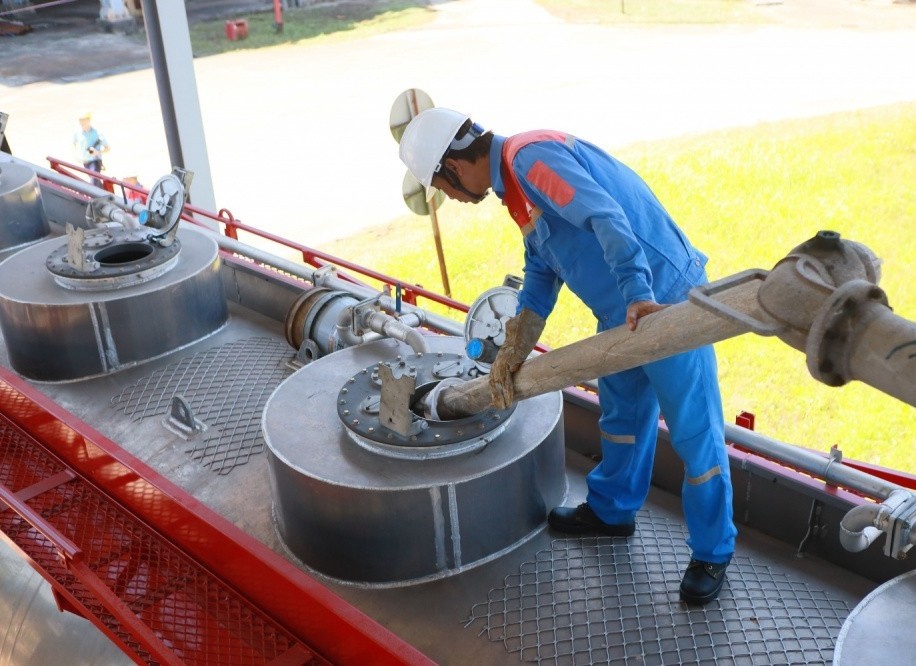
E10 Gasoline: A Cornerstone for Vietnam's Energy Independence
The introduction of E10 gasoline nationwide represents more than just the addition of a new fuel to the market. Behind every liter of E10 lies the formation of a new value chain connecting agriculture, biotechnology, and the oil refining industry. With the Dung Quất Biofuel Plant resuming operations and the Dung Quất Oil Refinery prepared to supply E10 to the market, Vietnam is establishing a stronger foundation for gradually achieving energy self-sufficiency.
The Development Context of Biofuels in Vietnam
Vietnam is a nation with significant agricultural strengths, annually producing substantial yields of food crops and industrial plants. In an era of unpredictable global oil price fluctuations and the increasingly urgent need to ensure national energy security, the development of biofuels has emerged as a crucial strategic direction.
E10 gasoline, a fuel blend containing 10% ethanol and 90% petroleum gasoline, has been researched and tested in Vietnam for many years. Its official implementation marks a significant step in the country's sustainable energy development strategy.
The Value Chain from Agriculture to Biofuel Industry
From Raw Materials to Final Product
The value chain of E10 biofuel begins with raw materials primarily consisting of cassava, corn, sugarcane, and other industrial crops capable of being converted into ethanol. These crops are cultivated in specialized farming areas, then harvested and transported to processing facilities.
At the processing plants, the raw materials undergo fermentation and distillation to produce high-quality ethanol. The ethanol is then transported to oil refineries where it is blended with petroleum gasoline to create E10 gasoline, ready for distribution to consumers.
Agriculture-Industry Linkage
The development of biofuels has created a strong linkage between the agricultural and industrial sectors. Biofuel enterprises have entered into product purchase contracts with farmers, ensuring stable market outlets for agricultural products. This approach not only addresses agricultural product consumption challenges but also creates stable income sources for farmers.
According to statistics, cassava cultivation generates approximately 80-100 million VND per hectare annually, significantly higher than many traditional crops. This encourages farmers to shift their crop structures toward high-value crops suitable for biofuel production.
| Crop Type | Yield (tons/ha) | Ethanol Production Capacity (liters/ha) | Income (million VND/ha) |
|---|---|---|---|
| Cassava | 25-30 | 3,000-3,500 | 80-100 |
| Corn | 5-7 | 2,500-3,000 | 60-80 |
| Sugarcane | 70-90 | 5,000-6,000 | 90-120 |
The Role of the Dung Quất Biofuel Plant
The Dung Quất Biofuel Plant stands as one of the flagship projects in Vietnam's biofuel development strategy. With a designed capacity of 100 million liters of ethanol annually, the plant plays a pivotal role in supplying raw materials for E10 gasoline production.
However, the plant encountered numerous challenges during its initial operational phase, including insufficient raw material input and technological issues. After a period of adjustment and upgrading, the plant is now ready to resume operations, creating significant opportunities for biofuel development in the Central region and nationwide.
The Dung Quất Oil Refinery and E10 Supply
The Dung Quất Oil Refinery, with a capacity of 6.5 million tons annually, is Vietnam's most modern oil refinery. The refinery's readiness to supply E10 gasoline marks a significant step in making biofuels widely available.
The synergy between the Dung Quất Biofuel Plant and the Dung Quất Oil Refinery creates a complete energy industrial complex, from ethanol production to blending and distribution of biofuels. This integration not only optimizes the supply chain but also significantly reduces production costs.
Economic and Environmental Benefits of Biofuels
Economic Benefits
The development of E10 biofuel offers numerous practical economic advantages:
- Creation of a new industry with high added value
- Generation of employment for millions of workers, particularly in rural areas
- Reduced dependence on imported gasoline and diesel, saving foreign currency
- Development of raw material zones, promoting agricultural structural transformation
Environmental Benefits
E10 biofuel provides several environmental advantages:
- Reduced CO2 emissions compared to conventional petroleum gasoline
- Decreased emissions of harmful gases such as CO, SOx, and NOx
- Greenhouse gas reduction, contributing to climate change mitigation
- Utilization of renewable, sustainable raw materials
Challenges in Biofuel Implementation and Development
Despite its significant potential, biofuel development in Vietnam faces numerous challenges:
- Insufficient and unstable raw material supply
- Incomplete production technology with high production costs
- Unsynchronized distribution and marketing systems
- Lack of sufficiently strong government support policies
- Consumer hesitation toward new fuel types
Future Vision for Vietnam's Biofuel Industry
According to Vietnam's renewable energy development strategy, the proportion of biofuel usage will continue to increase in the coming years. The target is for biofuels to account for at least 5% of total energy consumption by 2030, and reaching 10-15% by 2050.
Vietnam is also researching the development of next-generation biofuels such as cellulosic ethanol, high-quality vegetable oil-based biodiesel, and even sustainable aviation fuel (SAF). These technologies will expand raw material sources and improve energy utilization efficiency.
E10 gasoline represents merely the beginning of Vietnam's journey toward energy self-sufficiency. With the synchronized development of the value chain from agriculture to industry, combined with governmental determination and business participation, biofuels are poised to become a crucial pillar in the country's sustainable energy structure in the future.