Iran Commits to Uranium Dilution Under Agreement with United States
Tehran Agrees to Reduce Uranium Enrichment to Civilian Thresholds Under IAEA Supervision
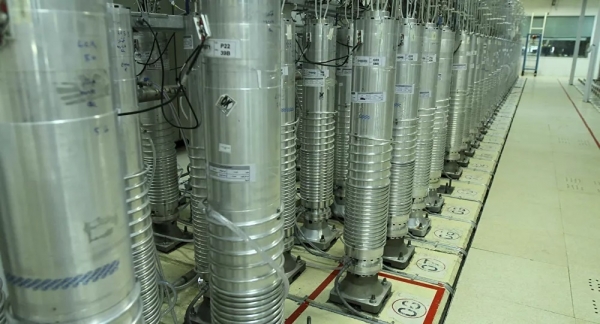
In a move viewed as a significant step forward in bilateral relations, Iran has formally committed to diluting its enriched uranium to levels suitable for civilian purposes under strict supervision from the International Atomic Energy Agency (IAEA). This development marks an important milestone in international efforts to regulate Iran's nuclear program.
According to announcements from Iran's Ministry of Energy, the enriched uranium will be processed to achieve concentrations appropriate only for civilian applications, completely eliminating the potential for military use. This decision follows direct negotiations between Iranian and American representatives, although the two nations have yet to fully restore the 2015 nuclear agreement (JCPOA).
Details of the Uranium Agreement
Iran has agreed to dilute approximately 1,000 kg of uranium enriched to 20% purity. This enrichment level is considerably higher than the 3-5% typically used for nuclear power plants but remains significantly below the 90% required for nuclear weapons.
The dilution process will take place at IAEA-monitored facilities, ensuring transparency and compliance with international regulations. Converting uranium from highly enriched to civilian-grade is seen as a confidence-building measure, reducing international concerns about Iran's nuclear program.
| Uranium Type | Enrichment Level | Application |
|---|---|---|
| Natural Uranium | 0.7% | Commonly found in nature |
| Low-Enriched Uranium | 3-5% | Nuclear power plants |
| Medium-Enriched Uranium | 20% | Medical research, industrial applications |
| Highly Enriched Uranium | 90% | Material for nuclear weapons |
Historical Context of Iran's Nuclear Program
Iran's nuclear program has been controversial internationally for decades, with Western nations suspecting that the true purpose was developing nuclear weapons. Iran has consistently maintained that the program serves only peaceful purposes such as electricity production and medical applications.
In 2015, Iran signed the Joint Comprehensive Plan of Action (JCPOA) with world powers, agreeing to limit its nuclear program in exchange for the lifting of sanctions. However, in 2018, the U.S. withdrew from the agreement and reimposed sanctions, leading Iran to gradually reduce its compliance with the accord's provisions.
Role of IAEA in Monitoring
The International Atomic Energy Agency (IAEA) will play a crucial role in monitoring Iran's uranium dilution process. IAEA inspectors will regularly inspect Iranian nuclear facilities to verify transparency and ensure that uranium is not being diverted for military purposes.
This marks improved cooperation between Iran and the IAEA after years of tension. The IAEA will utilize advanced monitoring technologies, including cameras, sensors, and tracking systems, to ensure the entire process is conducted in accordance with the agreement.
International Community Response
Regarding this agreement, the U.S. Secretary of State called it "a necessary step" to build trust and reduce regional tensions. Meanwhile, European nations such as France, Germany, and Britain expressed support but emphasized the need for additional concrete steps from Iran.
The P5+1 group (world powers and Iran) is expected to convene soon to discuss next steps in nuclear negotiations. Some analysts suggest this development could pave the way for the full restoration of the 2015 nuclear agreement.
| Timeline | Key Event | Impact |
|---|---|---|
| 2003 | Nuclear program commencement | International concerns arise |
| 2015 | JCPOA signing | Temporary reduction in tensions |
| 2018 | U.S. withdrawal from JCPOA | Tensions resurge |
| 2023 | Uranium dilution commitment | New progress in negotiations |
Analysis and Prospects
International analysts view Iran's commitment to uranium dilution as a significant political move, indicating Tehran's willingness to pursue diplomatic solutions for its nuclear program. However, many remain skeptical about the sustainability of this agreement in the complex political landscape.
Experts also note that this is only the first step in a long process needed to fully restore the 2015 nuclear agreement. Outstanding issues include sanctions removal, uranium enrichment limits, and missile development.
Nevertheless, this development is seen as a positive signal that could pave the way for further negotiations and reduce the risk of nuclear conflict in the region. The international community is closely monitoring the situation and hopes this will be an important turning point toward a sustainable solution.
Conclusion
Iran's commitment to uranium dilution marks a significant step in its relations with the United States and the international community regarding the nuclear issue. Despite numerous challenges ahead, this move shows the potential for cooperation and trust-building among all parties involved.
IAEA supervision will ensure transparency and compliance with commitments, while the international community continues to monitor Iran's next steps. The future of the nuclear agreement depends on the steadfastness and goodwill of all participating parties.