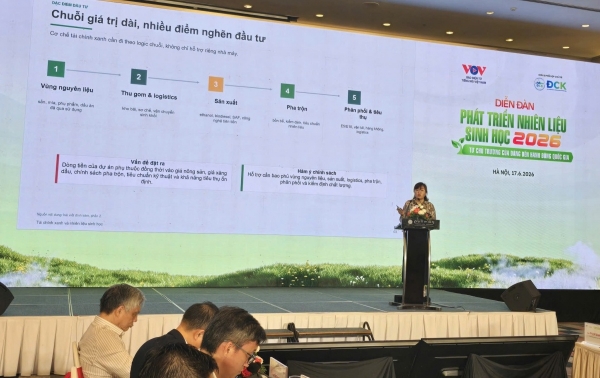
E10 and the Financial Challenge for Vietnam's Biofuel Industry
The nationwide implementation of E10 gasoline represents a significant milestone for Vietnam's biofuel market. However, for this policy to achieve its intended impact, it is crucial to simultaneously develop appropriate financial mechanisms that ensure stable capital flows for production and distribution activities.
E10 as a Sustainable Energy Solution
E10, a blend of 10% ethanol and 90% petroleum-based gasoline, is expected to serve as a critical alternative energy solution in Vietnam. The government mandated nationwide implementation of E10 starting January 1, 2023, following successful trials in several major cities including Hanoi, Ho Chi Minh City, and Da Nang.
Biofuels, particularly ethanol derived from energy crops such as cassava, corn, and sugarcane, are viewed as renewable energy solutions that can reduce dependence on fossil fuels and decrease greenhouse gas emissions. Nevertheless, the industry faces numerous challenges, particularly in the financial sector.
The Financial Conundrum for Vietnam's Biofuel Industry
Vietnam's biofuel industry is grappling with complex financial challenges. The production cost of ethanol remains higher than that of petroleum-based gasoline, making it difficult for enterprises to compete effectively.
According to the Ministry of Industry and Trade, there are approximately 10 ethanol production plants in Vietnam with a combined production capacity of about 500 million liters per year. However, the utilization rate stands at only 60-70% due to shortages of raw materials and difficulties in market distribution.
| Indicator | 2022 | 2023 | 2025 Target |
|---|---|---|---|
| Ethanol production capacity (million liters/year) | 500 | 500 | 800 |
| Capacity utilization rate | 60-70% | 70-80% | 85-90% |
| E10 usage standard | 10% | 10% | 10-15% |
Essential Financial Mechanisms
To ensure sustainable development, the biofuel industry requires appropriate financial mechanisms. Several proposed solutions include:
- Price support policies: A mechanism to support ethanol prices is needed to enable competition with petroleum-based gasoline. This could involve establishing a biofuel development fund to compensate for price differentials.
- Tax incentives: Exemptions or reductions in import duties for biofuel production equipment and machinery; corporate income tax reductions for investments in this sector.
- Capital support: Facilitating access to preferential capital from sources such as the Vietnam Development Bank, social insurance funds, etc.
- Market development: Promoting biofuel consumption through mandatory E10 and E5 usage policies at state-owned facilities and enterprises.
Challenges and Solutions
Vietnam's biofuel industry faces numerous challenges:
- Shortage of raw materials for ethanol production
- High production costs, making it uncompetitive with petroleum-based gasoline
- Inadequate and inconsistent distribution infrastructure
- Limited investment capital
- Weak technological capabilities and management skills
To address these challenges, comprehensive solutions are required:
| Challenge | Proposed Solution |
|---|---|
| Raw material shortage | Development of concentrated raw material cultivation areas; support for farmers growing energy crops |
| High production costs | Application of new technologies; price support; establishment of a biofuel development fund |
| Distribution infrastructure | Investment in storage tank systems and pipelines; conversion of gasoline stations to sell E10 |
| Capital sources | Credit incentives; bond issuance; attraction of private investment |
Future Prospects
Despite numerous challenges, Vietnam's biofuel industry still holds significant potential for expansion. According to plans, the proportion of biofuels in total transportation fuels could reach 5-10% by 2030.
Vietnam possesses favorable climatic and land conditions for developing biofuels from energy crops such as cassava, corn, and sugarcane. With proper investment, the biofuel industry could emerge as a key economic sector, contributing to energy security and environmental protection.
Conclusion
The nationwide implementation of E10 marks a crucial step in developing Vietnam's biofuel industry. However, for this policy to succeed, appropriate financial mechanisms must be established to ensure stable capital flows for production and distribution activities. Only then can biofuels truly become a sustainable energy solution, reducing dependence on fossil fuels and protecting the environment.