Outstanding events on the International Energy Market the week of June 15 - June 20
The energy market last week witnessed important developments, especially warnings from major financial institutions and changes in energy supply strategies of countries. In the context of the COVID-19 pandemic, which is still complicated, the energy market continues to be affected by many sides, from geopolitical tensions to changes in consumption demand.
Goldman Sachs warns that tanker traffic through the Strait of Hormuz may never fully recover
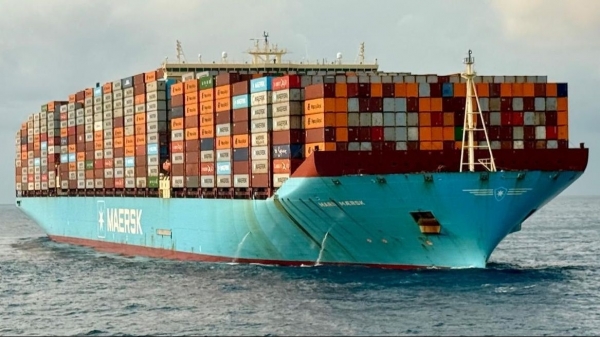
In a newly released report, Goldman Sachs issued a notable warning that tanker traffic through the Strait of Hormuz - a strategic waterway supplying global crude oil - may never fully recover from recent tensions. According to analysis by this leading investment bank, the unstable political situation in the Middle East and maritime security risks are permanently changing the structure of global oil transportation.
The Strait of Hormuz, the route through which about a third of the world's seaborne oil passes, has become a focus of geopolitical tensions in recent months. The May 2019 tanker attack and subsequent incidents prompted many insurers to increase rates, forcing some ships to change to longer routes.
According to analysts from Goldman Sachs, this change is not just temporary but may become a long-term trend. Oil importing countries, especially Asia, will likely seek to diversify their supply sources and reduce their dependence on this route in the future.
European customers are not committed to long-term LNG supply agreements with the US
The second event that attracted the attention of the energy market last week was that European customers were showing caution in signing long-term liquefied gas (LNG) supply agreements with the US. This is an important sign of the shift in Europe's energy strategy and the challenges facing the US LNG industry.
Previously, the US has boosted LNG exports to Europe as part of efforts to reduce dependence on gas from Russia. However, global LNG prices have fallen sharply in recent months due to weaker demand and abundant supply. This gives European companies more options and reduces the pressure to sign long-term contracts with American suppliers.
According to analysts, Europe is shifting towards short-term or more flexible contracts, allowing them to take advantage of short-term price fluctuations and minimize risks amid economic uncertainty caused by the COVID-19 pandemic.
Summary of the energy market situation last week
| Market | Main situation | Trend |
|---|---|---|
| Crude oil | Tensions in the Strait of Hormuz | Fluctuating, prices fluctuate around 40 USD/barrel |
| Liquefied Petroleum Gas (LNG) | Europe is cautious about long-term contracts with the US | Price drop, weak demand |
| Electricity | Demand recovers slowly | Stable in many areas |
In-depth analysis
According to energy experts, although the above two events belong to different fields, they both reflect profound structural changes in the global energy market. Tensions in the Strait of Hormuz and Europe's caution in importing LNG from the US both show that the trend of supply diversification and minimizing geopolitical risks is becoming a top priority for energy importing countries.
For the oil market, the situation in the Strait of Hormuz continues to be one of the biggest risk factors. Although oil prices have recovered significantly from a 20-year low in April, any breakdown in the region could cause sharp price fluctuations.
On the LNG side, the change in European strategy could affect the expansion plans of the US industry. Many LNG projects in the US have been delayed or canceled due to weak demand and low prices. European caution could make the situation more complicated.
Impact on Vietnam
For Vietnam, a country that imports most of its energy, developments in the global market are important. Closely monitoring the situation in the Strait of Hormuz is necessary to ensure national energy security. At the same time, changes in the LNG market also create opportunities for Vietnam to diversify gas supply for economic development.
According to Vietnamese energy experts, the country needs to continue promoting the development of renewable energy to reduce dependence on imported energy sources, while diversifying supply sources from many different regions to minimize risks from geopolitical instability.
Conclude
The energy market last week witnessed important developments shaping the long-term trend. The warning from Goldman Sachs about the Strait of Hormuz and Europe's caution with LNG from the US both show that the energy market is in a period of major transformation. Energy importing countries, including Vietnam, need to proactively adapt to these changes to ensure energy security and sustainable development.
In the context that the COVID-19 pandemic is still complicated and the global economy is recovering slowly, the energy market may continue to fluctuate strongly in the coming months. Closely monitoring developments and having a flexible response strategy will be the key for countries and businesses to overcome this challenging period.