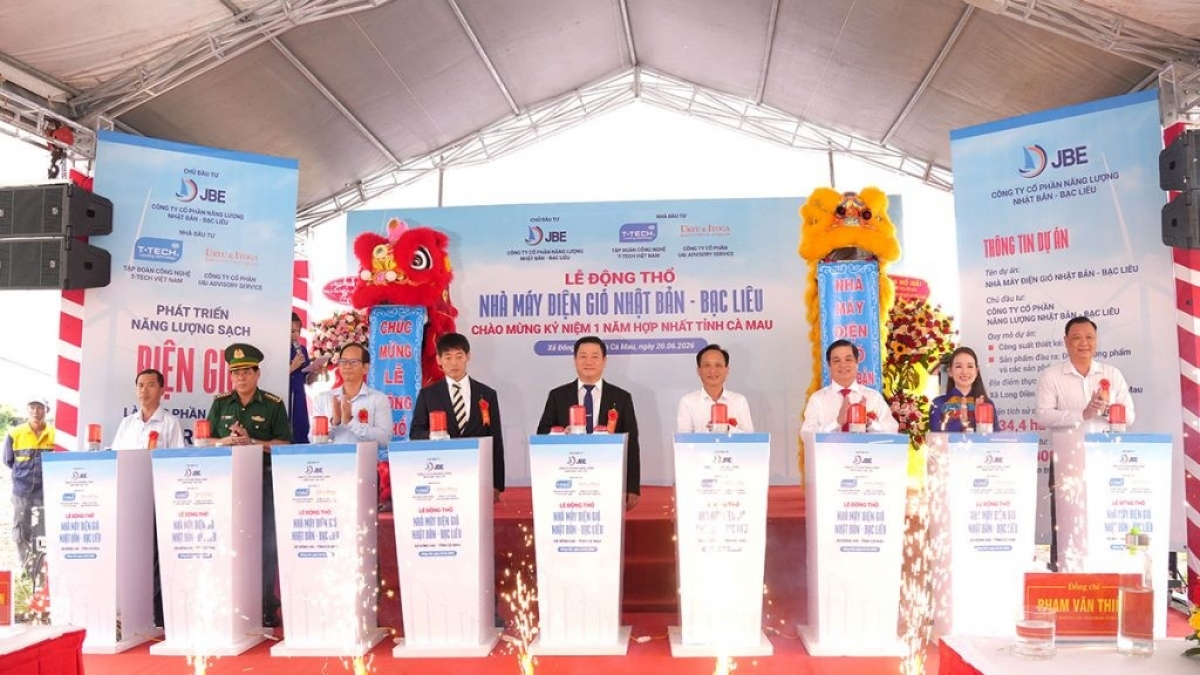
Groundbreaking Ceremony for Japanese Wind Power Project in Bac Lieu - A Milestone for Vietnam's Renewable Energy Sector
In a significant development for Vietnam's clean energy transition, a groundbreaking ceremony was recently held for the Bac Lieu Japanese Wind Power Plant project. The event took place at Truong Dien Hamlet, Dong Hai Commune, Ca Mau Province, marking the official commencement of construction for one of the largest renewable energy projects in the Mekong Delta region. The project is being developed by Bac Lieu Japanese Energy Joint Stock Company, in collaboration with T TECH Vietnam Technology Group and U I Advisory Service Joint Stock Company from Japan.
This ceremony represents a crucial milestone in Vietnam's pursuit of sustainable energy development and reducing dependency on fossil fuels. The project is expected to become a model for future renewable energy initiatives in the country, demonstrating the successful integration of international expertise with local implementation capabilities.
Project Overview and Strategic Importance
The Bac Lieu Japanese Wind Power Plant is positioned to become one of the most modern and large-scale wind power facilities in the Mekong Delta region. With a total investment value amounting to thousands of billions of Vietnamese Dong, the project signifies a substantial commitment to clean energy development in Vietnam's southernmost province.
Strategically located in an area with significant wind potential, the project aligns with Vietnam's broader national energy strategy, which aims to increase the proportion of renewable energy in the country's energy mix to approximately 30-35% by 2030 and 40-45% by 2045. This initiative directly contributes to the country's commitments under the Paris Agreement to reduce greenhouse gas emissions.
Key Stakeholders and Their Roles
The successful development of this project is the result of a strategic partnership between three key entities, each bringing valuable expertise to the table:
- Bac Lieu Japanese Energy Joint Stock Company: Serving as the primary investor, this company is responsible for the overall implementation and management of the project, from initial development to full operation.
- T TECH Vietnam Technology Group: Providing advanced technological solutions and extensive experience in implementing energy projects in Vietnam. Their local knowledge and technical capabilities are crucial for ensuring the project's successful adaptation to Vietnam's specific conditions.
- U I Advisory Service Joint Stock Company (Japan): Offering specialized consulting services and technical support from Japan, bringing international best practices and cutting-edge wind power technology to the project.
Technical Specifications and Project Scale
The Bac Lieu Japanese Wind Power Plant is designed with a capacity of approximately 100 MW, making it one of the significant wind power projects in the region. The facility will feature 20-25 state-of-the-art wind turbines, all imported from Japan. These turbines are selected for their advanced technology, high efficiency, and durability, ensuring optimal performance in Vietnam's climatic conditions.
Upon completion, the plant is projected to generate an estimated 400-450 million kWh of electricity annually, sufficient to power approximately 200,000 households. This substantial contribution to the national grid will help stabilize electricity supply in the region and reduce the strain on conventional power sources.
| Key Technical Specifications of the Bac Lieu Japanese Wind Power Project | |
|---|---|
| Location | Truong Dien Hamlet, Dong Hai Commune, Ca Mau Province |
| Design Capacity | 100 MW |
| Number of Turbines | 20-25 wind turbines |
| Annual Power Generation | 400-450 million kWh |
| Households Supplied | Approximately 200,000 |
| Total Investment | Thousands of billions of Vietnamese Dong |
Significance for Vietnam's Renewable Energy Development
The Bac Lieu Japanese Wind Power Project holds profound significance for Vietnam's renewable energy sector. Firstly, it contributes to the diversification of the country's energy mix, reducing over-reliance on fossil fuels and enhancing energy security. As Vietnam continues its economic development, having a stable and sustainable energy supply becomes increasingly critical.
Secondly, the project demonstrates Vietnam's strong commitment to clean energy development and climate change mitigation. By investing in wind power, the country is taking concrete steps to reduce greenhouse gas emissions and meet its international climate commitments. This initiative aligns with Vietnam's updated Nationally Determined Contribution (NDC) under the Paris Agreement, which includes more ambitious emission reduction targets.
Furthermore, the collaboration with Japanese partners facilitates valuable technology transfer and knowledge sharing. This not only ensures the project's technical excellence but also builds capacity within Vietnam's renewable energy sector, supporting the development of local expertise that can be applied to future projects.
Implementation Timeline and Construction Process
The construction phase of the Bac Lieu Japanese Wind Power Project is scheduled to last approximately 24 months. Following the groundbreaking ceremony, the project will move through several key phases, including site preparation, foundation construction, turbine installation, and grid connection.
Throughout the construction process, strict adherence to environmental and labor safety standards will be maintained. The project developers have committed to implementing comprehensive environmental management practices to minimize ecological impact, including measures to protect local biodiversity and reduce construction-related pollution.
The project is expected to achieve commercial operation by the end of 2024, at which point it will begin contributing to the national electricity grid. Upon completion, the facility will undergo regular maintenance and performance monitoring to ensure optimal operation and maximum energy generation throughout its operational lifespan.
Economic and Social Impacts on the Local Community
Beyond its energy contributions, the Bac Lieu Japanese Wind Power Project is expected to generate substantial economic and social benefits for the local community. During the construction phase, the project will create hundreds of direct employment opportunities for local workers, with positions ranging from skilled technicians to general laborers.
Additionally, the project will stimulate the growth of supporting industries and services, including transportation, accommodation, and equipment supply, potentially creating thousands of indirect jobs. This economic activity will contribute to the overall development of the Ca Mau province and improve living standards for local residents.
The project will also generate revenue for local authorities through taxes and fees, which can be invested in public services and infrastructure development. Furthermore, the improved electricity supply will support the establishment and growth of local businesses, particularly in industries that require reliable power for their operations.
Future Vision and Regional Development
The successful implementation of the Bac Lieu Japanese Wind Power Project is expected to serve as a catalyst for further renewable energy development in the region. Ca Mau Province, with its abundant wind resources and coastal geography, possesses significant potential for wind power generation.
This project will help establish Ca Mau as a hub for renewable energy in the Mekong Delta, potentially attracting additional investments in clean energy infrastructure. The presence of a large-scale wind power facility could also stimulate research and development activities in renewable energy technologies, fostering innovation and expertise in the region.
Looking ahead, the success of this project may inspire similar initiatives in other provinces with favorable wind conditions, contributing to Vietnam's broader goal of achieving 40-45% renewable energy in its total energy mix by 2045. The integration of international expertise and technology, as demonstrated in this project, could become a model for future renewable energy developments across the country.
The Bac Lieu Japanese Wind Power Project represents not just a significant investment in clean energy infrastructure, but also a forward-looking approach to sustainable development that balances economic growth with environmental responsibility. As Vietnam continues its transition toward a greener energy future, projects like this will play a crucial role in shaping the country's energy landscape for decades to come.