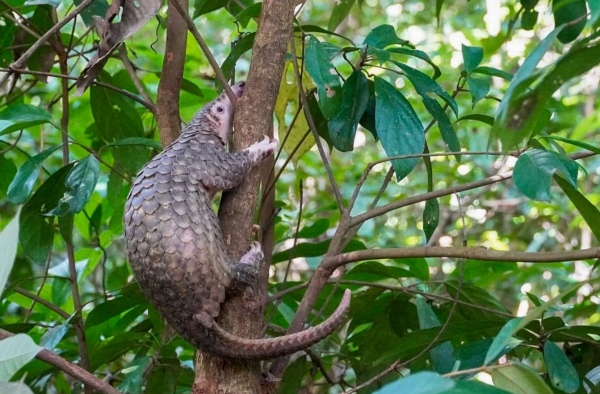
Quảng Ngãi: Four Rare Animal Species Returned to Forest - Ecological Conservation Technology at Chư Mom Ray National Park
In a significant effort to preserve biodiversity and leverage modern technology in forest management, local authorities in Quảng Ngãi province have successfully collaborated with relevant agencies to release four rare animal species, listed as endangered, back into their natural habitat. This event marks a crucial advancement in conservation efforts in the Central Highlands region.
Detailed Information About Released Species
On [date], local authorities in Sa Thầy commune and relevant agencies released four rare animal species back into their natural habitat at Chư Mom Ray National Park. The species included:
- Monitor Lizard: A large reptile species from the monitor lizard family, possessing significant ecological value.
- Pangolin: A nocturnal mammal species facing extinction due to illegal trafficking.
- Yellow Mountain Tortoise: A rare terrestrial tortoise species characterized by its distinctive yellow shell.
- Banded Mountain Tortoise: A tortoise species with a shell featuring distinctive banding patterns, classified as endangered.
Professional Rescue and Care Process
Before being released back into their natural habitat, these animal specimens underwent professional rescue and healthcare care. This process included:
- Comprehensive health examinations to ensure all specimens were healthy.
- Provision of species-appropriate nutritional diets.
- Observation of natural behaviors to assess adaptation capabilities.
- Use of GPS tracking technology (for suitable specimens) to monitor post-release activities.
Chư Mom Ray National Park - Ideal Environment for Reintegration
Chư Mom Ray National Park was selected as the release site due to its suitable natural environmental conditions, abundant food sources, and stable ecosystem. The area is also strictly managed with modern technology surveillance systems, enabling effective monitoring of the released specimens' adaptation.
| Information About Chư Mom Ray National Park | Details |
|---|---|
| Location | Sa Thầy District, Kon Tum Province |
| Area | 56,000 hectares |
| Biodiversity Level | High with many endemic plant and animal species |
| Surveillance System | Camera traps, GPS systems, drones |
Technology in Wildlife Conservation Efforts
The use of modern technology plays a crucial role in wildlife conservation in this area. Technologies being applied include:
- Camera trap systems to document wildlife activities.
- Global Positioning System (GPS) technology to track the movement of released specimens.
- Drone-based surveillance systems to access hard-to-reach areas.
- Digital biodiversity databases for monitoring and analyzing ecological changes.
Challenges in Conservation Work
Despite notable achievements, conservation efforts in the region still face numerous challenges:
- Poaching and illegal wildlife trafficking.
- Habitat degradation due to illegal resource extraction activities.
- Invasion of alien species.
- Limited financial and human resources for conservation work.
Technological Solutions to Address Challenges
To address these challenges, authorities are implementing various technological solutions:
| Challenge | Technological Solution |
|---|---|
| Illegal poaching | 24/7 camera surveillance systems, AI object recognition |
| Habitat degradation | Satellite monitoring, IoT sensors for soil quality assessment |
| Alien species invasion | Environmental DNA analysis, wide-area drone scanning |
| Limited resources | Mobile reporting applications, community management platforms |
Significance of Releasing Rare Animal Species
The release of rare animal species not only helps restore population numbers but also contributes to:
- Maintaining ecosystem balance.
- Preserving genetic diversity within populations.
- Raising community awareness about biodiversity conservation.
- Promoting sustainable ecotourism development.
Sustainable Development and Green Economy
Wildlife conservation efforts at Chư Mom Ray National Park are moving toward a sustainable development model that combines ecological conservation with green economic growth. Projects being implemented include:
- Development of responsible ecotourism.
- Livelihood transformation for local communities.
- Building value chains from forest products.
- Training communities on technology application in conservation.
Conclusion
The release of four rare animal species back into the forest in Quảng Ngãi represents not only a success in rescue operations but also demonstrates the effectiveness of applying modern technology in biodiversity management and conservation. With the collaboration between authorities, relevant agencies, and local communities, Chư Mom Ray National Park is gradually becoming a model for sustainable ecological conservation in the Central Highlands region.
The future of conservation efforts in the area will continue to be strengthened through the application of advanced technologies and enhanced community awareness, moving toward a sustainable development goal that harmonizes between humans and nature.