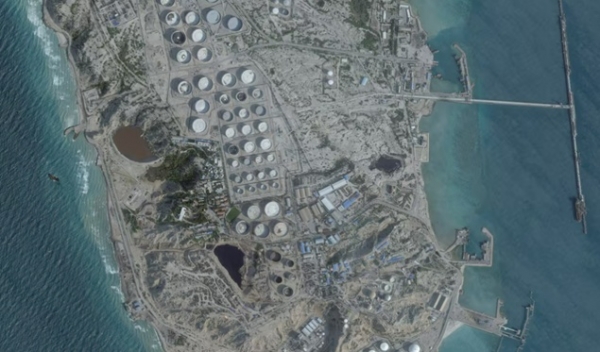
US Temporarily Permits Iran to Sell Oil for 60 Days
In a surprising move, on June 22, the United States government announced it would allow Iran to sell oil over the next 60 days. This decision is viewed as a relaxation of decades-long economic sanctions against Tehran, as Washington actively pursues a final peace agreement with Iran.
Historical Context of US-Iran Relations
Relations between the United States and Iran have experienced numerous ups and downs since the 1979 Islamic Revolution. US sanctions, particularly oil sanctions, have been imposed to pressure Iran's nuclear program and regional activities.
However, since President Joe Biden took office, the US administration has expressed willingness to return to the 2015 nuclear agreement (JCPOA), which the previous administration withdrew from in 2018. This agreement, officially known as the Joint Comprehensive Plan of Action, restricted Iran's nuclear program in exchange for the removal of economic sanctions.
Details of the New US Decision
According to the announcement from the US Treasury Department, this special license will allow certain countries to purchase oil from Iran within a 60-day period. This decision is seen as a goodwill gesture to facilitate ongoing diplomatic negotiations.
Sources indicate that the license will be granted to several Asian countries that had previously imported oil from Iran before the US withdrawal from the 2015 nuclear agreement. The specific volume of oil permitted for sale has not been disclosed in detail.
Reaction from Tehran
Iran welcomed the move but maintained a cautious stance. The Iranian Foreign Ministry stated that it appreciates US flexibility but emphasized that more substantial measures are needed to fully restore the 2015 nuclear agreement.
"We consider every step toward the full implementation of nuclear agreement commitments," Iranian Foreign Ministry spokesperson Nasser Kanaani said during a press conference.
International Community Response
The United Nations and European powers have expressed support for the US move, viewing it as a significant step toward reducing regional tensions.
However, Israel – the United States' closest ally in the Middle East – expressed concerns. Israeli Prime Minister Naftali Bennett stated that the decision could provide Iran with financial resources to continue its nuclear and missile programs.
Economic and Geopolitical Impacts
The temporary permission for Iran to sell oil could have significant effects on the global energy market. Below is a summary of the key impacts:
| Sector | Short-term Impact | Long-term Impact |
|---|---|---|
| Oil Prices | Modest decrease due to increased supply | Dependent on negotiation outcomes |
| Iranian Economy | Increased export revenue | Recovery if agreement is finalized |
| Regional Security | Minimal significant change | Potential improvement if successful agreement |
According to energy market analyses, Iran's potential return to oil exports could increase global supply by approximately 1-2 million barrels per day, equivalent to 1-2% of total global supply. This could potentially reduce oil prices by about $5-10 per barrel in the short term.
Impact on Oil-Importing Countries
Several Asian countries such as China, India, and South Korea – which had previously imported significant quantities of oil from Iran before 2018 – could benefit from this decision.
| Country | Iran Oil Imports (pre-2018) | Potential Import Volume |
|---|---|---|
| China | 650,000 barrels/day | 300,000-500,000 barrels/day |
| India | 550,000 barrels/day | 200,000-400,000 barrels/day |
| South Korea | 300,000 barrels/day | 100,000-200,000 barrels/day |
Future Outlook
The US decision is seen as part of the Biden administration's diplomatic strategy to reduce tensions in the Middle East and focus on other global challenges such as China and Russia.
However, the prospects for fully restoring the nuclear agreement remain uncertain. Key issues that need to be resolved include:
- US congressional approval of any agreement
- Iran's stance on additional requirements
- Reactions from Israel and regional allies
- The impact of the Russia-Ukraine conflict on negotiations
A political analyst at the Middle East Institute for International Studies noted: "The US decision is a necessary but insufficient step. To achieve a sustainable agreement, both sides need to demonstrate greater flexibility and address each other's core concerns."
Nevertheless, this move is still viewed as a positive signal that diplomacy could change the course of US-Iran relations after years of tension. The permission to sell oil for the next 60 days creates space for negotiations to continue without adding further economic pressure on ordinary Iranian citizens.