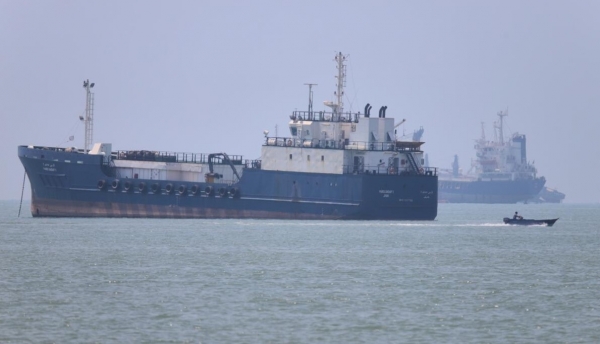
Europe Still Faces Natural Gas Challenges Despite Strait of Hormuz Reopening
In recent developments, the European natural gas market has recorded significant price decreases following announcements regarding agreements to reopen the Strait of Hormuz. This development has been welcomed as a positive signal for the European economy, which has been grappling with persistent tensions related to natural gas supply stability and pricing. However, market analysts caution that while this represents a step in the right direction, fundamental challenges remain that will continue to impact Europe's energy landscape.
Market Response to Hormuz Reopening Agreement
The announcement regarding the reopening of the strategically vital Strait of Hormuz has immediately influenced European natural gas prices, with benchmarks showing notable declines. This price movement reflects market optimism regarding potential improvements in supply stability. However, industry experts emphasize that this price adjustment is not immediate but rather a gradual process as the market digests and adapts to the new geopolitical reality.
The Strait of Hormuz serves as a critical maritime chokepoint through which approximately 20-30% of the world's liquefied natural gas (LNG) and 40% of globally traded crude oil passes. Its previous disruption had created significant uncertainty in global energy markets, particularly affecting European nations heavily dependent on imported energy resources.
Detailed Market Analysis
Current market data indicates that European natural gas prices have indeed decreased from their recent peaks but have yet to return to pre-conflict levels. The TTF (Title Transfer Facility) benchmark, which serves as the primary pricing reference for European natural gas, has shown moderate stabilization but remains vulnerable to various market forces.
| Market Indicator | Current Status | Comparison to Pre-Conflict Levels |
|---|---|---|
| TTF Natural Gas Price | Decreasing but volatile | Approximately 30-40% above pre-2022 levels |
| Storage Levels | Adequate but dependent on imports | Within seasonal norms |
| Global LNG Demand | Steady with regional variations | Continued growth in Asian markets |
Several factors continue to influence the European natural gas market despite the positive Hormuz development:
- Geopolitical Tensions: Ongoing conflicts and diplomatic disputes in Eastern Europe and the Middle East continue to create uncertainty in energy markets.
- Global Demand Competition: Asian economies, particularly China and India, remain significant consumers of LNG, creating competitive pressure on global supplies.
- Infrastructure Limitations: European regasification facilities and pipeline infrastructure remain constrained, limiting the ability to rapidly increase imports.
- Market Speculation: Financial markets continue to play a role in price formation, with futures markets reflecting both immediate concerns and longer-term expectations.
Persistent Challenges in European Energy Security
Despite the positive developments regarding the Strait of Hormuz, Europe continues to face substantial challenges in ensuring stable and affordable natural gas supplies. These challenges span multiple dimensions and require careful consideration by policymakers and market participants.
| Challenge Category | Specific Issues | Impact on European Markets |
|---|---|---|
| Geopolitical Factors | Regional conflicts, sanctions regimes, diplomatic relations with supplier nations | Price volatility, supply uncertainty, market manipulation risks |
| Climatological Considerations | Seasonal demand variations, extreme weather events, renewable intermittency | Price spikes during peak demand periods, storage management challenges |
| Energy Transition Policies | Renewable energy deployment rates, nuclear phase-out policies, carbon pricing mechanisms | Long-term structural changes in demand, stranded asset risks |
| Infrastructure Constraints | Limited regasification capacity, pipeline dependencies, cross-border interconnection limitations | Bottlenecks in supply distribution, regional price disparities |
Geopolitical Implications and Energy Diversification
The reopening of the Strait of Hormuz must be viewed within the broader context of Europe's ongoing efforts to diversify its energy sources and suppliers. Following the reduction of Russian gas flows in response to geopolitical tensions, European nations have accelerated their search for alternative supply routes and sources.
This diversification strategy has multiple components:
- Increased imports of LNG from the United States, Qatar, and other global suppliers
- Strengthening relationships with North African gas producers including Algeria, Egypt, and Nigeria
- Development of new pipeline connections with neighboring regions such as the Mediterranean and Caspian areas
- Enhancement of interconnection capacity between European countries to facilitate gas redistribution
However, these diversification efforts come with their own challenges, including higher transportation costs, longer supply chains, and increased competition with other global consumers, particularly in Asia.
Economic Impact on European Industries and Consumers
The persistent volatility in natural gas prices continues to have significant economic implications across European sectors and households. Energy-intensive industries such as chemicals, steel, glass, and ceramics have been particularly affected, with some production facilities being forced to reduce output or relocate to regions with more favorable energy costs.
For European consumers, elevated energy prices have contributed to cost-of-living pressures, with household energy expenditures remaining significantly higher than pre-2022 levels. This has prompted policy interventions including energy subsidies, price caps, and targeted assistance for vulnerable populations.
The business sector has responded through various strategies:
- Accelerated adoption of energy efficiency measures
- Increased investment in on-site renewable generation
- Relocation of energy-intensive processes to regions with lower energy costs
- Diversification of energy sources and suppliers
- Implementation of hedging strategies to manage price volatility
Future Outlook and Expert Predictions
Industry analysts and energy economists offer varied perspectives on the future trajectory of European natural gas markets. While the reopening of the Strait of Hormuz provides some relief, most experts agree that the era of cheap and abundant natural gas in Europe has likely ended.
Key predictions include:
- Continued price volatility with potential for occasional spikes during periods of high demand or supply disruptions
- Gradual decoupling of European gas prices from oil-indexed pricing mechanisms
- Increased role of spot markets and shorter-term contracts in European gas trading
- Accelerated deployment of renewable energy sources and energy storage solutions
- Enhanced regional cooperation on energy security and infrastructure development
The transition to a more diversified and resilient European energy system is expected to be a multi-year process, requiring substantial investment in infrastructure, technology, and market design. The current situation, while challenging, may ultimately serve as a catalyst for more rapid and decisive action toward Europe's energy transition goals.
Conclusion
While the reopening of the Strait of Hormuz represents a positive development for European natural gas markets, it should not be viewed as a complete solution to the region's energy challenges. The fundamental issues of supply security, price volatility, and the transition to a sustainable energy system remain significant concerns.
Market participants and policymakers must maintain a long-term perspective, recognizing that energy security in Europe will depend on continued diversification of supply sources, investment in infrastructure, acceleration of renewable energy deployment, and development of more resilient market mechanisms.
For European consumers and businesses, the message is clear: while some immediate relief may be forthcoming from improved supply conditions, the era of historically low natural gas prices has likely concluded. Adaptation, efficiency improvements, and strategic planning will be essential in navigating the evolving energy landscape of the coming years.