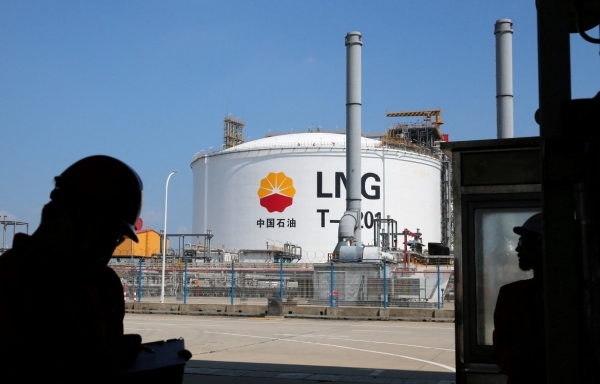
China's Oil Imports Face Long-Term Decline Amid Global Shifts
In the prolonged geopolitical tensions between the United States and Iran, analysts are increasingly pessimistic about the prospects for China's oil imports to recover to pre-conflict levels. This anticipated decline reflects a profound transformation in China's energy structure, driven by multiple factors beyond international conflicts.
Geopolitical Context and Market Realities
The ongoing friction between Washington and Tehran has created persistent uncertainties in global oil markets. For China, the world's largest oil importer, these geopolitical challenges have exposed vulnerabilities in traditional energy supply chains. Rather than a temporary disruption, analysts now view the current situation as a catalyst for permanent structural changes in China's energy landscape.
"The era of unconstrained oil import growth in China appears to be ending," noted Zhang Wei, senior energy analyst at the China Energy Research Institute. "Multiple converging factors suggest that China's oil demand has peaked and will likely continue on a downward trajectory."
Drivers of China's Energy Transition
The shift in China's energy consumption patterns stems from multiple interconnected factors that extend beyond geopolitical considerations. These fundamental changes are reshaping the country's relationship with fossil fuels:
| Factor | Description | Impact on Oil Demand |
|---|---|---|
| Environmental Policy | Stringent regulations targeting pollution reduction and carbon neutrality commitments | Direct reduction in fossil fuel consumption |
| Technological Advancement | Rapid development in electrification, battery technology, and renewable energy | Creation of viable alternatives to petroleum products |
| Consumer Behavior | Shifting preferences toward environmentally friendly transportation options | Reduced demand for gasoline and diesel |
Environmental Policy Initiatives
The Chinese government has implemented increasingly ambitious environmental policies aimed at reducing pollution and addressing climate change. These include:
- National Carbon Peak Strategy: China has committed to reaching peak carbon emissions before 2030 and achieving carbon neutrality by 2060.
- Air Quality Improvement Plans: Stringent regulations in major industrial regions have forced reductions in fossil fuel consumption.
- New Energy Vehicle Mandates: Requirements for manufacturers to produce increasing percentages of electric and hybrid vehicles.
Technological Innovation in Energy
China's rapid technological advancement in energy sectors has created viable alternatives to traditional petroleum products. Key developments include:
- Electric Vehicle Revolution: China leads the global market in electric vehicle production and adoption, with domestic manufacturers like BYD and NIO gaining international prominence.
- Renewable Energy Expansion: Massive investments in solar and wind capacity have reduced China's dependence on fossil fuels for electricity generation.
- Energy Storage Breakthroughs: Advances in battery technology have improved the viability of renewable energy solutions.
Changing Consumer Preferences
Chinese consumers are increasingly embracing environmentally friendly transportation options, driven by:
- Environmental Awareness: Growing public concern about air quality and climate change.
- Economic Incentives: Government subsidies and favorable policies making electric vehicles more affordable.
- Urban Mobility Solutions: Expansion of public transportation networks and shared mobility services reducing private vehicle ownership.
Quantitative Projections for China's Oil Imports
Industry experts project a continued decline in China's oil imports over the coming years. The following table presents detailed forecasts for China's crude oil import volumes from 2023 to 2025:
| Year | Daily Import Volume (Million Barrels) | Year-over-Year Change (%) | Primary Contributing Factors |
|---|---|---|---|
| 2023 | 10.5 | -5.0 | Geopolitical tensions, EV adoption acceleration |
| 2024 | 10.0 | -4.8 | Renewable capacity expansion, economic slowdown |
| 2025 | 9.5 | -5.0 | Carbon policy implementation, technological disruption |
These projections represent a significant departure from pre-2020 trends, when China's oil imports were growing at approximately 4-5% annually. The anticipated decline would mark the first sustained reduction in China's oil imports in modern history.
Global Economic Implications
The reduction in China's oil imports carries profound implications for the global economy and energy markets:
| Impact Area | Potential Consequences | Time Horizon |
|---|---|---|
| Global Oil Prices | Downward pressure on crude prices, particularly for heavy sour grades favored by China | Medium to Long Term |
| Investment Strategies | Shift in capital from traditional oil projects to renewable energy and electrification | Long Term |
| Geopolitical Dynamics | Reduced leverage for oil-exporting nations, potential realignment of energy alliances | Medium to Long Term |
Market Adjustments and Industry Response
The global oil industry is already adapting to China's changing demand profile:
- Refinery Restructuring: Chinese refineries are being reconfigured to process lighter, more specialized crude grades as demand for traditional transportation fuels declines.
- Product Slate Diversification: Increased focus on producing petrochemical feedstocks rather than transportation fuels.
- Geographic Market Shifts: Oil exporters are seeking alternative markets in South and Southeast Asia to offset reduced Chinese demand.
Accelerated Energy Transition
China's reduced oil dependency is expected to accelerate global energy transition efforts:
- Renewable Energy Investment: The declining economics of fossil fuels will make renewable energy projects more competitive.
- Technological Innovation: Reduced investment in traditional oil infrastructure will free capital for clean energy technologies.
- Policy Momentum: China's success in reducing oil dependence will encourage other nations to pursue similar strategies.
Future Outlook and Strategic Considerations
As China navigates this energy transition, several strategic considerations will shape the country's energy policy:
- Energy Security: Reducing dependence on imported oil while maintaining economic growth and industrial competitiveness.
- Economic Competitiveness: Leveraging China's technological leadership in renewable energy and electric vehicles to create new economic advantages.
- Environmental Commitments: Balancing economic development with increasingly ambitious climate targets.
"China's energy transition represents one of the most significant shifts in global energy markets in the past half-century," observed Li Ming, director of the Global Energy Studies Center. "The country's reduced oil imports will have ripple effects throughout the global economy, potentially reshaping international relations and industrial structures."
Conclusion
China's oil imports appear unlikely to recover to pre-conflict levels between the United States and Iran, marking a potential turning point in global energy markets. The confluence of environmental policy, technological advancement, and changing consumer preferences has created structural changes that will permanently reduce China's dependence on petroleum products.
This transition presents both challenges and opportunities for China and the global economy. While traditional oil-exporting nations will face significant adjustments, the reduced demand for fossil fuels may accelerate the global energy transition, potentially mitigating some of the worst impacts of climate change.
As China continues to implement its environmental and energy policies, the world will be watching closely to understand the implications of this historic shift in the world's largest energy consumer. The coming years will likely see further acceleration of China's energy transition, with profound implications for global markets, geopolitics, and the environment.