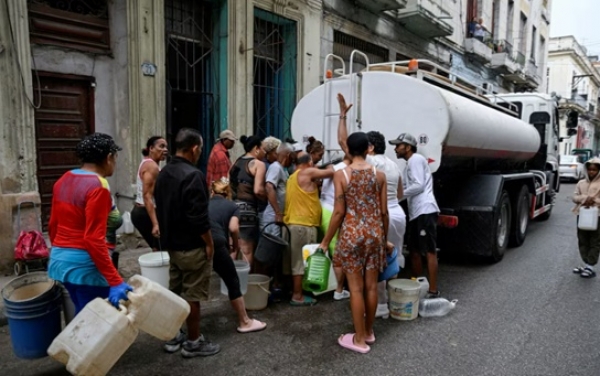
Cuba Implements Emergency Response Plan Amid US Oil Embargo
Amid escalating tensions with the United States and increasingly stringent oil sanctions, Cuba has officially enacted an emergency contingency plan aimed at fuel conservation. This comprehensive strategy includes a series of impactful measures affecting critical sectors of the economy, from public transportation to education and tourism.
Background: The US-Cuba Tensions
The relationship between Cuba and the United States has experienced historical fluctuations. In recent years, the US administration under President Donald Trump tightened sanctions against Cuba, including restrictions on oil exports to the Caribbean nation. While President Joe Biden's administration raised hopes for policy relaxation, these sanctions continue to exert significant pressure on Cuba's economy.
Cuba heavily relies on imported fuel, particularly from countries like Venezuela, which also faces US sanctions. The combination of these embargoes and the COVID-19 pandemic has plunged Cuba into its most severe energy-economic crisis in decades.
Detailed Emergency Response Plan
The Cuban government has unveiled a comprehensive plan to address the fuel shortage, encompassing conservation measures and energy usage restructuring. This large-scale implementation impacts multiple aspects of social life.
Reduced Public Transportation Operations
One of the most notable measures is the significant reduction in bus operations nationwide. The already aging and frequently malfunctioning bus system must now operate at considerably reduced capacity, causing daily commuting difficulties for citizens.
Additionally, Cuba is considering implementing carpooling systems as an alternative solution. The government encourages citizens to use personal vehicles or shared transportation methods to reduce fuel consumption.
Educational Sector Limitations
Schools and universities across Cuba are facing severe operational restrictions under the new plan:
- Reduced weekly in-person school days
- Expanded implementation of online and remote learning models
- Limits on extracurricular activities and sporting events at educational institutions
- Temporary closure of certain educational facilities to save energy for operations
While these measures aim to conserve fuel, they also present new challenges for Cuba's education system, particularly in ensuring teaching quality and maintaining connections with students.
Tourism Service Cuts
The tourism industry—one of Cuba's most important foreign exchange earners—is also severely impacted by the fuel conservation plan. Implemented measures include:
- Reduction in international flights to Cuba
- Limited operations of resorts and hotels
- Decreased frequency of tour operations and recreational activities
- Temporary closure of several popular tourist destinations
Cuban authorities indicate these measures are necessary to ensure energy supply for essential services amid current circumstances. However, the tourism industry, already struggling due to the COVID-19 pandemic, may face further complications with these new restrictions.
Economic and Social Impacts
Cuba's emergency response plan is generating profound effects on the economy and social life. The following table summarizes the primary impacts:
| Sector | Short-term Impact | Long-term Impact |
|---|---|---|
| Public Transportation | Citizen mobility difficulties, increased waiting times | Need for investment in more efficient transportation vehicles |
| Education | Digital transformation in education, development of online learning systems | |
| Tourism | Tourism diversification, development of sustainable tourism | |
| Energy | Development of renewable energy, energy independence |
International Reactions
Cuba's plan has elicited varied international responses. Several countries and international organizations have condemned US sanctions as the primary cause of Cuba's crisis. Others argue that Cuba needs deeper economic structural reforms to address fundamental issues.
The United Nations has repeatedly called for the lifting of US sanctions against Cuba, particularly amid the COVID-19 pandemic. However, these sanctions remain in place, continuing to pressure Cuba's economy.
Cuba's Future Amid Energy Challenges
In the immediate term, Cuba must find ways to navigate the current energy crisis. This may include:
- Strengthening cooperation with allied nations to find alternative fuel sources
- Accelerating renewable energy development (solar, wind)
- Modernizing the electricity system and energy-consuming facilities
- Diversifying the economy to reduce dependence on fuel imports
In the long term, the energy crisis could potentially serve as a catalyst for necessary economic reforms and a transition toward a more sustainable development model. However, this path will be challenging and require strong political will and international support.
Conclusion
Cuba's emergency response plan to the US oil embargo reflects the difficult circumstances facing this Caribbean nation. The cutbacks in transportation, education, and tourism demonstrate the severity of the energy crisis.
Cuba's future depends on multiple factors, including the adaptability of its economy, domestic political stability, and international relations—particularly with the United States. In this context, finding long-term solutions to the energy issue is not only an urgent requirement but also an opportunity for Cuba to restructure its economy toward greater sustainability.
The Cuban people are making significant sacrifices in the face of the oil embargo. However, in these challenging circumstances, the Cuban spirit of creativity and adaptability could become a driving force to overcome challenges and build a better future.
Keywords: Cuba, United States, Oil Embargo, Energy Economy, Tourism, Public Transportation, Education