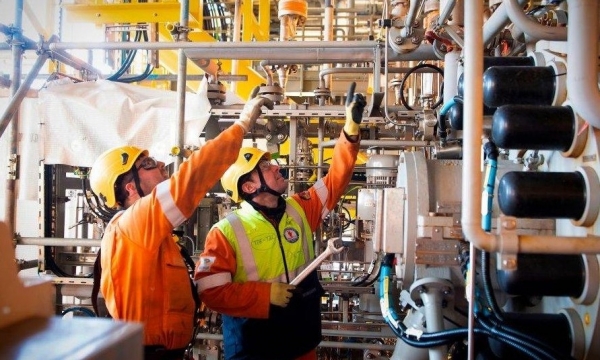
Energy Transition: Charting the Path for Scotland's Oil and Gas Workforce
In the global push toward clean energy transition, Scotland has announced a comprehensive support program to help over 1,000 oil and gas workers transition into clean energy sectors and other growing industries. This initiative represents a significant stride in Scotland's energy transformation strategy, aiming to reduce dependence on fossil fuels while developing sustainable industrial sectors.
The Context of Scotland's Oil and Gas Industry
Scotland has historically been one of the world's prominent oil and gas centers, with offshore activities in the North Sea generating tens of thousands of jobs over several decades. However, facing global pressure to reduce greenhouse gas emissions and the commitment to achieve carbon neutrality by 2045, the traditional oil and gas sector now confronts substantial challenges.
According to recent statistics, Scotland's oil and gas industry generated approximately 100,000 direct and indirect employment opportunities before the COVID-19 pandemic. In recent years, however, employment figures have declined significantly due to falling oil prices, depletion of existing oil fields, and the global trend toward renewable energy adoption.
Details of the Transition Support Program
The Scottish government has unveiled a multi-million pound support package to assist over 1,000 oil and gas workers in transitioning to new career paths. The program encompasses several key components:
- Retraining and upskilling for oil and gas workers
- Financial support for career change courses
- Personalized career counseling
- Connections with employers in the clean energy sector
- Support for entrepreneurship and innovation
The program is being implemented through collaboration between the Scottish government, universities, vocational training agencies, and companies within the clean energy sector. The objective is to create a seamless transition pathway for workers, ensuring they acquire the necessary skills and employment opportunities in emerging industries.
Clean Energy Sectors and Growth Industries
Scotland is making substantial investments in various clean energy sectors, creating numerous job opportunities for transitioning oil and gas workers:
| Sector | Job Opportunities | Required Skills |
|---|---|---|
| Offshore Wind Energy | Engineers, technicians, project managers | Mechanical engineering, electrical engineering, project management |
| Tidal Energy | Tidal power engineers, scientists | Hydraulic engineering, materials science |
| Solar Energy | Installation engineers, energy analysts | Electronics, semiconductor materials |
| Energy Storage | Chemical engineers, battery developers | Physical chemistry, materials technology |
| Green Hydrogen | Chemical engineers, technology developers | Chemistry, petroleum engineering |
Beyond clean energy sectors, Scotland is also developing green technology industries, circular economy initiatives, and sustainable development programs, creating diverse employment opportunities for transitioning workers.
Challenges and Opportunities
While the support program offers considerable promise, the transition process faces numerous challenges:
- Skill gaps: Some skills in the oil and gas sector may not directly transfer to clean energy industries
- Workplace culture changes: Clean energy sectors may have different work cultures compared to traditional oil and gas
- Geographical considerations: Many clean energy job opportunities are concentrated in different areas than traditional oil and gas operations
- Training time: Acquiring new skills may require significant time and investment
However, these challenges are accompanied by substantial opportunities:
- Building careers in sectors with long-term growth potential
- Directly contributing to climate change mitigation efforts
- Developing skills aligned with global trends
- Reducing dependence on non-renewable resources
Reactions from Stakeholders
The transition support program has received positive feedback from various stakeholders:
Scotland's Energy Minister stated: "We are committed to supporting oil and gas workers through this transition. This is not merely a training program but a long-term strategy to build a clean, sustainable energy economy that creates additional high-quality employment opportunities."
General Secretary of the Unite Union welcomed the government's efforts while noting: "We need to ensure this program is sufficiently broad and deep to support all workers who need to transition. At the same time, oil and gas companies must also contribute responsibly to this process."
CEO of a Major Renewable Energy Company shared: "We enthusiastically welcome this initiative. Oil and gas workers possess valuable skills that can be applied in the clean energy sector. We are ready to collaborate to create employment opportunities for them."
Conclusion and Future Outlook
The support program for over 1,000 oil and gas workers in Scotland marks a significant step in the nation's energy transition strategy. Despite ongoing challenges, this initiative serves as a model that other countries facing similar circumstances can learn from.
The future of the oil and gas industry is not about complete disappearance but transformation to align with new contexts. Oil and gas workers have the opportunity to become pioneers in the clean energy sector, contributing to both economic development and environmental protection.
Scotland is demonstrating that energy transition is not merely a challenge but an opportunity to build a more sustainable economy, create additional high-quality employment, and contribute to the global fight against climate change.