Smart Rig Revolution: PV Drilling's Digital Transformation Journey
The oil and gas industry stands at a pivotal moment of technological evolution, with automation and digitalization reshaping traditional drilling operations. Vietnam's leading drilling contractor, PV Drilling, is spearheading this transformation through its ambitious Smart Rig initiative, powered by the innovative NOVOS drilling automation platform. This comprehensive digital strategy aims not only to enhance drilling efficiency but to fundamentally reimagine how offshore drilling operations are conducted in the 21st century.
The Imperative for Smart Rig Technology in Modern Drilling Operations
The global oil and gas industry faces unprecedented challenges in the current economic and environmental landscape. As conventional reserves become increasingly difficult to access, operators must navigate deeper waters, more complex geological formations, and stricter regulatory requirements. Traditional drilling methods, reliant heavily on manual operations and reactive decision-making, struggle to meet these demands efficiently.
Smart Rig technology represents more than just incremental improvements; it embodies a paradigm shift toward data-driven, predictive, and autonomous drilling operations. The integration of Internet of Things (IoT) sensors, artificial intelligence (AI) algorithms, and real-time analytics transforms drilling rigs from mechanical assets into intelligent systems capable of self-monitoring, optimization, and autonomous operation.
The benefits of this transformation are multifaceted:
- Enhanced Safety: Reduced human exposure to hazardous environments through automation of high-risk tasks
- Operational Efficiency: Optimized drilling parameters minimizing non-productive time (NPT)
- Cost Reduction: Lower operational expenses through predictive maintenance and resource optimization
- Environmental Protection: Reduced environmental footprint through precise operations and emissions control
- Resource Optimization: Better utilization of equipment and personnel assets
NOVOS: The Cornerstone of PV Drilling's Digital Strategy
Central to PV Drilling's Smart Rig initiative is the implementation of the NOVOS (Novel Operations) drilling automation platform developed by National Oilwell Varco (NOV). This comprehensive digital solution represents a significant advancement in drilling automation technology, offering unprecedented capabilities in data integration, analysis, and automated control.
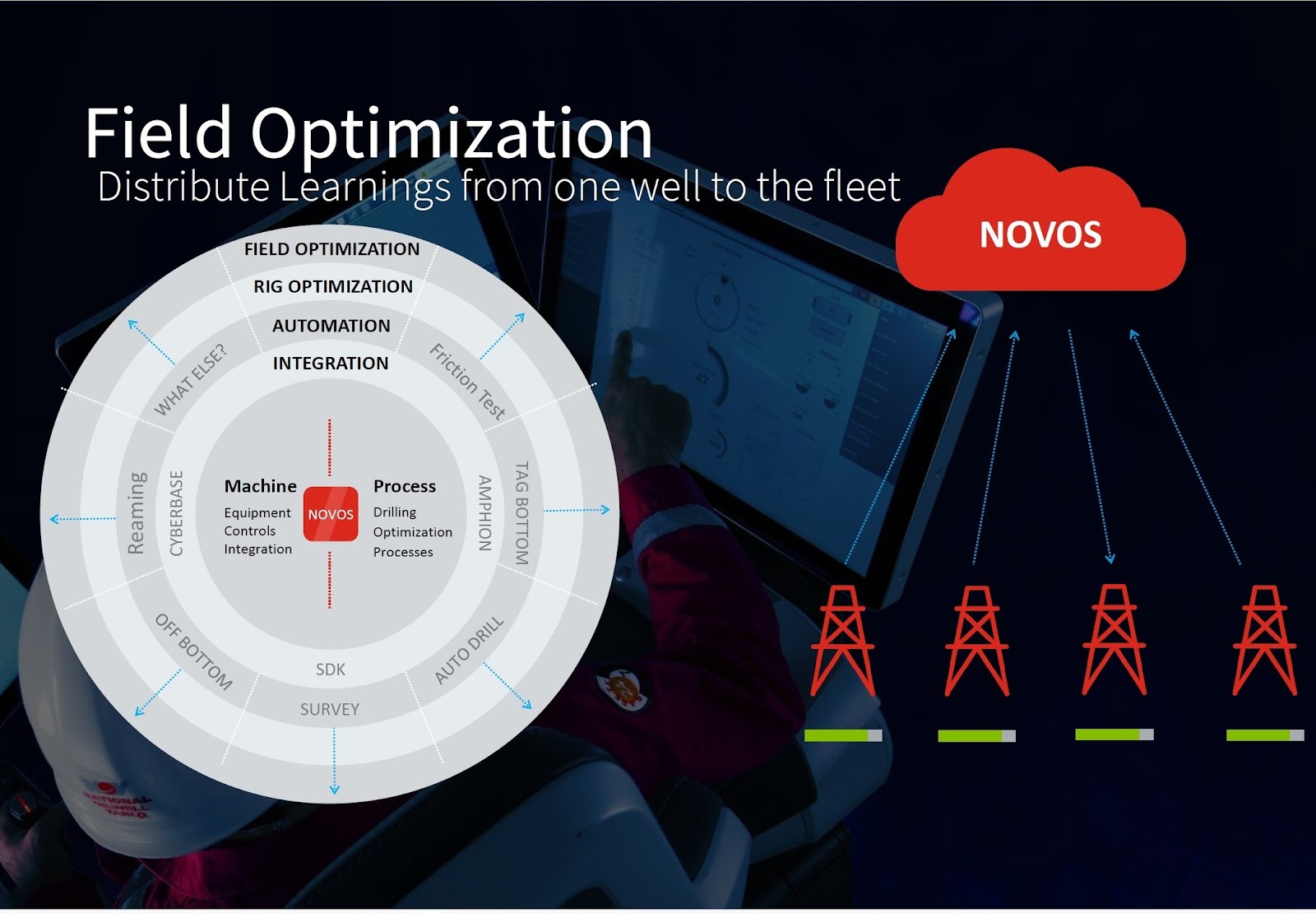
NOVOS functions as a central nervous system for drilling operations, connecting disparate subsystems and creating a unified digital environment where information flows seamlessly between surface and downhole equipment. The platform's architecture is built on several key components:
| Component | Function | Technical Specifications |
|---|---|---|
| Surface Data Acquisition | Real-time monitoring of surface parameters | High-frequency sensors (100Hz+) for weight-on-bit, torque, pressure measurements |
| Downhole Data Integration | Processing and visualization of downhole measurements | Support for MWD/LWD tools with advanced telemetry systems |
| Automated Control System | Closed-loop control of drilling parameters | |
| Analytics Engine | Predictive analytics and pattern recognition | Cloud-based processing with edge computing capabilities |
The platform's most transformative features include:
Real-Time Monitoring and Visualization
NOVOS provides a comprehensive dashboard that displays critical drilling parameters in real-time, enabling operators to make informed decisions based on accurate, up-to-the-minute information. The visualization system employs advanced 3D modeling techniques to represent drilling conditions graphically, allowing for intuitive understanding of complex downhole scenarios.
Process Optimization Algorithms
At the heart of NOVOS lies sophisticated optimization algorithms that continuously analyze drilling data to identify the most efficient operating parameters. These algorithms consider multiple variables simultaneously—including formation characteristics, equipment capabilities, and operational constraints—to recommend optimal drilling strategies that balance speed with safety.
Automated Drilling Control
Perhaps the most revolutionary aspect of NOVOS is its capability to implement closed-loop drilling control. The system can automatically adjust drilling parameters in real-time based on downhole conditions, maintaining optimal drilling efficiency while preventing dangerous situations like stick-slip vibrations or excessive torque on the drill string.
Advanced Analytics and Machine Learning
NOVOS leverages machine learning algorithms to identify patterns in drilling data that might be imperceptible to human operators. These systems continuously improve their predictive capabilities as they process more data, enabling increasingly accurate forecasts of drilling performance, potential hazards, and equipment maintenance needs.
PV Drilling's Implementation Roadmap: From Concept to Reality
PV Drilling has developed a systematic, phased approach to implementing Smart Rig technology across its fleet. This carefully structured methodology ensures that digital transformation occurs in a controlled manner, with proper validation at each stage before full-scale deployment.
| Phase | Timeline | Key Activities | Expected Outcomes |
|---|---|---|---|
| Assessment & Planning | Q1-Q2 2023 | Comprehensive digital transformation roadmap with clear milestones and KPIs | |
| Pilot Implementation | Q3-Q4 2023 | Validated implementation approach with documented best practices | |
| Optimization & Scaling | Q1-Q2 2024 | Enhanced drilling efficiency metrics with proven ROI | |
| Fleet-wide Deployment | Q3 2024 onwards | Industry-leading Smart Rig operations with autonomous capabilities |
Technical Implementation Challenges and Solutions
The transition to Smart Rig technology presents several technical challenges that PV Drilling must address to ensure successful implementation. These challenges span across infrastructure, integration, personnel, and operational domains.
Infrastructure Modernization
Legacy drilling rigs often lack the computational infrastructure required to support advanced digital systems. PV Drilling has undertaken a comprehensive program to upgrade rig electronics, including:
- Installation of high-speed industrial networks with redundant connectivity
- Deployment of edge computing devices for local data processing
- Implementation of robust cybersecurity measures to protect drilling operations
- Upgrading power systems to support increased electronic load
System Integration Complexity
Modern drilling rigs comprise numerous subsystems from different manufacturers, each with proprietary protocols and communication standards. PV Drilling has addressed this complexity through:
- Implementation of middleware solutions to facilitate data exchange between disparate systems
- Development of standardized data models ensuring consistent interpretation across platforms
- Creation of APIs for seamless integration with third-party applications
Workforce Transformation
The transition to Smart Rig operations requires significant changes in workforce skills and operational procedures. PV Drilling has implemented comprehensive training programs including:
- Technical training for rig crews on new digital systems
- Development of new operational procedures and protocols
- Creation of specialized roles for data analysts and digital operations specialists
- Implementation of change management strategies to ensure smooth transition
Expected Operational Impact and Performance Metrics
The implementation of NOVOS-powered Smart Rig technology is expected to deliver significant improvements across multiple operational metrics. PV Drilling has established key performance indicators (KPIs) to measure the success of this digital transformation initiative.
| Performance Category | Current Baseline | Target Improvement | Measurement Methodology |
|---|---|---|---|
| Drilling Efficiency | 65% Rate of Penetration (ROP) efficiency | 15-20% improvement | ROP optimization algorithms comparing actual vs. theoretical penetration rates |
| Non-Productive Time | 22% of total time | 30-40% reduction | Automated NPT detection and root cause analysis |
| Equipment Reliability | MTBF: 180 hours | 25% improvement | |
| Energy Efficiency | |||
| Safety Performance |
Industry Implications and Future Outlook
PV Drilling's Smart Rig initiative represents a significant advancement in drilling technology that may influence the broader oil and gas industry. As digital transformation accelerates across the sector, several emerging trends are likely to shape the future of drilling operations:
Autonomous Drilling Operations
The next phase of Smart Rig evolution will likely see increased levels of autonomy, with systems capable of making and executing complex drilling decisions with minimal human intervention. This progression toward fully autonomous drilling could fundamentally change workforce requirements and operational models in the industry.
Digital Twin Technology
The integration of digital twin technology—creating virtual replicas of physical drilling operations—will enable unprecedented capabilities in simulation, optimization, and remote operations. PV Drilling is already exploring how digital twins can be used to plan complex drilling operations and train personnel in risk-free virtual environments.
AI-Driven Decision Support
As machine learning algorithms process increasingly vast amounts of drilling data, their predictive capabilities will continue to improve. Future systems may not only recommend optimal drilling parameters but also anticipate complex geological conditions and equipment failures hours or days in advance.
Sustainability Integration
Smart Rig technology will play an increasingly important role in reducing the environmental footprint of drilling operations. Advanced optimization algorithms can minimize fuel consumption, reduce emissions, and prevent environmentally damaging incidents through precise control and predictive capabilities.
Conclusion: Charting the Future of Drilling Operations
PV Drilling's implementation of Smart Rig technology represents a bold strategic vision for the future of drilling operations. By embracing digital transformation through the NOVOS platform, the company is positioning itself at the forefront of industry innovation, creating a template for how traditional oilfield services can evolve in the digital age.
The benefits of this transformation extend beyond operational efficiency to fundamental changes in how drilling operations are conceived, planned, and executed. As PV Drilling continues to refine and expand its Smart Rig capabilities, the company is not only enhancing its competitive position but also contributing to the broader digital transformation of the oil and gas industry.
The journey toward fully autonomous drilling operations is still in its early stages, but the foundation being built by PV Drilling demonstrates the potential for technology to solve some of the industry's most persistent challenges. As digital capabilities continue to advance, we can expect to see increasingly sophisticated Smart Rig systems that push the boundaries of what's possible in drilling efficiency, safety, and environmental performance.
In an industry facing unprecedented economic and environmental pressures, PV Drilling's commitment to digital innovation represents not just a competitive advantage, but a necessary evolution in how offshore drilling operations will be conducted in the decades to come.