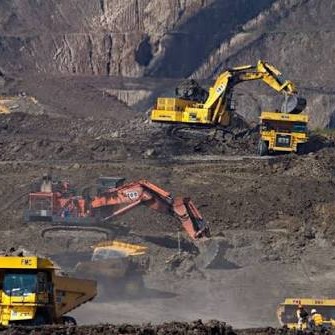
Nigeria Discovers World-Class Polymetallic Mine in Kaduna, Breakthrough in Mining Sector
Nigeria has announced the discovery of a world-class polymetallic mine in Kaduna State, with government experts confirming this as one of the most significant mineral discoveries in the country in recent years. This discovery marks a significant step in Nigeria's efforts to diversify its economy, which has been heavily dependent on oil.
Characteristics of the Polymetallic Mine in Gidan Waya
The discovered mine is located in the pegmatite area of Gidan Waya in Jema'a Local Government Area, containing important mineral resources including nickel, copper, gold, platinum group metals (PGMs), and rare earth elements. The discovery was made by Steron Mining and validated by the Nigerian Geological Survey Agency (NGSA).
Kaduna State is renowned for the high purity and grade of its platinum, lithium, and related rare earth elements. This discovery not only enhances Nigeria's position on the global mining map but also opens up new opportunities for domestic processing and manufacturing industries.
Significant Lithium Potential
In addition to the announcement about the Kaduna mine, Steron Mining recently discovered 3.3 million tons of lithium reserves in a project near Abuja, with total mineral resources estimated at 94.8 million tons. These figures indicate Nigeria's possession of enormous mineral potential, particularly for minerals crucial for the energy transition.
| Mineral Type | Reserve Amount (Tons) | Location |
|---|---|---|
| Lithium | 3.3 million | Near Abuja |
| Total mineral resources | 94.8 million | Steron Mining project |
Mining Sector Development Strategy
Crude oil remains Nigeria's primary source of foreign exchange, generating $20.22 billion ($14.66 billion) in export revenue in the first eight months of this year. However, the government is striving to build the mining sector into the second largest source of revenue.
Budget revenue from the mining sector reached ₦63.92 billion ($46.3 million) in the first 11 months of 2025, up from ₦38 billion in the entire year 2024. To promote this growth, Abuja has introduced a series of reforms aimed at curbing illegal mining, increasing government revenue, and developing over 40 commercially viable mineral resources, particularly lithium and other energy transition metals.
- Requiring mining permit applications to include plans for domestic processing and refining rather than exporting raw ore
- Revoking over 1,600 inactive or illegally held mining licenses
- The Mining Cadastre Office (MCO) has canceled more than 4,700 inactive, expired, or illegally taxed licenses
Chinese Investment in Nigeria's Mining Sector
Unsurprisingly, China is seeking to establish its presence in Nigeria's developing mining sector, particularly in midstream and downstream processing.
Jiuling Lithium Mining is supporting a $600 million processing facility located on the border between Kaduna and Niger states in northern Nigeria, while Canmax Technologies is developing a $200 million lithium processing plant in Nasarawa State.
Canmax Technologies, a major global supplier, oversees operations and integrates products from Nasarawa directly into international electric vehicle battery supply chains. The facility supports the Nigerian Federal Government's policy of preventing the export of unprocessed solid minerals, forcing mining companies to retain economic value domestically.
| Chinese Company | Project | Investment Value |
|---|---|---|
| Jiuling Lithium Mining | Lithium processing facility | $600 million |
| Canmax Technologies | Lithium processing plant in Nasarawa | $200 million |
Extensive Scope of Chinese Investment
China is Nigeria's largest import partner, dominating the supply of consumer goods, vehicles, electronics, and construction materials. Chinese companies have also established large assembly plants and production centers, including areas within the Ogun-Guangdong Free Trade Zone.
Companies like CNOOC hold significant stakes in profitable offshore oil permits. Additionally, Chinese companies are deeply involved in the energy sector, securing multi-billion dollar contracts for power plants and the national electricity grid.
Meanwhile, Chinese tech giants like Huawei and ZTE provide core hardware to major Nigerian telecom providers such as MTN, Airtel, and Glo, and have won extensive national contracts for government e-infrastructure and security.
Oil and Gas Sector's Continued Importance
That said, oil is likely to remain the main driver of Nigeria's economy for many years to come. Previously, we reported that Nigeria is seeking to increase crude oil production to capitalize on supply gaps caused by geopolitical tensions in the Middle East.
The Nigerian National Petroleum Company (NNPC) Limited has set a target to increase oil production by 100,000 barrels per day to 1.8 million barrels per day. Major energy companies are investing heavily in new drilling programs to expand capacity, with companies like Oando and Heirs Energies securing new funding for multi-well programs that will significantly increase both daily production and long-term reserves.
Dangote's 650,000 barrels per day refinery has fundamentally transformed Nigeria's oil and gas industry by ending the country's decades-long dependence on imported fuel, reducing pressure on the foreign exchange market, and positioning Nigeria as a net exporter of refined petroleum products in Africa and globally.
The facility meets daily domestic fuel demand with surplus production, protecting the country from unstable international oil supply chain disruptions. The facility has made Nigeria a major regional energy hub, rapidly transporting petroleum products to West, Central, and East Africa, as well as accessing international markets in the Americas.
The discovery of the polymetallic mine in Kaduna, combined with the mining sector development strategy and the continued prominence of the oil and gas sector, is reshaping Nigeria's economic landscape, opening up more diverse and sustainable development prospects for the future.