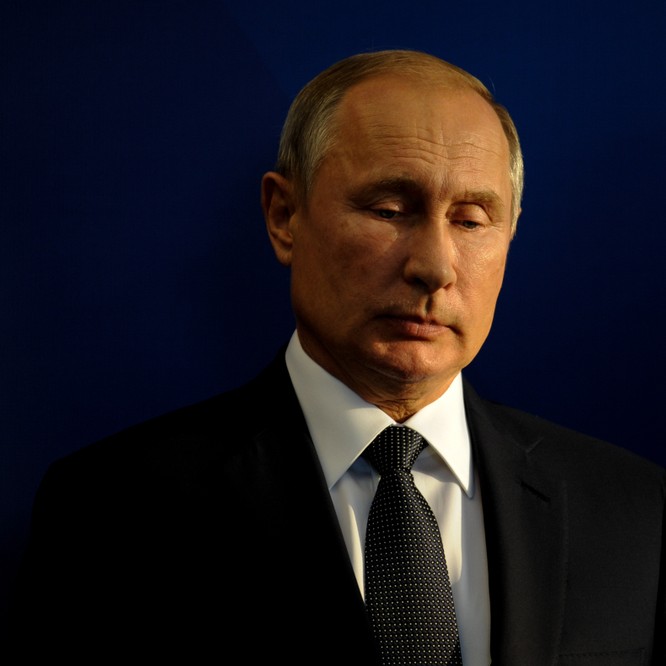
The Geopolitical Landscape in Russia: The Declining Influence of Vladimir Putin
Mounting evidence suggests that President Vladimir Putin's authority is rapidly diminishing, and his regional control mechanisms are beginning to fracture. Not only are Ukrainian drones pushing Russian forces into defensive positions in the prolonged conflict between the two nations, but these developments also threaten the very existence of the Collective Security Treaty Organization (CSTO), Russia's equivalent to NATO.
The unraveling of Putin's influence extends beyond military confrontations, revealing deeper structural weaknesses in the power dynamics that have long defined Russia's sphere of influence. This deterioration is becoming increasingly apparent across multiple fronts, from security alliances to economic partnerships.
Russia's Strategic Setbacks in Armenia
Simultaneously, the Kremlin's failure to prevent the re-election of Putin's political adversary, Prime Minister Nikol Pashinyan, in Armenia has exposed significant vulnerabilities in the Eurasian Economic Union (EAEU), a Russia-led organization intended as an alternative to the European Union.
In mid-June, Ukrainian President Volodymyr Zelenskyy issued an ultimatum to Belarus, described as a "captive ally" of the Kremlin, demanding immediate cessation of support for Russian military forces or face drone attacks. Lukashenko appears to have complied, at least partially, by declaring that Minsk does not wish to be drawn into the conflict.
Belarusian Response and Chinese Involvement
Lukashenko's actions quickly provoked Russian anger. In response to pressure from Moscow, Lukashenko made a swift visit to Beijing, where he received support for Belarus's sovereignty and territorial integrity from Chinese leader Xi Jinping. This move has highlighted the limitations of the Kremlin's influence over a nation that many consider a Russian vassal state.
The development suggests a significant shift in regional power dynamics, with Belarus actively seeking alternative international partnerships beyond Moscow's traditional sphere of influence. This realignment could have profound implications for Russia's strategic positioning in Eastern Europe and Central Asia.
Implications for the Collective Security Treaty Organization
Ukraine's strategy toward Belarus has had even broader implications for the CSTO, which contains a mutual defense clause similar to NATO's Article 5—essentially stating that an attack on one member is an attack on all. Consequently, any Ukrainian action against Belarus, a CSTO member, would theoretically require a collective response from other member states.
However, in recent days, other CSTO members Kazakhstan and Kyrgyzstan have explicitly indicated they have no intention of being drawn into the Russia-Ukraine conflict, suggesting that the CSTO has become little more than a paper alliance.
| Country | Position on CSTO Involvement |
|---|---|
| Kazakhstan | Opposes being drawn into Ukraine conflict |
| Kyrgyzstan | Requires parliamentary consensus before military action |
"Kazakhstan and Kyrgyzstan have expressed concerns about being drawn into the Ukrainian conflict; their representatives have stated that decisions regarding the activation of military support under the CSTO treaty would require parliamentary approval, which could face legislative opposition," reported the influential military blog Nezygar. A Kyrgyzstani Foreign Ministry official added, "Any aggressive action by Ukraine against Belarus must be officially recognized by a UN Security Council resolution; without such a decision, the CSTO has no grounds for response."
Challenges to the Eurasian Economic Union
The EAEU is facing a similar credibility crisis. Kazakhstan and Kyrgyzstan, both full members, have complained in recent months that the economic bloc functions inefficiently and primarily serves Russian economic interests. To illustrate the EAEU's inability to facilitate free trade, Kazakhstan is considering implementing a six-month wheat export ban, including to other EAEU members, to protect domestic farmers.
Pashinyan, who seeks to integrate Armenia into Western political and economic organizations, appears determined to push the EAEU to the brink of collapse. Armenia remains officially a member of the EAEU.
In an unsuccessful campaign to prevent Pashinyan's re-election in the June 7 parliamentary elections, Russia imposed import bans on numerous Armenian food products, claiming they failed to meet quality control standards. Pashinyam is now using Russia's ban to discredit the EAEU as an organization of little value. Armenian officials assert that the country is seeking new markets for its goods, and these potential partners have no concerns about quality control issues.
"The EAEU must clearly state whether it exists or not" as a viable trade organization, Pashinyan was quoted as saying by Russia's Nezavisimaya Gazeta.
Conclusion
As regional dynamics grow increasingly complex, the weakening of Russian power under Putin is becoming a prominent topic on international forums. This shift not only affects regional politics but may also reshape global alliances in the coming years. The apparent fracturing of CSTO and EAEU suggests a fundamental reconfiguration of post-Soviet institutional architecture, with potentially far-reaching consequences for security and economic cooperation across Eurasia.
The developments indicate that Putin's ability to project influence through multilateral organizations is significantly diminished, potentially creating opportunities for alternative power centers and new international partnerships to emerge in the region.