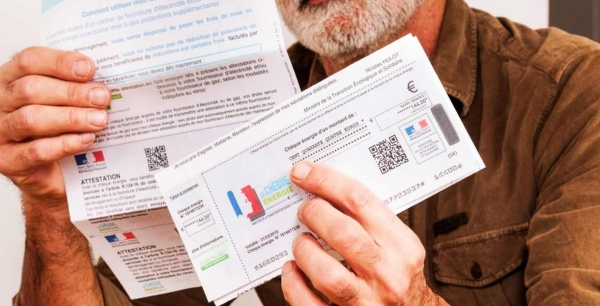
Understanding France's Energy Support Policy for Low-Income Households
In the context of rising global energy prices and their impact on daily life, many countries have implemented support policies for low-income populations. France, one of the leading nations in social policy implementation, introduced its energy support policy for low-income households in 2018. This policy replaced previous social energy tariff schemes and is expected to remain effective until 2026, providing support ranging from 48 to 277 euros. However, like any policy, the program has certain gaps, particularly regarding eligibility determination and support levels.
Background and Context of the Policy
France's energy support policy for low-income households was widely implemented in 2018, marking a significant shift from the previous policy of preferential social energy vouchers. This change occurred against a backdrop of rising energy prices and an urgent need to support low-income households.
The policy is not merely a temporary solution but part of France's long-term strategy to ensure energy access for all citizens, particularly those most vulnerable to energy market fluctuations.
Support Levels and Calculation Methods
France's energy support policy provides direct financial assistance to low-income households, with support ranging from 48 to 277 euros. The support level is determined based on multiple factors, including:
- Household income level
- Household size
- Type of energy used
- Geographic location
The support amount is adjusted annually for inflation and is expected to remain in place until 2026. This stability is crucial for beneficiaries amid economic fluctuations.
Eligible Beneficiaries
The policy targets the most vulnerable groups in French society:
- Households below the poverty threshold
- Elderly people living alone
- Families with children
- People with disabilities
- Unemployed individuals or those with unstable income
Eligibility is determined using the social income reference system (Référence des ménages) and specific socioeconomic criteria. However, this determination process remains controversial and doesn't cover all those who actually need assistance.
Implementation Mechanisms
The energy support policy is implemented through coordination among multiple stakeholders:
- Family Benefits Agency (Caisse d'Allocations Familiales - CAF)
- Social Security Agency (Sécurité sociale)
- Energy suppliers
- Local authorities
Beneficiaries do not need to apply separately but are automatically identified based on tax information and other benefit programs they participate in. The support is either transferred directly to the beneficiary's bank account or deducted directly from their energy bills.
Gaps and Challenges
Despite its advantages, France's energy support policy has significant gaps:
- Eligibility determination challenges: Many in need are not covered while some ineligible individuals receive support.
- Tax information dependency: Those who don't report income or have unstable income may be overlooked.
- Regional disparities: Support levels don't fully account for energy price differences between regions.
- Lack of flexibility: The policy doesn't respond quickly to short-term energy price fluctuations.
- Complex administrative procedures: Some individuals face difficulties accessing information and necessary procedures.
Comparison with Similar Policies in Other Countries
The following table compares France's energy support policy with similar initiatives in other countries:
| Country | Policy Name | Support Level | Target Beneficiaries | Implementation Period |
|---|---|---|---|---|
| France | Energy support for low-income households | 48-277 euros | Low-income households, elderly, families with children | 2018-2026 |
| Germany | Energy allowance | Up to 200 euros | Low-income households | 2022-2024 |
| United Kingdom | Cost of living payment | Up to 300 pounds | Low-income households | 2022-2023 |
| Italy | Social energy discount | Up to 150 euros | Elderly, families with children | 2021-2023 |
Future Prospects for the Policy
Against the backdrop of continuing global energy price volatility and increasing demand for support to low-income households, France's energy support policy is expected to undergo adjustments after 2026:
- Enhancing more accurate eligibility determination mechanisms
- Developing a more flexible support system to respond quickly to price fluctuations
- Expanding coverage to reach more people in need
- Strengthening cooperation with NGOs and civil society organizations for more effective implementation
- Investing in renewable energy to reduce fossil fuel dependency and stabilize long-term prices
Conclusion
France's energy support policy for low-income households represents a significant step toward ensuring energy access for all citizens. With support ranging from 48 to 277 euros and implementation until 2026, the policy has been providing tangible benefits to many struggling families.
However, to maximize the policy's effectiveness, France needs to address gaps in eligibility determination and support calculation. Learning from other countries and continuously improving the policy will help France build a more comprehensive and sustainable energy support system.
In the long term, the most fundamental solution remains developing renewable energy and improving energy efficiency, thereby reducing dependence on fossil fuel energy sources and stabilizing prices over the long term.