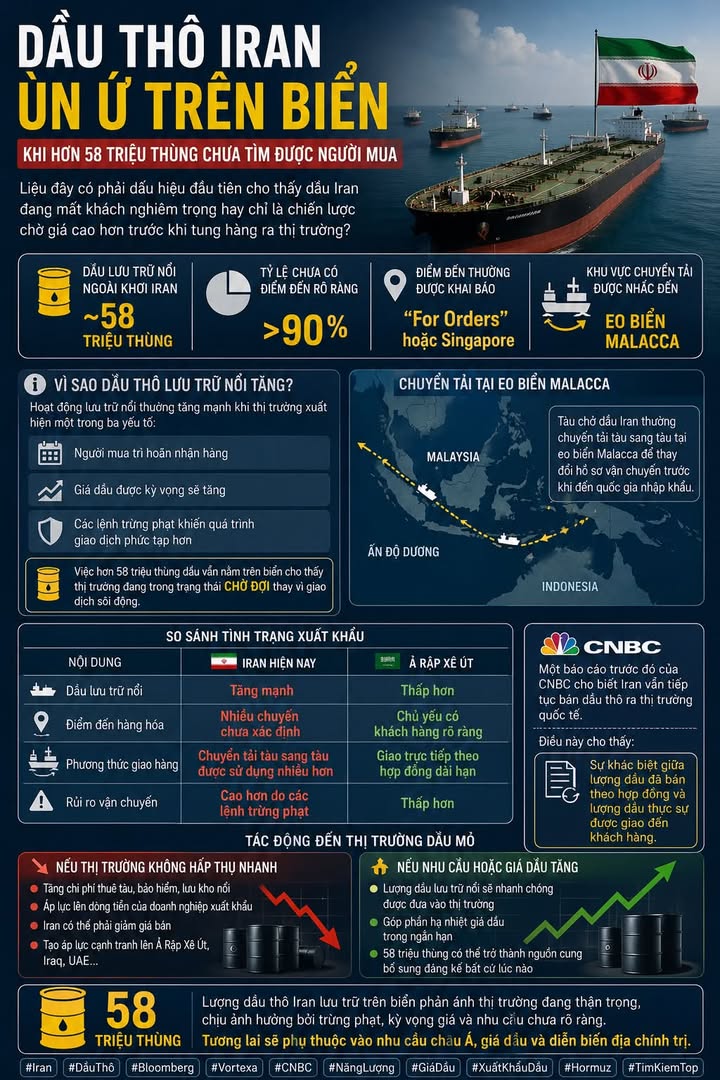
Iranian Crude Oil Piles Up at Sea as Over 58 Million Barrels Seek Buyers
In a development that raises questions about Iran's oil export capabilities and market dynamics, approximately 58 million barrels of Iranian crude oil are currently floating on tankers without clear destinations. According to data from Vortexa and calculations by Bloomberg, this massive inventory of crude represents a significant buildup of unsold oil at sea, with over 90% of these shipments lacking confirmed buyers.
The accumulation of Iranian crude at sea comes amid ongoing international sanctions and shifting global energy markets. This situation has prompted analysts to question whether this represents a fundamental challenge to Iran's ability to sell its oil or merely a strategic pause in anticipation of higher prices.
The Scale of the Inventory
The volume of Iranian crude currently awaiting buyers—approximately 58 million barrels—represents more than two months of Iran's typical export volumes. This substantial buildup suggests either a significant reduction in buyers or a deliberate strategy to withhold oil from the market in anticipation of price increases.
Most of the vessels carrying this Iranian crude are reporting their destinations as either "For Orders" or Singapore. In the oil shipping industry, these designations typically indicate that tankers are awaiting purchase confirmation or preparing for ship-to-ship transfers in the Malacca Strait—a common practice used to alter shipping documentation before proceeding to final destinations.
Potential Explanations for the Buildup
Maritime analysts note that floating storage typically increases when one of three factors occurs: buyers delay taking delivery, oil prices are expected to rise, or sanctions make transactions more complex. The current situation with Iranian crude appears to involve elements of all three factors.
The "For Orders" designation suggests that while some transactions may have been agreed upon, the final delivery details remain unresolved. This could be due to:
- Buyers negotiating for more favorable terms
- Complexities in arranging payment mechanisms amid sanctions
- Uncertainty about future price movements
- Logistical challenges in routing oil to final destinations
Market Comparison: Iran vs. Saudi Arabia
The following table compares Iran's current export situation with that of Saudi Arabia, highlighting key differences in operational approaches and market conditions:
| Aspect | Iran Current Situation | Saudi Arabia |
|---|---|---|
| Floating Storage | Significant increase (58 million barrels) | Lower levels |
| Cargo Destinations | Many shipments without confirmed buyers | Primarily contracted customers |
| Delivery Method | Frequent ship-to-ship transfers | Direct delivery under long-term contracts |
| Shipping Risks | Higher due to sanctions | Lower established routes |
Implications for Oil Markets
The accumulation of Iranian crude at several potential points in the supply chain could create ripple effects throughout the oil market:
- Shipping Costs: Extended charter periods for tankers could increase freight rates and insurance costs
- Market Dynamics: The potential release of this inventory could significantly impact global oil prices
- Competitive Pressure: Iran may need to offer discounts to attract buyers, potentially pressuring other producers
- Financial Impact: Extended storage periods tie up working capital for Iranian exporters
According to earlier reports from CNBC, Iran continues to sell crude oil internationally, suggesting a distinction between oil that has been contracted and oil that has been physically delivered. Many shipments may have been traded but are still awaiting final delivery completion or undergoing complex routing procedures.
Future Scenarios
The fate of the 58 million barrels of Iranian crude currently at sea depends on several factors:
Scenario 1: Market Absorption
If Asian demand recovers or oil prices continue rising, this inventory could quickly enter the market, providing a significant supply boost that might temper price increases in the short term.
Scenario 2: Strategic Storage
Iran may be deliberately withholding this oil from the market to create artificial scarcity and drive up prices, a strategy that would require maintaining storage until more favorable market conditions emerge.
Scenario 3: Sanctions Impact
Increasing enforcement of sanctions could continue to complicate delivery mechanisms, potentially extending the period this oil remains in storage or forcing Iran to accept lower prices to find buyers willing to navigate the complex compliance landscape.
Regional Implications
The situation in the Strait of Hormuz, a critical chokepoint for global oil shipments, remains a focal point for market watchers. The combination of Iranian crude floating at sea and potential ship-to-ship transfers in the Malacca Strait creates a complex logistical picture that could affect regional security and stability.
As the global energy landscape continues to evolve with shifting demand patterns, geopolitical tensions, and the ongoing energy transition, the fate of Iran's floating crude inventory may serve as an important indicator of both current market conditions and future trends in the global oil trade.