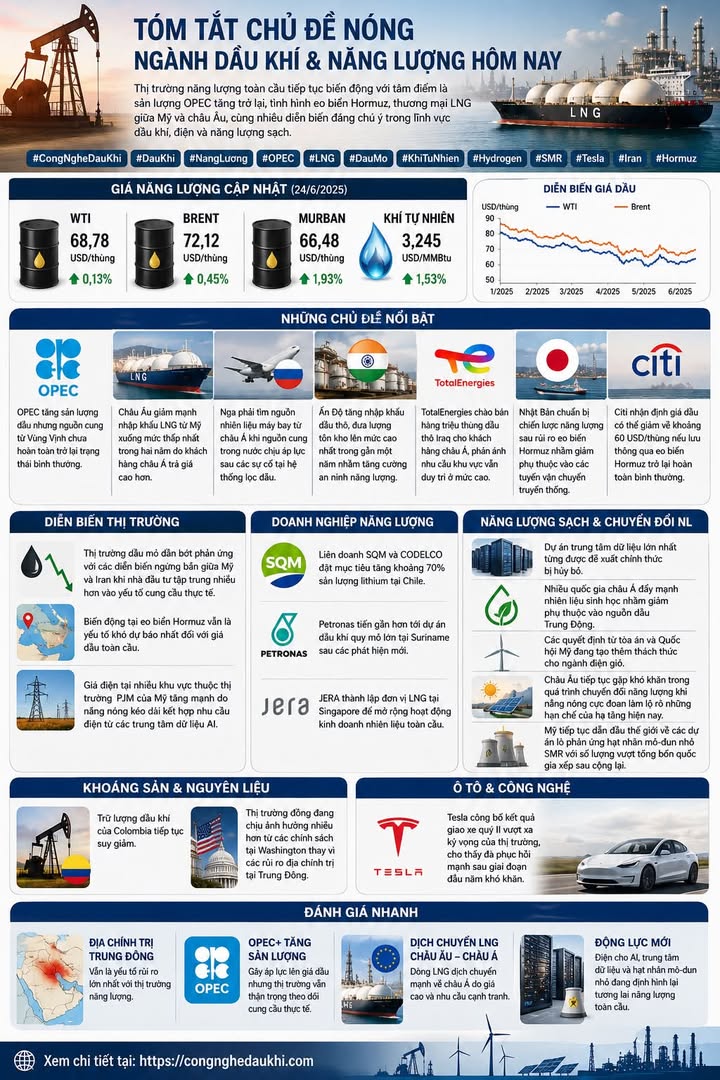
Global Energy Market in Flux: Geopolitical Tensions Meet Energy Transition
The global energy landscape continues to experience significant volatility, with market dynamics shaped by OPEC's production decisions, the strategic importance of the Strait of Hormuz, shifting LNG trade patterns between the United States and Europe, and notable developments across the oil, gas, electricity, and clean energy sectors.
Current Energy Price Overview
Energy markets remain sensitive to multiple geopolitical and economic factors, with oil and gas prices showing mixed trends:
| Energy Commodity | Current Price | Change |
|---|---|---|
| WTI Crude Oil | $68.78/barrel | +0.13% |
| Brent Crude Oil | $72.12/barrel | +0.45% |
| Murban Crude Oil | $66.48/barrel | +1.93% |
| Natural Gas | $3.245/MMBtu | +1.53% |
Key Market Developments
OPEC Production and Middle East Stability
The Organization of the Petroleum Exporting Countries (OPEC) has increased production levels, though supply from the Gulf region has yet to fully normalize following recent disruptions. The Strait of Hormuz remains a critical chokepoint for global oil shipments, with continued geopolitical tensions in the region creating persistent uncertainty for energy markets.
Citi analysts suggest that oil prices could potentially decline to around $60 per barrel if full normalization of shipping through the Strait of Hormuz is achieved, reflecting the market's sensitivity to this critical waterway.
LNG Trade Realignment
Europe has significantly reduced its LNG imports from the United States, reaching a two-year low, as Asian customers have accepted higher prices, creating additional challenges for energy cooperation between the US and the European Union. This shift highlights the competitive dynamics in the global LNG market and the varying priorities between regions.
Regional Energy Strategies
- Russia: Facing domestic supply pressures following incidents at its refining system, Russia is now seeking aviation fuel from Asian markets to compensate for reduced domestic production.
- India: The country has increased crude oil imports, bringing its inventory levels to a near-year high to enhance energy security amid global market uncertainties.
- Japan: Preparing an energy strategy to mitigate risks associated with the Strait of Hormuz, aiming to reduce dependence on traditional shipping routes.
- TotalEnergies: The company has offered millions of barrels of Iraqi crude to Asian customers, indicating sustained strong demand in the region.
Power Market Dynamics
Electricity prices in several areas of the US PJM market have surged due to prolonged heatwaves combined with increased electricity demand from AI data centers. This development highlights the intersection of climate change, digital transformation, and energy infrastructure challenges.
Corporate Energy Sector News
- The joint venture between SQM and CODELCO aims to increase lithium production in Chile by approximately 70%, reflecting the critical role of lithium in the energy transition.
- Petronas is advancing toward a large-scale oil and gas project in Suriname following new discoveries in the region.
- JERA has established an LNG unit in Singapore to expand its global fuel business operations.
Clean Energy and Transition Challenges
Project Developments and Setbacks
The world's largest proposed data center project has been officially canceled, signaling potential headwinds for digital infrastructure expansion. Meanwhile, many Asian countries are accelerating biofuel adoption to reduce dependence on Middle Eastern oil sources.
Policy and Infrastructure Challenges
The US wind energy sector faces additional challenges from court decisions and congressional actions, creating uncertainty for renewable energy development. Europe continues to struggle with its energy transition as extreme heatwaves expose limitations in current infrastructure.
Nuclear Energy Advancement
The United States continues to lead globally in Small Modular Reactor (SMR) nuclear projects, with the number exceeding the combined total of the next four countries. This development reflects growing interest in nuclear energy as a baseload power source in the transition to cleaner energy systems.
Minerals and Raw Materials
Colombia's oil and gas reserves continue to decline, raising concerns about long-term production prospects in the region. The copper market is increasingly influenced by policies in Washington rather than geopolitical risks in the Middle East, highlighting the shifting dynamics of commodity markets.
Automotive and Technology
Tesla has reported Q2 vehicle deliveries that significantly exceeded market expectations, demonstrating a strong recovery after a challenging start to the year. This performance indicates resilience in the electric vehicle market despite broader economic uncertainties.
Market Assessment
Currently, the energy market is simultaneously impacted by three major factors: geopolitical tensions in the Middle East, OPEC+ production strategies, and the shifting flows of LNG between Europe and Asia. Additionally, electricity demand for AI development, data center expansion, and investment in small modular nuclear reactors are emerging as new drivers of the global energy landscape.
The confluence of these factors creates a complex market environment where traditional energy dynamics intersect with emerging trends in digitalization and energy transition. Market participants must navigate these multifaceted challenges while positioning for a future where clean energy and traditional sources will coexist during the transition period.
Conclusion
The global energy market remains at a critical juncture, balancing traditional supply and demand dynamics with the accelerating transition to cleaner energy sources. As geopolitical tensions persist and technological transformations reshape the sector, stakeholders must remain agile in their strategic planning to navigate the evolving energy landscape.