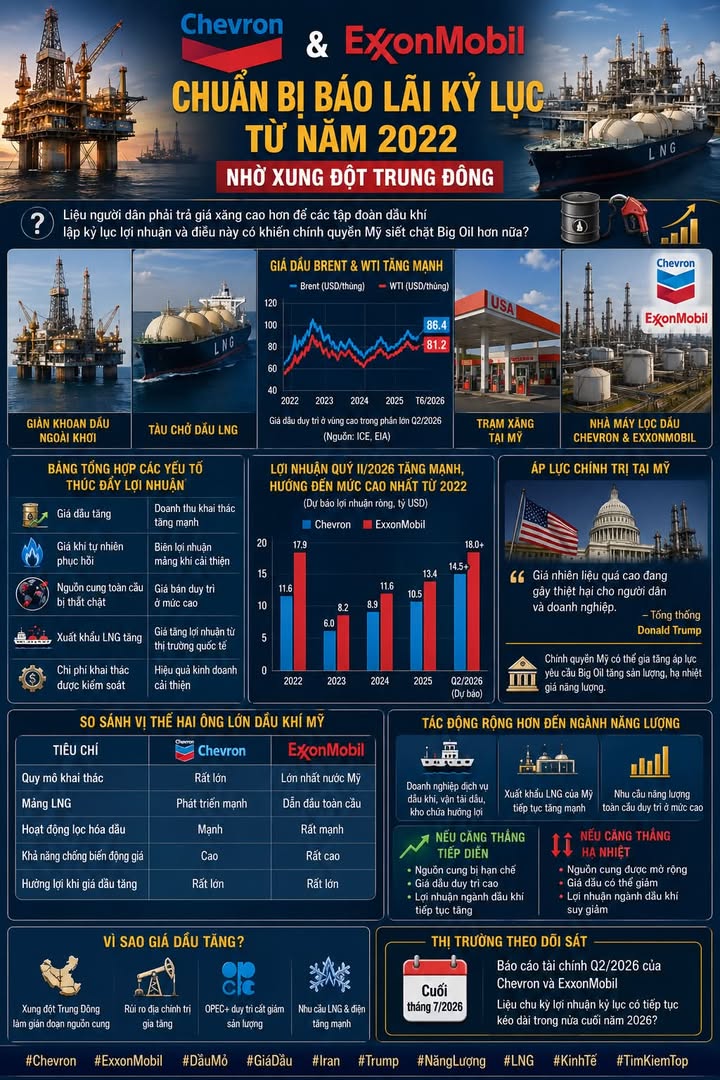
Record Profits for Chevron and Exxon Amid Middle East Conflict
The ongoing geopolitical tensions in the Middle East have dramatically reshaped the global energy landscape during Q2 2026, creating conditions that are expected to propel Chevron and ExxonMobil to report their most profitable quarters since 2022. With tightened oil and gas supplies worldwide, energy prices have surged significantly, setting the stage for exceptional financial results from these American energy giants.
Market Dynamics Fueling Unprecedented Profits
According to pre-earnings forecasts, both Chevron and ExxonMobil are poised to demonstrate substantial profit growth in Q2 2026. This financial surge has been primarily driven by sustained high levels of Brent and WTI crude oil prices throughout most of the quarter. Concurrently, natural gas prices have experienced a robust recovery, bolstered by strong demand in both electricity generation and liquefied natural gas (LNG) markets.
The current market conditions represent a confluence of factors that have collectively created an exceptionally favorable environment for oil and gas producers:
| Factor | Impact |
|---|---|
| Rising oil prices | Significant increase in revenue from exploration and production activities |
| Recovering natural gas prices | Improved profit margins in the gas segment |
| Tightened global supply | Sustained high selling prices |
| Increased LNG exports | Growth in international market profitability |
| Controlled extraction costs | Enhanced operational efficiency and profitability |
Political Pressures and Regulatory Challenges
While investors anticipate positive financial reports, political pressure in the United States has been intensifying. President Donald Trump has repeatedly criticized major oil corporations for maintaining high retail fuel prices, arguing that this creates additional burdens for consumers and businesses alike. This public stance has placed Chevron and ExxonMobil in a delicate position, forcing them to balance shareholder interests against mounting governmental pressure.
Should the reported profits exceed market expectations, these corporations may face increased calls to boost production investments in an effort to cool energy prices. This represents a complex strategic challenge for the companies as they navigate between financial performance imperatives and broader economic considerations.
Comparative Analysis: Chevron vs. ExxonMobil
While both companies are positioned to benefit from the current market conditions, they possess distinct operational characteristics and competitive advantages:
| Criteria | Chevron | ExxonMobil |
|---|---|---|
| Extraction scale | Very large | Largest in the United States |
| LNG segment | Strong development | Global leader |
| Refining operations | Strong | Very strong |
| Price fluctuation resilience | High | Very high |
| Benefit from rising oil prices | Very significant | Very significant |
Broader Industry Impact
The favorable market conditions extend beyond Chevron and ExxonMobil to encompass a wide range of energy-related enterprises. American oil service providers, oil transportation companies, storage facilities, and LNG exporters have all reported increased activity as global energy demand continues to rise. This comprehensive industry upswing suggests that the current profitability cycle is affecting multiple segments of the energy value chain.
Future Outlook and Uncertainties
Looking ahead, the trajectory of the energy sector remains contingent on several critical factors. Should geopolitical tensions in the Middle East ease or if OPEC and non-OPEC countries expand production, oil prices could adjust downward, potentially reducing profit margins for energy corporations in subsequent quarters. Conversely, if supply constraints persist, the energy sector will likely continue its high-profitability cycle.
Market participants will closely monitor the late-month financial reports from Chevron and ExxonMobil to assess whether the current growth phase in the oil and gas industry will extend into the second half of 2026. These results will provide valuable insights into the sustainability of the current market conditions and help shape investment strategies across the energy sector.
Conclusion
The confluence of Middle East conflict, supply constraints, and robust global demand has created unprecedented profit opportunities for the American energy sector. While Chevron and ExxonMobil are positioned to benefit most significantly, the entire industry is experiencing a period of exceptional financial performance. However, this prosperity exists alongside increasing political scrutiny and the need to balance economic returns with broader societal considerations regarding energy affordability and accessibility.
As these energy giants prepare to announce their Q2 2026 results, all eyes will be on their financial performance statements and accompanying guidance, which will offer critical insights into the future trajectory of global energy markets and the evolving relationship between energy producers and regulatory authorities.