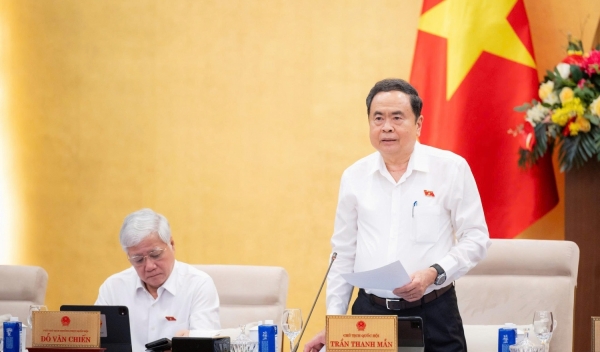
Amended Petroleum Law and Renewable Energy Resolution to be Considered by National Assembly in August 2026
At the fourth session of the National Assembly Standing Committee held on the afternoon of July 8, 2026, preparations for the first extraordinary session of the XVI National Assembly, a specialized session on legislation building for August 2026, were discussed. According to the proposed schedule, the session will consider a large volume of laws and resolutions, notably including the draft Resolution on mechanisms and policies to overcome difficulties for renewable energy projects and the draft Amended Petroleum Law.
Background and Significance of the Legislative Projects
Vietnam is currently undergoing a significant energy transition, aiming toward sustainable development and emission reduction. The amendment of the Petroleum Law and the issuance of measures to promote renewable energy development are considered crucial steps in this strategy.
According to reports presented at the session, these two legal documents are expected to create a new legal framework, resolve current obstacles, attract investment, and promote sustainable development of Vietnam's petroleum and renewable energy sectors.
Amended Petroleum Law: Notable Changes
The amended Petroleum Law is being prepared based on an evaluation of 15 years of implementing the 2008 Petroleum Law and the profound changes in the global energy market. The draft law focuses on the following main contents:
- Improving the legal framework for petroleum activities in the context of energy transition
- Adjusting regulations on petroleum product sharing, especially for new projects
- Establishing mechanisms to encourage the development of green hydrogen and renewable energy projects in petroleum areas
- Enhancing state management efficiency and increasing the social responsibility of petroleum enterprises
Comparison of Key Points Between Current and Amended Petroleum Law
| Content | Current Law (2008) | Amended Draft |
|---|---|---|
| Product sharing policy | Applied uniformly to all projects | Flexible mechanism by project type and specific conditions |
| Renewable energy development | No specific regulations | Encouragement of green hydrogen and offshore wind power in petroleum areas |
| Environmental responsibility | General regulations | Higher requirements including carbon responsibility and green transition |
| Investment decision process | Complex procedures with multiple levels | Simplified procedures, enhanced role of enterprises |
Resolution on Mechanisms to Overcome Difficulties for Renewable Energy
This resolution is expected to address major obstacles in renewable energy development in Vietnam, particularly for wind power, solar power, and LNG gas power. Some key provisions expected to be regulated include:
- Preferential electricity pricing mechanisms for renewable energy projects, especially offshore projects
- Solutions for transmission infrastructure to address overload in areas with high renewable energy potential
- Risk-sharing mechanisms and financial support for investors
- Simplification of administrative procedures, shortening project approval time
- Development roadmap for LNG gas power combined with renewable energy
Status of Renewable Energy Development in Vietnam Until 2025
| Energy Type | Installed Capacity (MW) | Percentage of Total Capacity | 2030 Target |
|---|---|---|---|
| Solar Power | 20,000 | 10.5% | 25,000 |
| Wind Power | 4,000 | 2.1% | 18,000 |
| Biomass Power | 500 | 0.3% | 2,000 |
| LNG Gas Power | 3,000 | 1.6% | 15,000 |
Development Process and Review Plan
According to the program presented at the session, the draft Amended Petroleum Law and Renewable Energy Resolution will be finalized after collecting opinions from agencies, organizations, and experts in July 2026.
In August 2026, at the specialized session, the National Assembly will consider and provide opinions on these draft laws. It is expected that these documents will be adopted at the second session of the XVI National Assembly in late 2026.
Expert Opinions and Business Reactions
According to experts' assessments, amending the Petroleum Law and issuing a resolution to promote renewable energy is necessary and urgent in the context of Vietnam's commitment to achieve net "zero" emissions by 2050.
However, many experts also note the need to balance between attracting investment and ensuring national interests, while establishing strict monitoring mechanisms to avoid environmental and energy security risks.
Representatives of petroleum and renewable energy enterprises expressed support for the expected legal changes, while requesting the National Assembly to carefully consider policy mechanisms to ensure feasibility and attractiveness to investors.
Conclusion
The consideration of the Amended Petroleum Law and Renewable Energy Resolution at the National Assembly's specialized session in August 2026 is seen as a significant step in Vietnam's energy transition journey. These legal documents are expected to create a solid legal foundation, promoting sustainable development of the petroleum and renewable energy sectors, and contributing to the implementation of national commitments on climate change.
The timely completion and issuance of these documents will create new momentum for attracting investment, promoting economic growth, and ensuring national energy security in the new context.