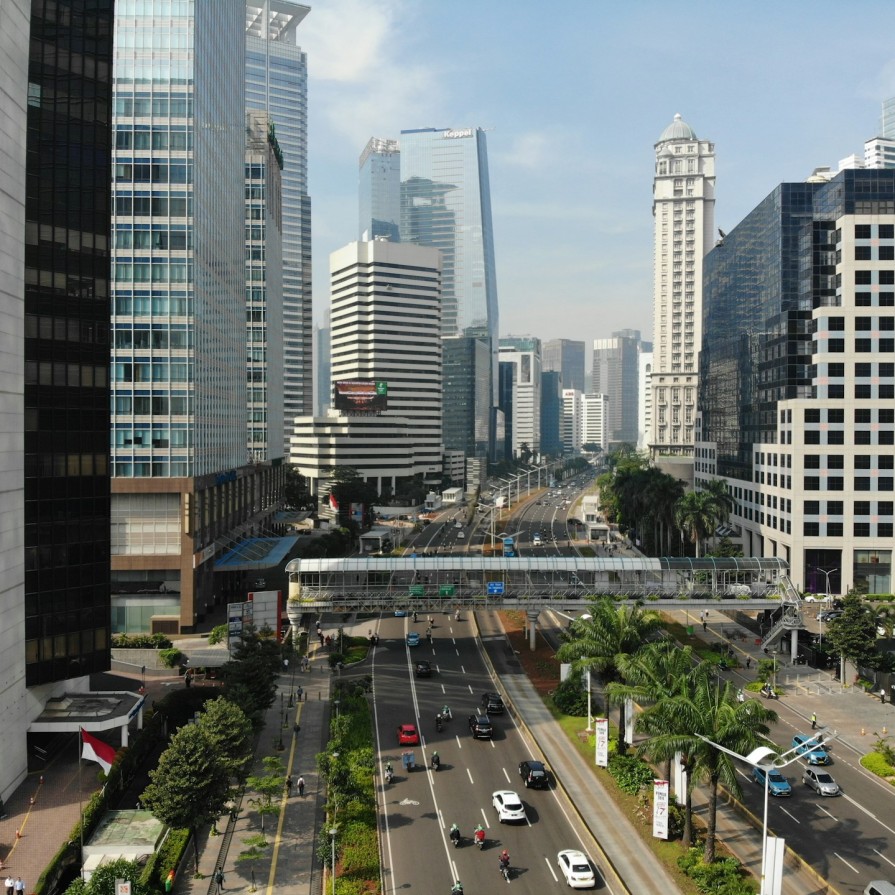
Indonesia Receives First Russian Crude Oil Shipment, Diversifying Energy Supply Sources
Indonesia has welcomed its first shipment of Russian crude oil under an agreement signed between Southeast Asia's largest economy and Moscow in April. This significant delivery comes as the region faces mounting energy security challenges, particularly following heightened tensions in the Strait of Hormuz.
Initial Delivery Arrives at Balikpapan Port
According to customs data from Big Trade Data cited by Bloomberg, approximately 770,000 barrels of Russian crude oil were delivered to Indonesia's Balikpapan port in late June. This marks the first Russian crude oil shipment to Indonesia since the two nations established a regular supply agreement in April, a period when the Hormuz crisis reached its peak.
Indonesia's Energy Landscape
Currently, Indonesia produces approximately 600,000 barrels of crude oil daily, yet domestic consumption far exceeds this output, reaching about 1.6 million barrels per day. This substantial deficit forces the archipelagic nation to heavily rely on crude oil imports to meet its domestic energy demands.
| Indonesia's Energy Indicators | Production/Consumption Rate |
|---|---|
| Daily crude oil production | 600,000 barrels |
| Daily crude oil consumption | 1.6 million barrels |
| Import dependency | ~62.5% |
Diversifying Energy Supply Sources
Historically, Indonesia's crude oil imports have predominantly originated from the Middle East. However, recent tensions involving Iran and the potential for disruptions in the Strait of Hormuz—a critical global oil shipping artery—have compelled Indonesia to seek alternative supply sources. Russia has emerged as a strategic option in this context.
"Indonesia's strategy of diversifying its crude oil import basket with supplies from Russia is supported by supply economics, compatibility with existing refineries, and medium-term energy security logic—not just an opportunity around the Middle East crisis," Prateek Panday, an analyst at Rystad Energy, told Business Times in April.
Strategic Agreement with Russia
In April, Indonesia established a strategic cooperation agreement with Russia aimed at enhancing the nation's energy resilience. Deputy Energy Minister Yuliot Tanjung revealed that Indonesia plans to import 150 million barrels of Russian crude oil this year.
"The Indonesian government has secured a strategic cooperation agreement with Russia to enhance national energy resilience, particularly through crude oil supply and energy infrastructure development," stated Bahlil Lahadalia, Indonesia's Minister of Energy and Mineral Resources.
Long-Term Strategic Approach
The cooperation agreement extends beyond immediate needs to encompass long-term partnerships in the energy sector, addressing national oil requirements. Minister Lahadalia emphasized that crude oil supplies have been secured for one year, from the agreement's inception through December.
"Regarding crude oil, supply is secured for one year from this month until December, so there's no need to worry. What we need to do now is increase refinery production," he stated.
Strategic Implications
Indonesia's pivot toward importing Russian crude oil represents not merely a short-term response to the Middle East crisis but a strategic move to diversify energy sources and reduce dependence on a geopolitically unstable region. This also demonstrates the flexibility of Indonesia's energy policy amid evolving global energy dynamics.
The collaboration with Russia also opens opportunities for broader energy cooperation, including infrastructure development and refining technologies, which could help Indonesia enhance its long-term energy self-sufficiency.
Conclusion
The arrival of the first Russian crude oil shipment marks a significant shift in Indonesia's energy policy. In an increasingly complex global energy security landscape, diversifying supply sources not only helps ensure energy security but also facilitates strategic long-term partnerships, contributing to the stability and sustainable development of Indonesia's economy.
This development also reflects a growing trend among developing nations seeking new energy partners beyond traditional sources, signaling a shift in the global energy geopolitical order.