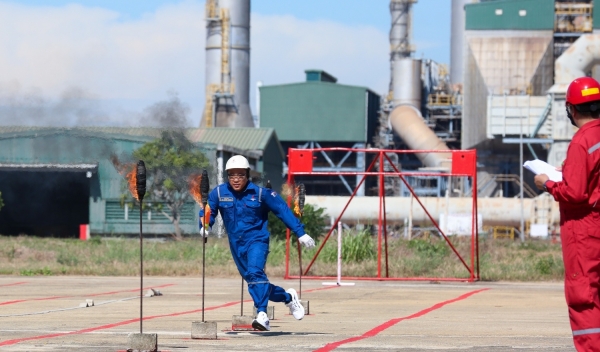
BSR Actively Promotes Safety Culture, Determined to Achieve Production and Business Targets
The Binh Son Refinery Joint Stock Company (BSR), a subsidiary of the Vietnam Oil and Gas Group (Petrovietnam), has recently organized multiple information exchange sessions to evaluate the implementation of Health, Safety, and Environment (HSE) work. These events have attracted the active participation of officials, employees, and workers from various contractors operating at the Dung Quat Refinery Complex. This initiative represents a significant step in BSR's comprehensive approach to operational excellence and risk management in the petroleum refining sector.
Strategic Objectives of Safety Operations
Through these regular information exchange sessions, BSR aims not only to assess the implementation of safety regulations but also to strengthen and develop a comprehensive safety culture throughout the entire system. This strategic approach ensures the refinery operates safely, stably, and efficiently, contributing to national energy security while fulfilling production and business objectives in the remaining months of 2026.
The establishment of a robust safety culture serves as a cornerstone for BSR's operational philosophy, aligning with international best practices in the petroleum industry. By prioritizing safety, the company aims to prevent incidents that could lead to production losses, environmental damage, or harm to personnel, thereby ensuring sustainable business operations.
Key Activities and Initiatives
- Comprehensive HSE Performance Evaluation: Systematic assessment of all safety protocols, procedures, and their implementation across all operational units.
- Information Exchange Sessions: Regular meetings between BSR officials, employees, and contractor workers to share experiences, identify challenges, and develop solutions.
- Safety Enhancement Discussions: In-depth analysis of measures to improve labor safety and environmental protection, incorporating lessons learned from industry incidents.
- Safety Training Programs: Continuous education initiatives to ensure all personnel maintain up-to-date knowledge of safety procedures and emergency response protocols.
- Incident Prevention Strategies: Development and implementation of proactive measures to identify and mitigate potential hazards before they result in incidents.
The Significance of Safety Culture in Industrial Operations
At BSR, safety culture transcends being merely a regulatory requirement; it is an integral component of production and business operations. The cultivation and dissemination of this culture not only protect the health and safety of workers but also ensure the refinery's operational efficiency. A strong safety culture correlates directly with reduced operational disruptions, lower maintenance costs, and improved productivity.
Research in industrial psychology and safety management consistently demonstrates that organizations with embedded safety cultures experience fewer accidents, lower employee turnover, and higher overall performance metrics. BSR's commitment to safety aligns with this evidence, positioning the company as a leader in operational excellence within Vietnam's petroleum sector.
Safety Performance Targets and Metrics
BSR has established clear, measurable safety targets for 2026, demonstrating the company's data-driven approach to safety management. The following table outlines key performance indicators and targets for the first and second halves of the year:
| Performance Indicator | January-June 2026 | July-December 2026 |
|---|---|---|
| Labor Safety Rate | 98% | Target: 99% |
| Incident Occurrence | 5 incidents | Target: Zero incidents |
| Safety Training for Workers | 100% completion | Quarterly refresher courses |
| Emergency Response Drills | 2 conducted | Quarterly scheduled drills |
| Safety Compliance Audit | 90% compliance | Target: 95% compliance |
These targets reflect BSR's commitment to continuous improvement in safety performance. The progressive nature of these goals demonstrates the company's understanding that safety is an ongoing journey rather than a destination. By setting increasingly ambitious targets, BSR creates a culture of continuous improvement where safety is regularly reviewed and enhanced.
Implementation Challenges and Solutions
Implementing a comprehensive safety culture in a complex industrial environment like the Dung Quat Refinery presents several challenges. These include coordinating between different contractor groups, maintaining consistent safety standards across various shifts, and ensuring compliance with evolving regulatory requirements.
To address these challenges, BSR has implemented several strategies:
- Integrated safety management systems that apply uniformly to all personnel, regardless of employer
- Digital safety reporting platforms that enable real-time incident tracking and analysis
- Behavior-based safety observation programs that encourage proactive identification of hazards
- Cross-functional safety committees that include representatives from all operational areas
Impact on Business Operations and National Energy Security
The emphasis on safety culture at BSR directly contributes to the company's ability to maintain consistent production levels and meet contractual delivery obligations. By minimizing unplanned downtime due to safety incidents, BSR ensures reliable supply of petroleum products to the Vietnamese market.
From a national perspective, BSR's operational reliability is crucial to Vietnam's energy security. The Dung Quat Refinery serves as a critical component of the country's energy infrastructure, processing crude oil into refined products that support various economic sectors. By maintaining high safety standards, BSR reduces the risk of supply disruptions that could impact multiple industries and consumers nationwide.
Future Outlook and Industry Leadership
With these decisive steps in building a safety culture, BSR is progressing toward its goal of becoming one of the most modern and safest refineries in Vietnam. The company's approach aligns with global trends in the petroleum industry, where safety performance increasingly correlates with operational excellence and business success.
Looking ahead, BSR plans to further enhance its safety management systems through:
- Advanced predictive analytics for early hazard identification
- Integration of artificial intelligence in safety monitoring systems
- Expanded virtual reality-based safety training programs
- Strengthened partnerships with international safety organizations
Conclusion
BSR has demonstrated high determination in achieving production and business targets while ensuring worker safety and environmental protection. These efforts not only contribute to improving the refinery's operational efficiency but also affirm BSR's commitment to safety and sustainable development.
Through its systematic approach to safety culture development, BSR is setting new standards for operational excellence in Vietnam's petroleum industry. The company's success in this area serves as a model for other industrial enterprises in the country, demonstrating how safety and productivity can complement each other in modern industrial operations.
With these solid steps in building a safety culture, BSR is moving closer to its goal of becoming one of the most modern and safest refineries in Vietnam, contributing significantly to the country's energy security and industrial development.