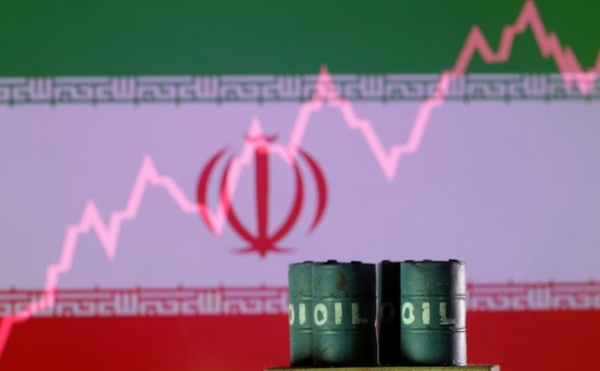
Global Oil Market Poised to Weather Middle East Storm
A recent report from Macquarie's team of experts, obtained by AFP, suggests that escalating tensions in the Middle East between the United States and Iran will likely prove to be relatively short-lived. This forecast brings positive signals for the global oil market, which has been impacted by regional security concerns.
Background on Middle East Tensions
In recent months, the situation in the Middle East, particularly the Persian Gulf, has become more tense than ever before. Confrontations between the US and Iran have raised concerns about potential disruptions to oil supplies from the region—which accounts for approximately one-third of globally seaborne oil transport.
Notable events include:
- Attacks on Saudi Arabian oil facilities in September 2019
- Detention of an Iranian oil tanker by the British Royal Navy
- US withdrawal from the nuclear agreement with Iran and imposition of sanctions
- Iran's retaliatory actions against vessels in the region
Analysis of Macquarie's Report
The team of experts at Macquarie, one of the world's leading investment banks, has assessed that despite escalating tensions, the likelihood of a large-scale and prolonged conflict remains low.
According to their analysis, key factors preventing escalation include:
- Military and political limitations faced by both the US and Iran
- The negative global economic impact that would result from actual conflict
- International community pressure to de-escalate tensions
Current Impact on Oil Prices
Security concerns in the region have driven oil prices to higher levels in recent months. However, Macquarie's report predicts that the market will soon stabilize as tensions prove less severe than feared.
| Time Period | Brent Oil Price (USD/barrel) | Change (%) |
|---|---|---|
| Early 2023 | 78.5 | - |
| March 2023 | 85.2 | +8.5% |
| June 2023 | 76.8 | -9.9% |
| End of 2023 (Projected) | 75.0 | -2.3% |
Future Outlook for the Oil Market
Macquarie's report also provides important forecasts for the oil market in the coming period:
- Oil prices are expected to stabilize at around $70-75 per barrel by the end of 2023
- Global oil demand will continue to grow, particularly from developing nations
- Oil supply from the US and non-OPEC countries will offset any disruptions from the Middle East
- OPEC+ is likely to maintain current production policies to stabilize the market
Other Factors Affecting Oil Prices
Beyond Middle East tensions, the oil market is influenced by numerous other factors:
- The pace of global economic recovery following the COVID-19 pandemic
- Production policies of OPEC+
- The development of renewable energy and the energy transition
- Strategic reserves of major consuming countries
- The situation in Ukraine and other conflicts
Conclusion
According to Macquarie's analysis, while tensions in the Middle East remain a factor to monitor, their impact on the oil market will not be as prolonged as many fear. The market has the capacity to adapt and overcome these challenges in the short term.
Investors and stakeholders in the oil and gas industry should closely monitor developments in the Middle East but also consider other fundamental market factors when making decisions. With the expected relative stability, the oil market can continue to recover and develop in the coming period.