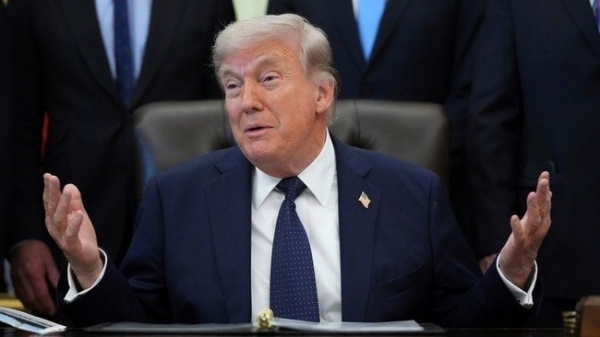
Trump Threatens to Launch 1,000 Missiles at Iran: Analysis of the Military Technology Behind the Shocking Statement
In a highly controversial post on the social media platform Truth Social, former US President Donald Trump issued a threat to launch thousands of missiles at Iran if the country were to attempt to assassinate him. This statement has not only sent shockwaves through international politics but has also drawn particular attention to missile technology and US military capabilities.
Background and Content of the Controversial Statement
In his recent post on the Truth Social platform, Trump wrote: "If Iran ever thinks of assassinating me, they will face thousands of missiles launched from America. They will never know what's coming to them."
The threat comes amid escalating tensions between the United States and Iran, particularly following reports of threats targeting the former US president. This is not the first time Trump has used social media to make statements related to national security.
Analysis of US Ballistic Missile Technology
The United States possesses one of the world's most advanced military missile technologies. Below is a comparison of some missile types that could potentially be used in the scenario described by Trump:
| Missile Type | Speed | Range | Accuracy | Special Features |
|---|---|---|---|---|
| Tomahawk | Subsonic | 1,600-2,500 km | CEP 5-10m | Low altitude, terrain-following capability |
| AGM-158 JASSM | Subsonic | 920 km | CEP 3m | Low altitude, stealth capability |
| SM-3 | Hypersonic | 2,500 km+ | CEP 10m | Ballistic missile defense |
| AGM-183A ARRW | Hypersonic | 1,000 km+ | CEP 5m | Extremely high speed |
US Missile Deployment Capabilities
The United States possesses a diverse arsenal of missiles with the capability for rapid deployment. Missile systems can be launched from various platforms:
- Naval surface vessels: Destroyers and cruisers equipped with Vertical Launch Systems (VLS) can carry dozens of Tomahawk missiles
- Submarines: Nuclear-powered ballistic missile submarines (SSBNs) can launch missiles from underwater
- Combat aircraft: Aircraft such as B-2, B-52, F-15E, and F-35 can carry cruise missiles and air-to-ground missiles
- Land-based launch sites: Ground-based missile systems and missile defense installations
History of Missile Usage in Recent Conflicts
The United States has employed Tomahawk cruise missiles in numerous recent conflicts:
- 1998: Operation Desert Fox, launching over 300 missiles at Iraq
- 2017: Strike against Shayrat Air Base in Syria following a chemical attack
- 2018: Attacks on chemical facilities in Syria
- 2020: Operation that killed Iranian General Qasem Soleimani in Iraq
Professional Analysis of the Feasibility of the Threat
Military experts note that launching 1,000 missiles in an attack as described by Trump is technologically feasible:
- The United States has over 3,000 Tomahawk missiles in its arsenal
- A single carrier strike group can carry approximately 150 missiles
- A destroyer squadron can carry more than 200 missiles
- Combat aircraft can add several hundred more missiles
However, such a large-scale attack would require:
- Highest-level political decision from the President
- Thorough intelligence assessment of targets
- Detailed planning of timing and attack methodology
- Coordination among multiple military branches
Impact on International Relations and Global Security
Trump's threat could have profound political and military repercussions:
- Increased tensions between the US and Iran, potentially leading to armed conflict
- Impact on international nuclear agreements
- Shift in the balance of power in the Middle East
- Effects on global oil prices and energy markets
Conclusion
Trump's threat to launch 1,000 missiles at Iran is not merely a political statement but also a demonstration of the United States' superior military technological capabilities. With its diverse missile arsenal and rapid deployment capabilities, the US certainly has the capacity to execute such a large-scale attack.
However, the use of force on such a massive scale would always come with political risks and humanitarian consequences. In the current context of international tensions, world leaders must carefully consider decisions that could alter the global landscape.
Military technology continues to advance at breakneck speed, presenting new challenges for global security. The balance of power among nations will depend not only on the quantity of weapons but also on the wisdom and prudence in their use.