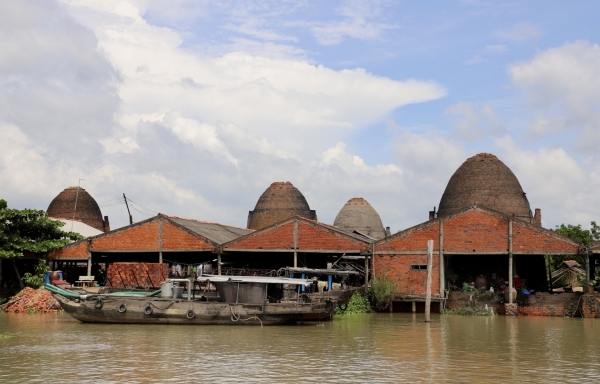
From Brick Kiln Village to Heritage Space: The Transformation of Mang Thít Pottery in Vĩnh Long
Once the thriving capital of brick and pottery in the Western region, Mang Thít village in Vĩnh Long is currently undergoing a profound transformation. The once-bustling brick kilns have largely ceased production, making way for a unique heritage model that preserves cultural identity while embracing new economic opportunities.
Historical Formation and Development
The Mang Thít brick and pottery village boasts a development history spanning over 200 years, originating from the Nguyen Dynasty period. With abundant clay soil resources and an intricate network of canals, the area emerged as the largest center for brick and pottery production in the Western region of Southern Vietnam.
During the 1980-1990 period, Mang Thít village reached its zenith with more than 200 active kilns, providing employment for thousands of workers. The brick, tile, and porcelain products from Mang Thít not only met domestic demand but were also exported to Cambodia, Laos, and Thailand, establishing the village as a significant cultural and economic hub.
Current Situation
In recent years, Mang Thít village has faced numerous challenges. The advancement of modern construction materials and environmental protection policies has led to the cessation of many kiln operations.
Currently, only approximately 30-40 kilns remain in operation, primarily small, family-scale establishments. The arched kilns covered in green moss along the Thầy Cai canal have become a characteristic landscape, reflecting both decline and a unique, rustic beauty that tells the story of industrial evolution.
| Period | Number of Kilns | Production Scale | Market Distribution |
|---|---|---|---|
| Nguyen Dynasty - 1980 | Approximately 50 kilns | Small scale | Local and neighboring provinces |
| 1980-1990 | Over 200 kilns | Large scale | Nationwide and export markets |
| 2000-present | 30-40 kilns | Small to medium scale | Local and niche markets |
New Direction: Transformation into a Heritage Space
In response to these challenges, local authorities and Mang Thít residents are striving to transform the traditional brick village into a cultural heritage space. This model not only preserves traditional handicrafts but also leverages cultural tourism potential.
Under this approach, the old arched kilns are preserved as industrial heritage sites, complemented by demonstrations of traditional brick-making processes. Visitors can tour the facilities, experience the craft firsthand, and gain insights into this traditional profession.
Additionally, several talented artisans are focusing on producing artistic pottery with high aesthetic value, catering to tourists and collectors.
Future Vision
The transition from a production-oriented brick village to a heritage space is considered an appropriate direction in the current context. This approach not only helps preserve intangible cultural heritage but also creates new economic value through tourism and handicraft products.
However, this transformation also presents numerous challenges related to technique, human resources, and finance. Retraining former brick makers, developing new products that align with contemporary tastes, and building tourism infrastructure are critical tasks that must be addressed.
| Domain | Challenges | Proposed Solutions |
|---|---|---|
| Heritage Preservation | Risk of traditional craft fading | Establish a brick craft museum, document production processes |
| Tourism Development | Inadequate infrastructure | Invest in infrastructure, develop tourism workforce |
| Product Development | Changing consumer preferences | Combine traditional and modern elements, diversify products |
Conclusion: Mang Thít brick and pottery village stands at a significant turning point in its development history. The transformation from a production-oriented craft village to a cultural heritage space is not merely an adaptation to current realities but also an opportunity to preserve and promote this unique heritage for future generations.
This evolution represents a thoughtful balance between preservation and innovation, demonstrating how traditional crafts can find new relevance in the modern economy while maintaining their cultural significance.