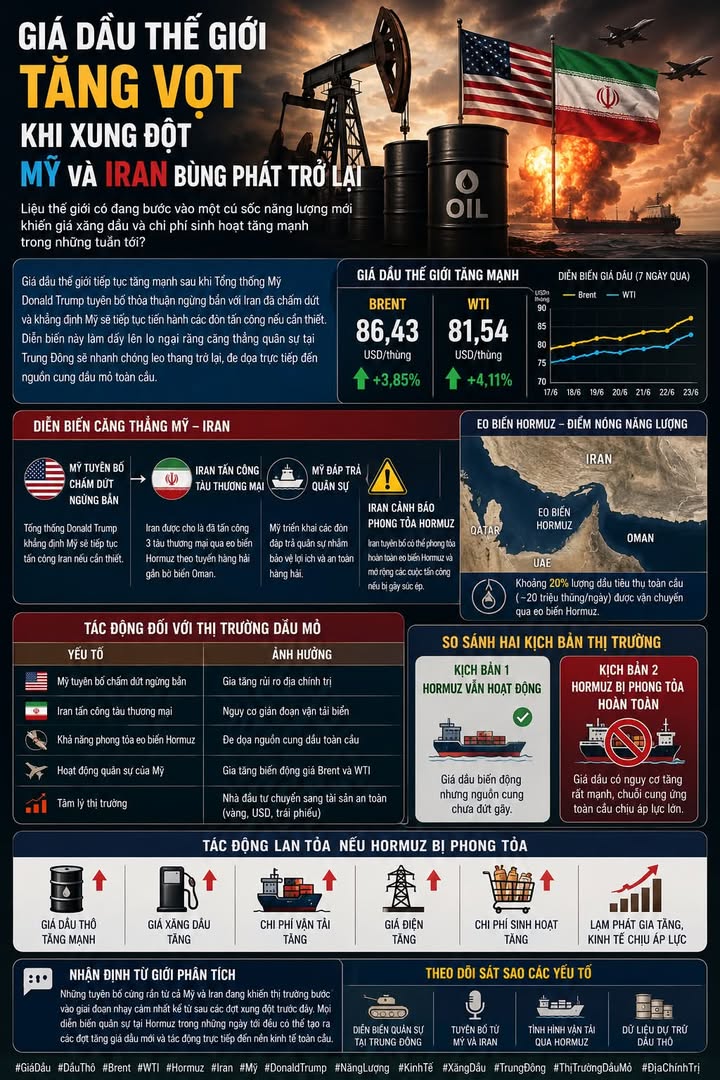
Global Oil Prices Surge as US-Iran Conflict Escalates
The global energy markets are experiencing significant volatility as tensions between the United States and Iran intensify, raising concerns about potential disruptions to oil supplies worldwide. Following recent military escalations in the strategically vital Strait of Hormuz, international benchmark crude prices have surged, with analysts warning that consumers worldwide may face substantial increases in gasoline and diesel costs in the coming weeks.
Geopolitical Tensions Drive Market Volatility
The situation escalated dramatically when President Donald Trump announced that the United States was terminating its ceasefire agreement with Iran. In a strong statement, the President affirmed that American military operations would continue as necessary, signaling a definitive shift in diplomatic relations between the two nations. This announcement sent shockwaves through energy markets, with oil prices jumping immediately as traders priced in the increased risk of supply disruptions.
The crisis deepened when Iranian forces allegedly attacked three commercial vessels transiting through the Strait of Hormuz along a maritime route near the coast of Oman, specifically designed to avoid the northern areas of heightened tension. In response to these actions, the United States has reportedly deployed military countermeasures, while Iranian officials have issued warnings suggesting they may completely blockade the strategic waterway and expand their military operations.
The Strategic Importance of the Strait of Hormuz
The Strait of Hormuz represents one of the most critical chokepoints in global energy infrastructure. Approximately 20% of the world's daily oil consumption is transported through this narrow waterway, which connects the Persian Gulf with the Gulf of Oman and the Arabian Sea. Any disruption to this vital shipping lane, even if temporary, can trigger significant price fluctuations in global energy markets.
The strait's importance cannot be overstated. Major oil-producing nations in the Middle East, including Saudi Arabia, Iraq, Kuwait, and the United Arab Emirates, rely on this passage to export their crude to markets in Asia, Europe, and North America. A complete blockade would effectively cut off a substantial portion of global oil supplies, potentially leading to a supply crisis that would affect economies worldwide.
Market Analysis and Potential Impacts
The current geopolitical situation has created a perfect storm for oil price increases. Multiple factors are converging to drive market uncertainty, with the potential for even more dramatic price movements in the coming days.
The following table outlines the key factors affecting the oil market and their potential impacts:
| Factor | Market Impact |
|---|---|
| US termination of ceasefire with Iran | Increased geopolitical risk premium |
| Iran's attack on commercial vessels | Elevated risk of maritime transport disruptions |
| Potential Hormuz Strait blockade | Direct threat to global oil supply |
| US military operations in the region | Heightened volatility in Brent and WTI prices |
| Market sentiment | Shift toward safe-haven assets |
Market analysts are comparing two potential scenarios to assess the potential impact on global energy markets:
| Scenario | Projected Impact |
|---|---|
| Hormuz Strait remains operational | Oil prices experience volatility but supply remains intact |
| Complete blockade of Hormuz Strait | Risk of extreme price increases, significant pressure on global supply chains |
Broader Economic Implications
If Iran follows through on its threat to completely block the Strait of Hormuz, the consequences would extend far beyond the energy sector. Rising crude oil prices would inevitably lead to increases in gasoline and diesel costs, affecting transportation expenses for both consumers and businesses. Higher energy prices would also ripple through the economy, potentially increasing electricity costs and contributing to inflationary pressures in many countries.
Nations heavily dependent on imported energy, particularly in Asia and Europe, would feel the effects most acutely. Countries like Japan, South Korea, India, and several European nations that rely on Middle Eastern crude would face significant economic challenges as energy costs rise. This could potentially slow economic growth, increase trade deficits, and complicate monetary policy decisions for central banks.
The transportation sector would be particularly vulnerable, as higher fuel costs would squeeze profit margins for airlines, shipping companies, and freight operators. These costs would likely be passed on to consumers, contributing to broader inflationary trends across multiple sectors of the economy.
Expert Perspectives
Market analysts suggest that the recent hardline statements from both the United States and Iran have pushed the global oil market into one of its most sensitive periods since previous conflicts in the region. Every military development in and around the Strait of Hormuz in the coming days could trigger new price spikes and directly impact the global economy.
"We're seeing a classic geopolitical risk premium being built into oil prices," commented one energy market analyst. "The market is pricing in the possibility of supply disruptions, but the actual impact will depend on how the situation evolves militarily. A prolonged conflict or blockade could send prices to levels not seen in years."
Historical precedents offer some insight into potential market reactions. During previous conflicts in the region, oil prices have sometimes doubled within weeks of supply disruptions. However, the current market dynamics are different, with global demand growth slowing in many regions and increased production from non-OPEC countries potentially mitigating some of the impact.
Conclusion
The escalating tensions between the United States and Iran have created a precarious situation for global energy markets. The strategic importance of the Strait of Hormuz cannot be overstated, and any disruption to this vital waterway would have far-reaching consequences for the global economy.
Consumers and businesses worldwide should brace for potential increases in energy costs, with the extent depending on how the geopolitical situation evolves. Market participants will be closely watching for any developments that could either escalate or de-escalate the conflict, with each development likely to trigger immediate reactions in oil markets.
As the situation continues to unfold, energy security remains a critical concern for policymakers worldwide. The coming weeks will determine whether this latest geopolitical confrontation leads to a sustained energy crisis or remains contained without significant disruption to global oil supplies.