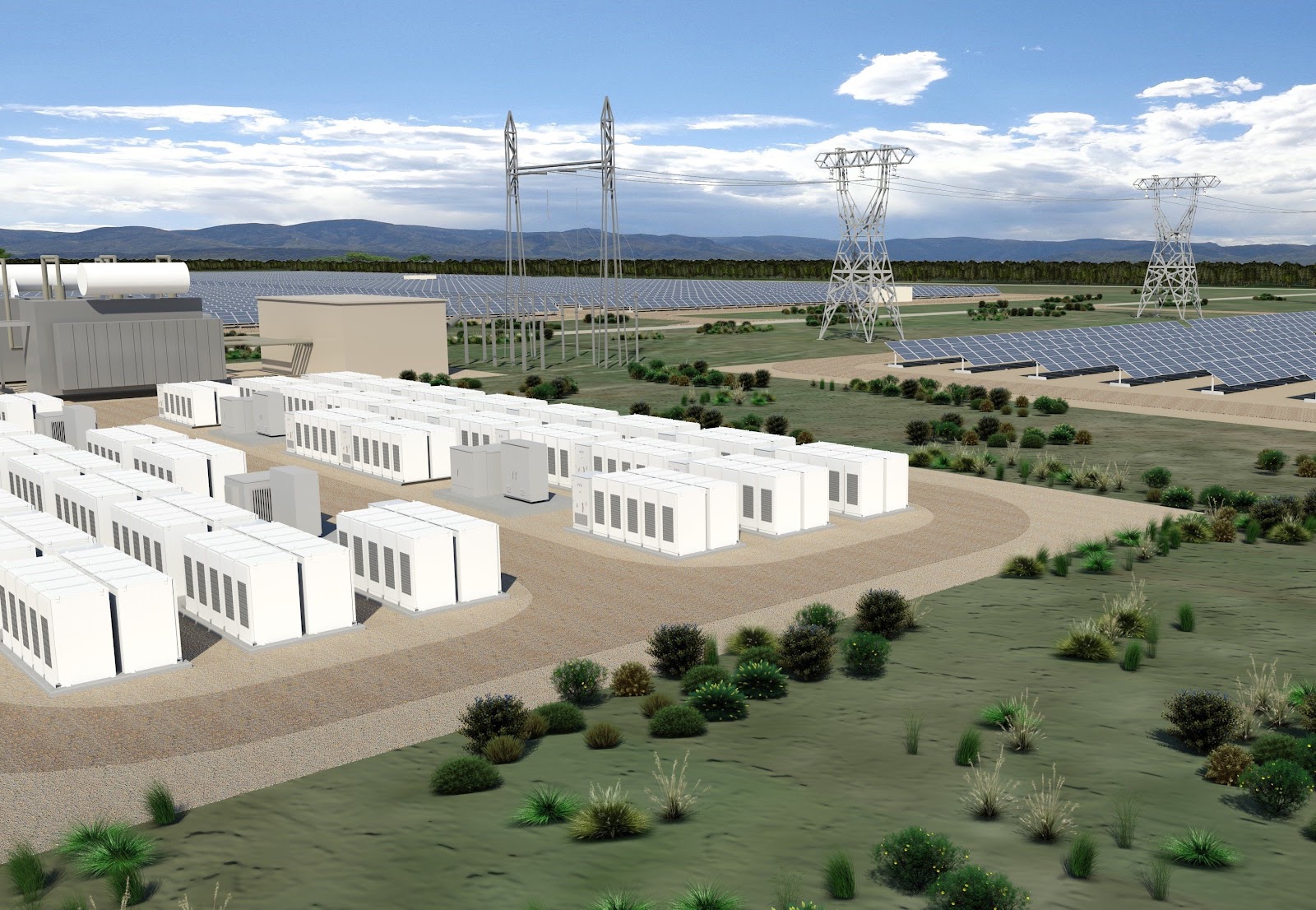
Energy Storage Payment Mechanisms: International Experience Shaping Vietnam's Policy
In the context of global energy transition and the growing demand for stable and flexible power systems, energy storage has become an indispensable component. As Vietnam accelerates its renewable energy deployment and works to achieve its net-zero emissions targets, the question of how to compensate energy storage systems becomes increasingly critical. Following previous articles on the pricing framework for solar power integrated with BESS (Battery Energy Storage System) and the mechanisms for recognizing the value of energy storage in the power system, this article examines how countries around the world are compensating for energy storage systems such as BESS and pumped hydro storage.
International experience shows that revenue from energy storage projects comes not only from selling electricity but also from providing ancillary services such as capacity, reserves, and other system support services. This article analyzes the payment mechanisms for energy storage worldwide and draws policy implications for Vietnam's energy transition journey.
Overview of Energy Storage Technologies
Energy storage is technology that allows electrical energy to be stored in chemical, mechanical, thermal, or electromagnetic form for later use. These technologies play a crucial role in balancing supply and demand, integrating variable renewable energy sources, and enhancing grid stability. Common types of energy storage include:
- Battery Energy Storage System (BESS): Energy storage systems using batteries, primarily lithium-ion technology, which has seen rapid advancements and significant cost reductions in recent years. BESS offers fast response times, modular scalability, and versatile deployment options.
- Pumped Hydro Storage: The oldest and largest-scale energy storage technology, using excess energy to pump water to a higher reservoir, then generating electricity when needed. It provides long-duration storage with high efficiency but requires specific geographical conditions.
- Compressed Air Energy Storage (CAES): Storing energy as compressed air in underground caverns. This technology offers large-scale storage with longer discharge durations than batteries but has geographical limitations.
- Green hydrogen: Using excess renewable energy to produce hydrogen from water through electrolysis, then storing and using hydrogen to generate electricity when needed via fuel cells or turbines. This technology provides long-duration storage but currently has lower efficiency.
- Flywheel energy storage: Using kinetic energy stored in a rotating mass to provide short-duration, high-power backup with rapid response times.
- Thermal energy storage: Storing thermal energy in materials like molten salt, water, or phase-change materials for later electricity generation or direct use.
Each type of energy storage has different technical characteristics, cost structures, and applications, requiring tailored payment mechanisms to attract investment and ensure optimal deployment.
Energy Storage Payment Mechanisms: International Experience
Countries around the world are applying various payment mechanisms for energy storage, focusing on the multiple values this technology brings to the power system. These mechanisms recognize energy storage not just as a generator or consumer but as a system enabler that provides multiple services simultaneously.
1. Energy Markets
Energy markets provide fundamental revenue streams for energy storage through price arbitrage and market participation:
- Price arbitrage: Energy storage buys electricity when prices are low (e.g., during high renewable generation periods or off-peak hours) and sells when prices are high (e.g., during peak demand or low renewable generation). This mechanism leverages the time value of electricity and is particularly effective in markets with significant price volatility.
- Providing ancillary services: Energy storage can participate in ancillary markets such as energy balancing, frequency regulation, and voltage support, providing critical grid services that are increasingly valuable as renewable energy penetration increases.
- Participating in day-ahead and intraday markets: Energy storage can bid to supply or consume electricity in day-ahead markets for the following day and in intraday markets for immediate delivery, allowing for optimal market participation strategies.
- Capacity markets: Some regions have separate capacity markets where energy storage can be compensated for its availability to meet peak demand, providing revenue independent of actual energy production.
To participate effectively in energy markets, energy storage must meet specific technical requirements, including response times, accuracy, and availability, and be recognized as a legitimate market participant with equal rights and obligations.
2. Ancillary Capacity and Reserve Services
Energy storage can provide critical ancillary services to the power system, often with faster response times than conventional alternatives. These services are increasingly valuable as grids incorporate more variable renewable energy:
| Ancillary Service | Description | Potential Value Range |
|---|---|---|
| Operating reserves | Providing capacity backup when other plants experience failures or unexpected outages | 20-50 USD/MWh |
| Frequency regulation | Helping to stabilize system frequency during fluctuations caused by changes in generation or load | 10-30 USD/MWh |
| Energy balancing | Compensating for imbalances between supply and demand in short timeframes, essential for real-time grid stability | 15-40 USD/MWh |
| Spinning reserves | Remaining online and synchronized to the grid, capable of rapid output increases to meet demand | 5-15 USD/MW |
| Non-spinning reserves | Available but not synchronized, capable of rapid startup to meet demand within specified timeframes | 3-10 USD/MW |
| Voltage support | Providing reactive power to maintain voltage levels within acceptable ranges | Variable, often bundled with other services |
3. Specialized Mechanisms
Besides standard market mechanisms, many countries have developed specialized approaches to support energy storage deployment:
- Special contracts: Tailored power purchase agreements or contracts for difference that provide revenue certainty for energy storage projects, often combining multiple revenue streams from energy and ancillary services.
- Capacity payments: Payment based on the available capacity of the storage system, regardless of actual electricity production. This mechanism provides stable revenue streams and helps de-risk investments.
- Location-based payments: Higher payments for storage projects located in strategic positions that reduce grid congestion, transmission losses, or defer expensive grid upgrades.
- Auction mechanisms: Government-organized auctions to select storage projects based on value for money, with payment determined through competitive bidding processes.
- Net metering and feed-in tariffs: Special billing arrangements that allow energy storage customers to receive compensation for excess energy fed back to the grid, often at preferential rates.
- Investment subsidies and tax incentives: Direct financial support through grants, low-interest loans, accelerated depreciation, or tax credits to reduce the upfront cost of energy storage projects.
Experience from Leading Countries
1. Australia
Australia has developed one of the world's most sophisticated energy markets with comprehensive mechanisms for compensating energy storage:
- The National Electricity Market (NEM) allows energy storage to participate fully in day-ahead and intraday markets, as well as ancillary service markets.
- The "Ancillary Services Market" provides multiple revenue streams for energy storage through services such as frequency control ancillary services (FCAS), with prices determined by market scarcity.
- The Australian Energy Market Operator (AEMO) has implemented "system strength" services that recognize the ability of energy storage to provide grid-forming capabilities, which are increasingly valuable as inverter-based resources become more prevalent.
- The government supports energy storage through the "Energy Storage Target" program and various state-level initiatives, including Victoria's "Big Battery" projects and New South Wales's "Energy Storage Taxation Incentive."
2. United States
The United States has a fragmented energy market with diverse payment mechanisms across its regions and states:
- California's "Self-Scheduling" mechanism allows storage system owners to optimize their market participation strategies, buying and selling electricity to maximize profits based on price forecasts and system conditions.
- New York's "Reforming the Energy Vision (REV)" framework encourages distributed energy resources, including energy storage, to participate in wholesale markets and provide grid services through the "Connected Grid" and "Distributed Energy Resources" markets.
- Federal Energy Regulatory Commission (FERC) Order 841 requires organized wholesale electricity markets to remove barriers to participation by electric storage resources and compensate them for the services they provide.
- The Federal Energy Storage Tax Incentive (ITC) provides a significant tax credit (26% in 2023, phasing down to 10% by 2032) for investment in energy storage systems, dramatically improving project economics.
- PJM Interconnection, one of the largest US grid operators, has implemented a "Capacity Market" that values energy storage's ability to meet peak demand and provides additional revenue through "capacity credits."
3. Europe
European countries have developed various approaches to support energy storage as part of their energy transition:
- Germany has implemented an "Auction-based capacity market" that specifically includes energy storage, recognizing its ability to provide capacity services. The country also offers investment subsidies through its "Energy Storage Funding Program."
- The United Kingdom's "Balancing Mechanism" allows energy storage to participate in real-time balancing of electricity supply and demand, with prices determined by the system operator's need for balancing services.
- The European Union's "Energy Storage Package" provides policy recommendations for member states, including removing regulatory barriers, establishing fair market access, and recognizing the multiple benefits of energy storage.
- Spain has developed a "Regulatory Framework for Energy Storage" that allows energy storage to participate in all electricity markets and provides specific compensation for services that support grid stability.
- Italy has introduced "Energy Storage Incentives" through its "National Energy Strategy" and "Integrated National Energy and Climate Plan" (NECP), supporting both large-scale and distributed storage projects.
4. Other Countries
| Country | Main Payment Mechanism | Key Features |
|---|---|---|
| United Kingdom | Ancillary markets, long-term contracts, capacity markets | Strong support for behind-the-meter storage; "Enhancing Frequency Response" and "Shorter Term Operating Reserve" markets specifically designed for storage |
| Germany | Capacity auctions, investment subsidies, market participation | Integration with renewable energy; "Battery Storage Funding" program supports both residential and commercial storage |
| Chile | Energy markets, special contracts, technology-specific auctions | Focus on large-scale storage to support high renewable penetration; "Energy Storage Roadmap" targets 1.3 GW by 2030 |
| Taiwan | Investment subsidies, feed-in tariffs, capacity payments | Support for battery industry development; "Energy Storage Promotion Program" aims for 3 GW by 2025 |
| South Korea | Feed-in tariffs, renewable energy credits, R&D support | Focus on battery manufacturing and deployment; "Energy Storage 2030" plan targets 15 GW by 2030 |
| India | Reverse auctions, viability gap funding, renewable purchase obligations | Integration with solar projects; "National Energy Storage Mission" aims to support 40-60 GW by 2030 |
Policy Implications for Vietnam
Based on international experience, Vietnam can establish payment policies for energy storage that support its renewable energy goals and ensure grid stability:
1. Establish a clear legal and regulatory framework
- Amend the Electricity Law to explicitly recognize energy storage as a distinct market participant with rights and obligations equal to other resources.
- Develop specific regulations for energy storage system interconnection, technical standards, and safety requirements to ensure grid compatibility and operational safety.
- Create a clear registration and approval process for energy storage projects, with streamlined procedures and transparent timelines.
- Establish a regulatory sandbox for innovative energy storage technologies and business models to encourage experimentation and learning.
2. Develop flexible and competitive energy markets
- Introduce market mechanisms that allow energy storage to participate in wholesale electricity markets through bidding and negotiation channels, recognizing its ability to provide both energy and ancillary services.
- Develop ancillary service markets that value the unique capabilities of energy storage, such as fast response times and precise control, to provide frequency regulation, voltage support, and operating reserves.
- Implement a market-based pricing mechanism that reflects the true value of energy storage to the system, including its ability to integrate renewable energy, reduce grid congestion, and defer infrastructure investments.
- Create a capacity market that compensates energy storage for its availability to meet peak demand, providing additional revenue streams and improving project economics.
3. Specialized payment mechanisms
- Establish a special pricing framework for energy storage projects integrated with solar and wind power, recognizing their role in mitigating renewable intermittency and providing system flexibility.
- Develop location-based payment mechanisms that incentivize strategic placement of energy storage to reduce transmission congestion, improve voltage stability, and defer grid upgrades.
- Create a "value stack" approach that allows energy storage to earn revenue from multiple services simultaneously, maximizing its economic viability.
- Introduce time-of-use and dynamic pricing mechanisms that create price signals encouraging optimal energy storage operation and market participation.
4. Financial incentives and support mechanisms
- Provide investment subsidies or grants for demonstration projects and early deployments of energy storage technologies to build market confidence and reduce perceived risks.
- Implement tax incentives such as accelerated depreciation, tax credits, or reduced import duties for energy storage equipment to improve project economics.
- Establish low-interest loan programs or green financing mechanisms specifically for energy storage projects to address high upfront capital costs.
- Create a renewable energy integration fund that supports energy storage as a critical enabler for higher renewable energy penetration.
5. Promote research, development, and human capacity
- Support research and development of energy storage technologies suitable for Vietnam's specific conditions, including climate, grid characteristics, and energy mix.
- Encourage public-private partnerships to develop innovative business models and financing mechanisms for energy storage deployment.
- Establish training programs and educational initiatives to develop human resources with expertise in energy storage technologies, operation, and regulation.
- Create knowledge exchange programs with countries that have advanced energy storage markets to facilitate technology transfer and policy learning.
Conclusion
International experience demonstrates that establishing appropriate payment mechanisms is a critical factor in successfully deploying energy storage. As Vietnam accelerates its renewable energy expansion and works to achieve its net-zero emissions target, energy storage will play an essential role in ensuring grid stability, optimizing system operations, and maximizing the value of renewable energy resources.
By studying successful models from around the world and adapting them to Vietnam's specific context, policymakers can create an enabling environment for energy storage development. This includes establishing clear regulations, developing competitive markets, creating innovative payment mechanisms, and providing targeted financial support.
Energy storage is not merely a technical solution but an economic enabler that can transform Vietnam's energy system. By properly valuing the multiple services provided by energy storage, Vietnam can attract investment, accelerate deployment, and realize the full benefits of a modern, flexible, and sustainable energy system.
In the context of Vietnam's ambitious goals for sustainable development and carbon emission reduction, developing energy storage with appropriate payment mechanisms represents a strategic investment in the country's energy future. As the global energy transition accelerates, Vietnam has the opportunity to position itself as a leader in Southeast Asia's energy storage market, driving economic growth while meeting its climate commitments.