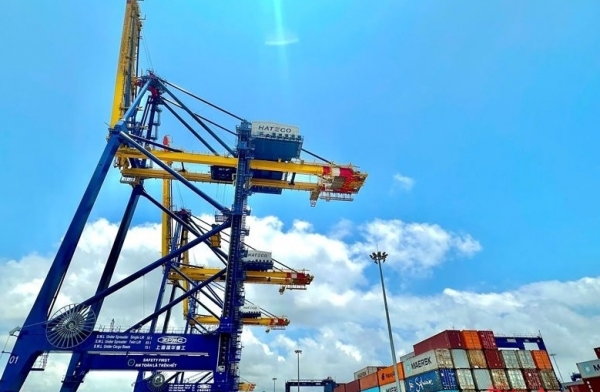
Hai Phong Port: Establishing Its Position on the International Maritime Landscape
Hai Phong Port, one of Vietnam's largest and most strategically important maritime facilities, is progressively solidifying its role on the global maritime map. More than just a crucial logistics gateway for Northern Vietnam, the port has consistently accommodated some of the world's largest container vessels, demonstrating remarkable advancements in port operations and management capabilities. This development positions Hai Phong as a key player in Southeast Asia's maritime ecosystem and a vital node in international shipping routes.
Enhancing Deep-Water Port Operations Capacity
Over recent years, Hai Phong Port has undertaken substantial investments in port infrastructure to enhance its operational capacity. These strategic developments have not only improved the port's ability to accommodate larger vessels but have also increased overall logistics efficiency, meeting the growing demands of global trade. The port's modernization efforts include dredging operations to deepen shipping channels, installing advanced cargo handling equipment, and implementing state-of-the-art terminal management systems.
The infrastructure investments extend to expanding storage facilities, improving road and rail connections to the port, and developing specialized terminals for different cargo types. These comprehensive upgrades position Hai Phong Port as a modern, efficient maritime facility capable of handling the complex demands of contemporary global shipping.
Welving Mega Container Vessels
A testament to its growing international stature, Hai Phong Port has successfully received a series of mega container ships, including vessels from the world's largest shipping lines. These include ships with capacities exceeding 14,000 TEU (Twenty-foot Equivalent Units), demonstrating the port's capability to handle the next generation of container vessels. This achievement not only affirms Hai Phong's position in the global maritime network but also stimulates regional economic growth by increasing cargo throughput and creating additional logistics services.
The ability to accommodate these mega vessels reflects significant improvements in the port's draft depth, berth capacity, and operational efficiency. It also signals growing confidence from international shipping companies in Hai Phong's capabilities, leading to increased direct calls and expanded service networks connecting Northern Vietnam to major global markets.
Role as a Northern Vietnam Logistics Gateway
Leveraging its strategic geographical location, Hai Phong Port serves not only the import-export activities of domestic enterprises but also provides vital connections to numerous international markets. This positioning has transformed Hai Phong into a critical logistics hub, not just for Northern Vietnam but for the entire country. The port facilitates the movement of goods between Vietnam and key global markets, particularly in Asia, Europe, and North America.
The port's extensive logistics network includes integrated services such as customs clearance, warehousing, transportation, and value-added services. This comprehensive approach makes Hai Phong a one-stop solution for international trade, significantly reducing transit times and logistics costs for businesses utilizing its facilities.
A Promising Future for Hai Phong Port
With continuous investment and a sustainable development strategy, Hai Phong Port is poised to further strengthen its position on the international maritime map. Expansion projects, infrastructure upgrades, and increasing cargo volumes will serve as powerful drivers for future growth. The port's development aligns with Vietnam's broader economic strategy of enhancing international trade relations and becoming a more significant player in global supply chains.
Future initiatives include the development of additional specialized terminals, further deepening of navigation channels, and digital transformation efforts to enhance operational efficiency. These developments, combined with Vietnam's favorable economic policies and growing participation in international trade agreements, will likely accelerate Hai Phong's ascent as a leading maritime hub in the region.
Hai Phong Port vs. Other Major Vietnamese Ports
| Port | Annual Capacity (million TEU) | Maximum Vessel Size (TEU) | Strategic Advantages |
|---|---|---|---|
| Hai Phong Port | 6-8 | 14,000+ | Gateway to Northern Vietnam, proximity to industrial zones, extensive logistics network |
| Cat Lai Port (Ho Chi Minh City) | 4-5 | 8,000 | Southern economic hub, direct access to Mekong Delta, established international connections |
| Cai Mep-Thi Vai Port | 5-6 | 18,000 | Deep-water capabilities, proximity to international shipping lanes, specialized for large vessels |
| Da Nang Port | 1-2 | 5,000 | Central location, tourism integration, growing industrial base |
Key Development Milestones
- 2018: Completion of Phase I expansion at Lach Huyen International Port, increasing capacity to 3.5 million TEU annually
- 2019: Introduction of automated container handling systems, improving efficiency by 30%
- 2020: Establishment of direct shipping routes to North America and Europe
- 2021: Implementation of digital customs clearance system, reducing processing time by 70%
- 2022: Successful berthing of first 14,000 TEU container vessel
- 2023: Commencement of Phase II expansion project, targeting 8 million TEU capacity
Economic Impact and Regional Integration
Hai Phong Port's significance extends beyond its physical infrastructure; it serves as an economic engine for Northern Vietnam and contributes substantially to the national economy. The port facilitates approximately 40% of Vietnam's container trade, supporting thousands of direct and indirect jobs in logistics, transportation, manufacturing, and related services.
The port's operations have stimulated the development of industrial zones and economic clusters in Hai Phong and surrounding provinces, creating a thriving ecosystem for international trade. Additionally, Hai Port's integration with Vietnam's broader transportation network—including highways, railways, and air cargo—enhances multimodal connectivity, further strengthening the country's position in global supply chains.
As Vietnam continues to deepen its participation in international trade agreements like the CPTPP, RCEP, and various bilateral agreements, Hai Phong Port is positioned to play an even more critical role in facilitating these trade relationships. The port's ongoing development aligns with Vietnam's ambition to become a manufacturing and logistics hub in Southeast Asia, driving economic growth and regional integration.
Conclusion
In summary, Hai Phong Port stands as more than just a maritime facility—it represents Vietnam's growing integration into the global economy and its aspirations to become a significant player in international trade. With continuous infrastructure investments, technological advancements, and strategic expansion plans, Hai Phong Port is well-positioned to enhance its role in the global maritime network.
As the port continues to evolve, it will not only contribute to Vietnam's economic development but also strengthen the country's position in the global supply chain. In an era where maritime logistics is increasingly vital to global commerce, Hai Phong Port's journey exemplifies how strategic infrastructure development can drive economic growth and international competitiveness.