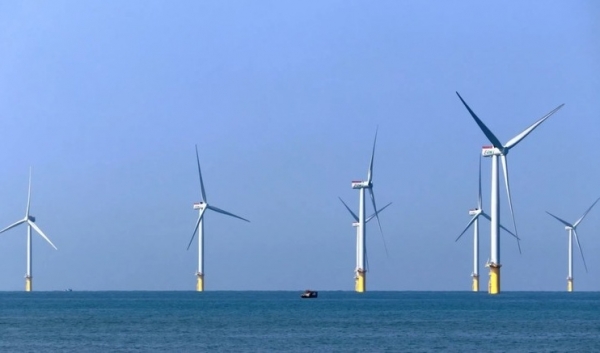
Offshore Wind Power: Establishing Investment Filters for Sustainable Development
The offshore wind power sector is undergoing a significant transformation, with current policy focus shifting from merely encouraging investment to selectively choosing investors with genuine capabilities. The Vietnamese government has issued Decree No. 272/2026/NĐ-CP, aiming to establish necessary filters to ensure effective exploitation of marine resources while creating a foundation for a modern and sustainable offshore wind power industry.
Policy Shift in Offshore Wind Investment
Previously, incentive policies primarily focused on attracting capital from domestic and foreign investors. However, the rapid development of the offshore wind sector has revealed that not all investors possess sufficient capacity and experience to implement large-scale projects effectively. This has necessitated the government to establish clearer criteria for selecting and categorizing investors.
The evolution of Vietnam's offshore wind policy reflects a maturation in the sector's development approach. Early-stage policies focused on rapid capacity expansion and meeting renewable energy targets, while the new framework emphasizes quality, sustainability, and technological advancement. This strategic shift recognizes that successful offshore wind development requires more than just capital—it demands specialized expertise, advanced technology, and long-term commitment.
Decree No. 272/2026/NĐ-CP: In-depth Analysis
The new decree is expected to create a robust legal framework for Vietnam's offshore wind sector. Its key provisions include:
- Establishing clear criteria for investor selection, including experience, financial capacity, and technological capabilities
- Defining transparent permitting processes for offshore wind projects
- Encouraging collaboration between domestic and foreign investors
- Ensuring environmental protection and marine resource conservation during development
These provisions represent a comprehensive approach to governance in the offshore wind sector. By establishing clear standards, the government aims to create a level playing field while ensuring that only qualified participants can develop these complex and capital-intensive projects.
Impact on the Offshore Wind Industry
The implementation of investor filters will contribute to more sustainable development of the offshore wind sector. Capable investors will enhance project quality and efficiency, thereby reducing risks for both investors and the environment. Furthermore, healthy competition among qualified investors will drive technological innovation and cost optimization.
This filtering mechanism is expected to have several positive impacts:
- Improved project quality and reliability
- Enhanced technological transfer and knowledge sharing
- Better alignment with international standards and best practices
- Reduced environmental risks through proper assessment and mitigation
- More efficient use of marine spatial resources
Future Prospects
With the new policies in place, Vietnam's offshore wind sector shows strong potential for significant growth in the coming years. The government expects that offshore wind projects will not only meet domestic energy demands but could potentially export electricity to international markets.
Vietnam possesses considerable advantages for offshore wind development, including extensive coastline areas with favorable wind conditions, growing energy demand, and increasing commitment to renewable energy transition. The combination of natural advantages and supportive policies positions Vietnam as a promising emerging market in the global offshore wind landscape.
International Context and Comparisons
Globally, leading offshore wind markets have implemented various regulatory frameworks to ensure sustainable development. The following table compares key aspects of Vietnam's new decree with established offshore wind markets:
| Regulatory Aspect | Vietnam (New Decree) | Leading Markets (EU, UK, etc.) |
|---|---|---|
| Investor Selection Criteria | Experience, financial capacity, technology | Established track records, technical expertise, financial stability |
| Permitting Process | Being standardized and streamlined | Well-established, often multi-stage processes |
| Environmental Standards | Being strengthened with clear requirements | Stringent, comprehensive environmental impact assessments |
| Grid Connection | Framework under development | Mature systems with dedicated offshore grid infrastructure |
Challenges and Opportunities
Despite the promising outlook, Vietnam's offshore wind sector faces several challenges that need to be addressed:
- Developing specialized human resources with technical expertise
- Establishing supportive infrastructure, particularly grid connection systems
- Navigating complex regulatory and administrative processes
- Securing long-term financing mechanisms
- Building local supply chain capabilities
Concurrently, significant opportunities exist:
- Leveraging Vietnam's extensive coastline and wind resources
- Attracting foreign direct investment with technology transfer
- Creating new employment opportunities in emerging sectors
- Contributing to national energy security and climate goals
- Potential for becoming a regional hub for offshore wind technology and services
Conclusion
The offshore wind sector in Vietnam stands at a critical juncture, with the new decree representing a pivotal moment in its development journey. By establishing appropriate filters for investor selection, the government aims to ensure sustainable, high-quality development that maximizes the sector's potential while minimizing risks.
The successful implementation of these policies will depend on collaboration between government agencies, investors, technology providers, and local communities. With careful planning and execution, Vietnam has the potential to establish itself as a significant player in the global offshore wind industry, contributing to both national development and global climate efforts.
| Key Development Milestones | Timeline | Expected Outcomes |
|---|---|---|
| Implementation of Decree No. 272/2026/NĐ-CP | 2026-2027 | Clear regulatory framework, improved investor selection |
| First phase of major offshore wind projects | 2027-2030 | Initial capacity deployment, technology demonstration |
| Grid infrastructure development | 2028-2035 | Enhanced connectivity, improved integration capacity |
| Industry maturation and potential export | 2030-2040 | Self-sustaining industry, regional energy export |
As Vietnam navigates this transition, the lessons learned and frameworks established could serve as a model for other emerging offshore wind markets, contributing to the global expansion of this critical renewable energy source.