Energy Security in the New Era: When Renewable Energy Surpasses Fossil Fuels
In a world witnessing complex geopolitical shifts and consecutive oil shocks, the concept of energy security is undergoing a revolutionary transformation. Historically, fossil fuels have been emblematic of energy security due to established supply chains and continuous production capabilities. Meanwhile, renewable energy was often perceived as risky due to its variable nature. However, this equation is reversing as global oil shocks destabilize the fossil fuel industry, and energy storage systems are making wind and solar power more reliable options.
Geopolitical Shifts and Their Impact on Energy Security
The attack on Iran led by the United States and Israel resulted in the near-complete shutdown of the most critical artery of the oil industry. Since March, one-fifth of the world's crude oil and gas trade has been blocked at the Strait of Hormuz, causing global oil price volatility and posing a particularly severe threat to Asian markets—the primary customers purchasing oil and gas passing through this strategic waterway.
In this context, the relative advantage of renewable energy is becoming increasingly evident on a global scale. As David Frykman, general partner of the Stockholm-based venture capital firm Norrsken, wrote in a commentary for Fortune this year:
"Wind and solar power cannot be embargoed, blockaded, or cut off by a foreign power. Every terawatt-hour of domestic renewable electricity is a terawatt-hour that no adversary can weaponize."
Challenges of Renewable Energy and Storage Solutions
The sole issue is that solar and wind energy are intermittent, meaning they only generate electricity when the sun is shining and wind is blowing, unlike baseload power sources that can produce continuously 24/7 and can be easily adjusted to meet demand. Unfortunately, demand often doesn't align with peak solar and wind production hours. This makes energy storage—capturing excess energy during high-production periods and then returning it to the grid when demand exceeds supply—an essential component for renewable-dependent energy systems.
As a result, demand for hybrid energy storage systems has surged worldwide, in both rich and poor countries, large and small. Not surprisingly, China is leading in the scale and speed of deployment of this relatively new technology.
Table: Traditional Energy Sources vs. Renewable Energy
| Characteristic | Fossil Fuels | Renewable Energy |
|---|---|---|
| Availability | Depends on finite resources | Leverages infinite resources |
| Supply Security | Vulnerable to geopolitical conflicts | Cannot be blocked by adversaries |
| Stability | Provides continuous 24/7 power | Weather-dependent |
| Environmental Impact | Greenhouse gas emissions | Near-zero emissions |
China Leads with World's Largest Hybrid Solar Power Plant
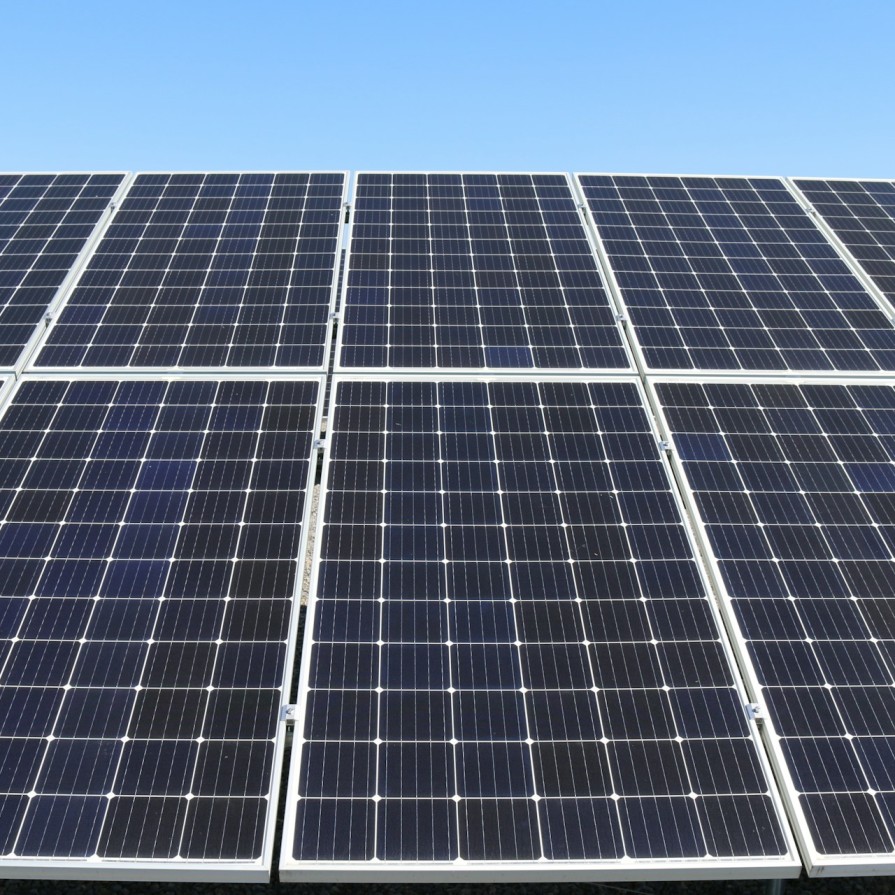
China's Three Gorges Corporation (CTG) is currently completing the world's largest hybrid solar power plant in the Gobi Desert, where the system has been connected to the grid and just began commercial trial operations this month.
The massive 1-gigawatt (GW) facility, located in Xinjiang in northwest China, uses standard photovoltaic solar panels as well as concentrated solar power (CSP) technology and molten salt thermal energy storage systems that can store energy for up to eight hours overnight. This allows the plant to continue generating electricity even after sunset.
Table: Lithium-ion Batteries vs. Molten Salt Batteries
| Characteristic | Lithium-ion Batteries | Molten Salt Batteries |
|---|---|---|
| Storage Duration | Maximum of about 4 hours | Up to 8 hours or more |
| Cost | Higher | Lower for long durations |
| Environmental Impact | Difficult to recycle | No emissions during operation |
| Commercial Viability | Proven | In commercialization phase |
Technology Breakthroughs and the Future of Clean Energy
Currently, most hybrid solar systems combined with batteries rely on lithium-ion technology. The fact that CTG's plant does not use lithium-ion batteries marks a significant step forward for alternative and long-duration storage solutions. Lithium-ion batteries have high energy density and perform well across various temperature ranges, making them ideal in many ways for energy storage. However, reliance on lithium also presents significant challenges.
There are substantial environmental, economic, and geopolitical limitations to mining and depending on "white gold." Furthermore, lithium-ion batteries can only store energy for a maximum of about four hours, creating a major challenge to achieving energy security throughout all hours of the day and across all seasons of the year.
Niu Jianle, CTG Hami project director, was recently quoted by Interesting Engineering:
"Lithium batteries are designed for short-term peak shaving, while PV only generates electricity during daytime hours. CSP thermal storage excels with large capacity, long discharge cycles, and no emissions during operation."
He continued to describe the system's commercial trial operations as "a landmark leap that brings the technology out of the laboratory and into large-scale commercial deployment."
The Chinese company is clearly optimistic about this technology's potential as a cornerstone of the country's future energy system, and other companies have plans to expand this technology domestically and internationally. China Energy Engineering Corp has already built an even larger hybrid solar power plant nearby.
Conclusion: The Future of Energy Security
The development of energy storage technologies like molten salt batteries is completely transforming how we perceive energy security. As geopolitical conflicts continue to impact fossil fuel supplies, the ability to generate renewable energy that can be stored and used anytime is becoming a strategic advantage for countries worldwide.
China is leading this energy revolution, but with global demand for energy-plus-storage systems surging, we can expect more countries and companies to invest in this technology in the coming years. In the future, energy security will no longer depend on controlling finite resources but on the ability to harness and store energy from infinite renewable sources.