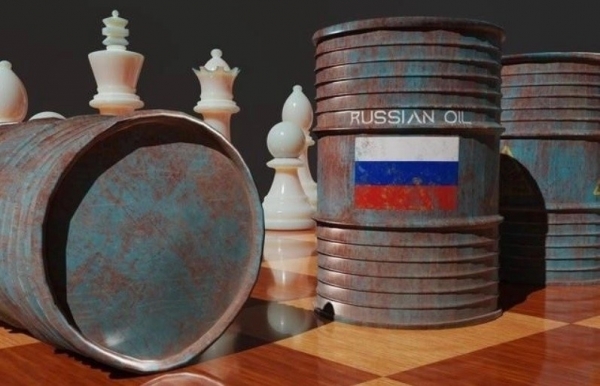
Millions of Barrels of Russian Crude Oil Stranded at Sea: Post-Conflict Transportation Challenges
The ongoing conflict between Russia and Ukraine has created an unprecedented situation in the global energy market: vast quantities of Russian crude oil are currently stranded at sea following Ukrainian military operations targeting Russian oil refining facilities. This development is causing significant disruptions to the global oil supply chain and potentially affecting energy prices worldwide.
Background of the Crisis
Recent military campaigns by Ukraine have specifically targeted critical oil infrastructure in Russia, including refineries and pipeline systems. According to multiple sources, these attacks have caused substantial damage to Russia's oil processing capabilities, rendering large volumes of crude oil unable to be refined or transported to international markets.
The consequence is that millions of barrels of crude oil are now idling on supertankers offshore, unable to be brought to shore for processing. This situation has been described by analysts as both a strategic opportunity for Ukraine to weaken Russia's oil industry and a new challenge for the global energy market.
The Magnitude of the Problem
Initial estimates indicate that approximately 50-70 million barrels of Russian crude oil are currently stranded on oil tankers at sea. This volume represents Russia's typical export volume for approximately 3-5 days, but due to the damaged refineries, this oil cannot be processed even if brought to port facilities.
Energy analysts suggest that this situation could persist for several weeks, or potentially months, depending on the speed of repairs to damaged infrastructure and Russia's ability to find alternative solutions. The stranded oil represents a significant logistical and financial challenge, as storage capacity is limited and vessels cannot remain indefinitely without movement.
Impact on the Global Oil Market
This development is causing significant volatility in the global oil market:
- Crude oil prices have experienced significant fluctuations in recent days, with Brent crude increasing by over 3% in yesterday's trading session before moderating.
- Countries importing oil from Russia are facing supply shortages and must seek alternative suppliers.
- Russia is facing pressure to store the accumulating crude oil, potentially leading to production cuts in the near term.
- Insurance costs for oil tankers in the region have increased due to heightened security risks.
- Global refining capacity utilization rates are being affected as refineries designed for Russian crude seek alternative feedstocks.
Reactions from Stakeholders
Russia: Moscow has vehemently condemned the Ukrainian attacks, labeling them as "terrorist acts" against critical national infrastructure. The Russian government is urgently seeking solutions to handle the stranded crude oil, including increased utilization of unaffected refineries, identification of new export markets, or temporary production reductions. The Ministry of Energy has reportedly convened emergency meetings with oil companies to develop contingency plans.
Ukraine: While Ukrainian officials have neither confirmed nor denied responsibility for the attacks, they have expressed support for actions aimed at weakening Russia's economy. Ukrainian leadership appears to be leveraging the situation to exert additional pressure on Russia amidst the ongoing conflict. Strategic communications from Ukrainian officials suggest they view targeting energy infrastructure as a legitimate tactic in the broader conflict.
Oil Importing Nations: Countries such as China, India, and various European nations are confronting challenges in maintaining stable crude oil supplies. Some nations have already begun sourcing alternatives from the Middle East, Africa, and Latin America. Import-dependent economies are particularly concerned about potential price increases and supply disruptions that could impact their economic recovery and inflation management efforts.
Potential Solutions
Industry experts have proposed several potential approaches to address the situation:
- Russia could increase exports of unrefined crude oil rather than refined products, but this requires operational refineries and appropriate port facilities.
- Exploration of new export markets in Asia, particularly China and India, which continue to import oil from Russia despite geopolitical tensions.
- Utilization of strategic petroleum reserves by consuming nations to offset temporary supply shortages.
- Increased production from alternative oil sources to compensate for reduced Russian supply.
- Temporary rerouting of oil through alternative pipeline routes or rail networks where feasible.
- Implementation of floating storage and processing solutions where port facilities are compromised.
Long-term Economic Implications
The stranded Russian crude oil situation may have several long-term economic consequences:
- Russia may be forced to reduce oil production over an extended period, significantly impacting the country's revenue streams and fiscal stability.
- Importing countries are likely to diversify their oil suppliers, reducing dependence on Russian oil in the future.
- Global oil prices may experience short-term increases but could stabilize as markets adjust to the new supply dynamics.
- Investment in alternative energy sources and refining capacity may accelerate in response to supply chain vulnerabilities.
- The incident may prompt reevaluation of energy security strategies by nations worldwide, potentially leading to increased strategic reserves and domestic production incentives.
Future Scenarios
Energy analysts have developed various scenarios for the evolution of the situation:
| Scenario | Probability | Impact on Oil Prices | Impact on Russian Economy | Global Market Response |
|---|---|---|---|---|
| Prolonged situation (>3 months) | 30% | 10-15% increase | Significant production cuts, major revenue loss | Accelerated diversification, increased strategic reserves |
| Extended resolution (1-3 months) | 50% | 5-10% increase | Temporary revenue loss, operational disruption | Modest diversification, price volatility |
| Rapid resolution (<1 month) | 20% | <5% increase | Limited impact, manageable disruption | Minimal market adjustment |
The World Bank and OPEC are closely monitoring the situation and are expected to update their supply and price forecasts in upcoming reports. The International Energy Agency has also indicated it may convene an emergency meeting if the situation deteriorates further.
Conclusion
The current situation with millions of barrels of Russian crude oil stranded at sea represents a significant consequence of the Russia-Ukraine conflict, creating new challenges for the global energy market. As stakeholders seek solutions, the oil market is likely to experience continued volatility in the coming period. This incident also highlights the fragility of global energy supply chains and their susceptibility to disruption by geopolitical conflicts.
Nations and energy companies must prepare for continued market fluctuations and diversify their supply sources to mitigate risks in the context of ongoing political uncertainty in Europe. The situation underscores the complex interplay between geopolitical conflicts and energy security, with implications that extend far beyond the immediate market disruptions.
Energy market participants are advised to maintain heightened risk management protocols and contingency planning as the situation evolves. The coming weeks will likely reveal whether this represents a temporary disruption or a more permanent shift in global energy dynamics.