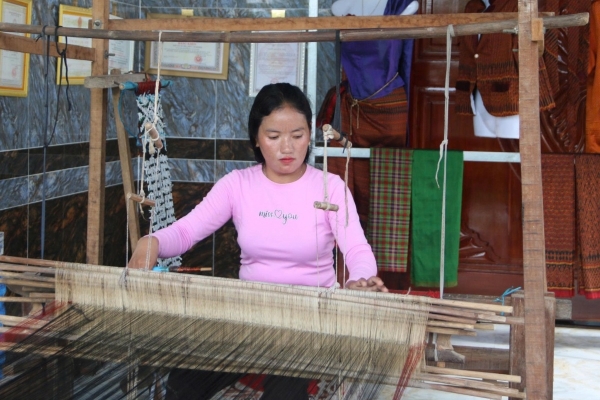
Centuries-Old Khmer Textile Weaving in the Modern Era
In An Giang Province, a centuries-old tradition of Khmer textile weaving continues to thrive amidst the rapid pace of modernization. More than just a handicraft, this intricate art form represents a precious cultural heritage that has been preserved through generations. Today, traditional Khmer textiles are finding new life through integration with community tourism, creating sustainable livelihoods for local residents while preserving this unique cultural treasure.
Traditional Craft in the Modern World
Khmer textiles are not merely ordinary woven products; they are cultural artifacts containing profound spiritual, religious, and aesthetic values of the Khmer community in Southern Vietnam. Each pattern, color, and design element carries specific meanings that reflect the spiritual life, natural environment, and aesthetic principles of the Khmer people.
An Giang Province, home to a long-established Khmer community, has safeguarded this textile weaving tradition as a valuable cultural asset. However, like many traditional crafts worldwide, Khmer weaving faces significant challenges in the face of industrialization and market competition.
Historical and Cultural Significance
The Khmer textile weaving tradition spans hundreds of years, intricately woven into the daily life, religious practices, and important ceremonies of the community. From fabrics used in festivals and weddings to everyday garments, all are created through the skilled hands of Khmer women.
Elder artisans explain that each textile pattern tells a unique story. Animal motifs, botanical designs, celestial symbols like the sun and moon not only demonstrate the weavers' keen observation of nature but also embody aspirations for a prosperous, happy life and a connection to the spiritual world.
Traditional Weaving Process
The traditional Khmer textile weaving process is remarkably complex, requiring meticulous attention to detail and immense patience. From selecting fibers and dyeing to the actual weaving on traditional looms, every step is done by hand.
- Fiber selection and preparation: Naturally grown cotton from local areas serves as the primary material. The fibers are hand-spun and prepared using traditional methods.
- Natural dyeing: Artisans use various leaves, tree barks, flowers, and fruits to create natural, safe, and vibrant colors.
- Pattern design: Each pattern is designed based on the artisan's experience and inspiration, deeply rooted in Khmer cultural identity.
- Hand weaving on looms: The fibers are hand-woven on traditional looms, demanding exceptional skill and high concentration.
- Product finishing: The finished fabric is crafted into various products such as scarves, bags, and traditional clothing.
Traditional Khmer Textile Weaving Process
| Step | Description | Time Required | Characteristics |
|---|---|---|---|
| 1 | Fiber selection and preparation | 1-2 days | Natural cotton fibers, hand-spun |
| 2 | Natural dyeing | 2-3 days | Using natural materials from the environment |
| 3 | Pattern design | 3-5 days | Based on experience and cultural inspiration |
| 4 | Hand weaving on looms | 5-7 days | Meticulous hand weaving technique |
| 5 | Product finishing | 1-2 days | Cutting, sewing, decorative details |
Challenges and New Opportunities
Like many traditional crafts worldwide, Khmer textile weaving in An Giang faces numerous challenges in the modern market economy. Competition from inexpensive industrial products, a declining number of young artisans entering the craft, and limited market access represent significant obstacles to its continuation.
In recent years, however, the craft has found new opportunities through integration with community tourism. Visitors to An Giang now not only explore and learn about Khmer culture but also have the opportunity to experience the textile weaving process firsthand and purchase products as unique souvenirs.
Community Tourism Development
The integration of traditional weaving with community tourism has opened new pathways for this ancient craft. Many weaving villages have organized workshops where tourists can directly experience the weaving process, from selecting fibers to creating finished products.
"Previously, only people within our village knew how to weave Khmer textiles," shares Mrs. Sam Thi Hong, a master artisan in An Giang's textile weaving village. "But with tourism development, many visitors, especially young people, have come to learn and fall in love with this craft. Many have become our apprentices, helping to spread this tradition more widely."
Economic and Social Impact
The combination of traditional craft and community tourism has brought tangible benefits to local communities:
- Creates additional employment opportunities and increases income for local residents, particularly women and elderly community members.
- Preserves and promotes traditional cultural values.
- Enhances community awareness about cultural heritage preservation.
- Creates distinctive tourism products that attract visitors.
- Drives local economic development and sustainable poverty reduction.
Economic Impact Comparison: Before and After Tourism Integration
| Indicator | Before Tourism Integration | After Tourism Integration | Growth Rate |
|---|---|---|---|
| Participating households | 15 households | 45 households | +200% |
| Average monthly income | 2 million VND | 5 million VND | +150% |
| Labor force | 30 people | 90 people | +200% |
| Monthly products sold | 50 products | 200 products | +300% |
| Tourism revenue | 0 VND | 50 million VND | Not applicable |
Future Development Prospects
For Khmer textile weaving to continue developing sustainably, comprehensive solutions need to be implemented. Building brand identity, product diversification, quality enhancement, market connection, and workforce training are crucial directions for future development.
According to the Department of Culture, Sports, and Tourism of An Giang Province, the province has plans to support textile weaving villages in product development, connect them with distribution channels, and promote them more widely. Simultaneously, the province encourages business participation in supporting and investing in these traditional craft villages.
"We have identified developing community tourism linked with cultural heritage preservation as the correct direction," states Mr. Nguyen Van Tung, Vice Chairman of An Giang Provincial People's Committee. "Khmer textile weaving is not just a tourism product but a cultural asset that needs to be preserved. We will continue to implement practical support policies to ensure the craft develops sustainably."
Conclusion
The Khmer textile weaving tradition in An Giang Province demonstrates that amidst the flow of time and modern life, traditional values can still find their place and continue to develop. The integration of traditional handcrafting with community tourism not only creates new livelihoods for local residents but also contributes to preserving and promoting the unique cultural heritage of the Khmer people.
This serves as a living testament that when empowered and provided with development opportunities, traditional craft villages can become drivers for sustainable socio-economic development while maintaining the cultural identity of the community. The future of Khmer textile weaving in An Giang looks promising as cultural values are harmoniously combined with modern market demands.