Shared Textbooks: Growing Trend Among Vietnamese Parents Sparks Environmental and Financial Benefits
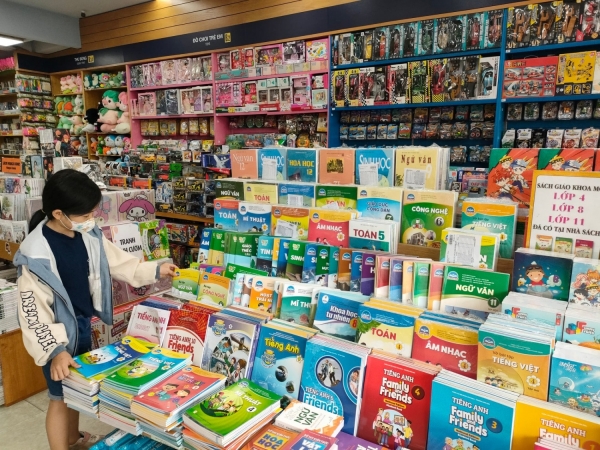
As mid-July approaches, bookstores along Đinh Lễ and Lý Thường Kiệt streets in Hanoi buzz with activity as parents accompany their children to purchase textbooks for the upcoming academic year. Amidst the aroma of fresh paper and the sound of pages turning, lively conversations emerge among parents whose children born in 2020 are about to enter first grade.
The Annual Textbook Purchasing Landscape
July has always been the busiest season for bookstores across Vietnam, where parents and students converge to prepare for the new school year. This year, however, the situation has become particularly notable as many parents opt for shared textbook solutions to reduce costs and minimize environmental impact.
Surveys conducted at major bookstores reveal a 20-30% decrease in customers compared to previous years, primarily due to the growing popularity of using pre-owned educational materials. This shift represents a significant change in consumption patterns within the educational sector.
The Rise of Textbook Sharing Culture
"I've decided to buy used textbooks for my child entering first grade," shares Ms. Nguyễn Thị Mai from Cầu Giấy, Hanoi. "My child will only use these books for one year before they can be passed on to younger students. This approach not only saves our family money but also contributes to environmental protection."
Similarly, Mr. Trần Văn Nam from Hoàng Mai, Hanoi notes: "Textbooks are quite expensive, especially with three children of my own. If we can share books among siblings and other children in the community, I'll save a considerable amount."
Comprehensive Benefits of Shared Textbook Usage
The practice of sharing textbooks offers multiple practical advantages:
- Financial Savings: A complete set of first-grade textbooks costs between 300,000 to 500,000 VND (approximately $12-20 USD), excluding supplementary materials. For families with multiple children, this represents a substantial financial burden.
- Environmental Conservation: Reduces paper consumption and decreases the number of trees harvested for textbook production. The average textbook requires approximately 2-3 kilograms of paper, meaning each shared set potentially saves several kilograms of paper annually.
- Community Building: Creates connections among families within residential areas, fostering mutual support and resource exchange networks.
- Financial Literacy Education: Helps children understand the importance of responsible resource utilization and the value of sharing.
- Reduced Educational Inequality: Makes educational materials more accessible to economically disadvantaged families.
Challenges and Innovative Solutions
Despite its benefits, textbook sharing presents several challenges:
- Used books may contain writing, drawings, or damage that affects usability
- Certain subjects workbooks require direct completion in the books themselves
- Quality of used books can be inconsistent
- Hybrid learning models that require digital resources may complicate sharing
In response to these issues, parents have developed creative solutions:
- Purchasing used textbooks accompanied by separate workbooks for direct completion
- Photocopying important sections for reference while preserving the original book
- Organizing community-based textbook exchange systems within residential neighborhoods
- Digital scanning of textbooks for reference while using physical copies for classroom activities
- Implementing "book adoption" programs where families donate textbooks after use
Expert Perspectives on Educational Sustainability
According to PGS.TS Nguyễn Văn Hùng from Vietnam Institute of Educational Sciences: "The trend of sharing textbooks is highly encouraging. It not only reduces financial burdens but also educates students about conservation and environmental awareness. However, specific guidelines are needed to ensure educational quality remains unaffected."
Ms. Trần Thị Thu Hằng, a primary school teacher in Hanoi, shares: "I fully support textbook sharing. In my teaching practice, I encourage students to preserve their books so they can be donated to younger children. This helps students understand the value of resources and appreciate what they have."
Dr. Lê Hoàng Anh, an environmental education specialist, adds: "Textbook sharing aligns perfectly with sustainable development goals in education. It reduces the carbon footprint of education systems while promoting a circular economy approach to educational resources."
Comparative Analysis: New vs. Used Textbooks
| Criteria | New Textbooks | Used/Shared Textbooks |
|---|---|---|
| Cost | High (300,000 - 500,000 VND/set) | Low (50,000 - 150,000 VND/set) |
| Quality | New, pristine condition | Previously used, may contain notes |
| Sensory Experience | Distinctive new paper smell, crisp pages | |
| Emotional Impact | Creates excitement and fresh start feeling | |
| Environmental Impact | Creates new production demand | |
| Educational Value | Standardized learning experience | |
| Long-term Viability | Single-use cycle |
Market Response and Industry Adaptation
Bookstore owners and publishers have begun adapting to this emerging trend. Many retailers now offer "textbook exchange" programs where customers can trade in used books for discounts on new purchases. Some bookstores have established dedicated sections for quality used textbooks, complete with grading systems based on condition.
Publishers are also exploring more sustainable practices, including using recycled paper in production and developing digital companion resources that can be shared regardless of physical textbook ownership. Several educational publishers have begun offering "hybrid packages" combining core textbooks with separate workbooks designed for individual use.
Government and Educational Institution Response
The Ministry of Education and Training has acknowledged the textbook sharing trend, with officials noting that it aligns with the country's educational development goals. While maintaining that core curriculum materials should remain standardized, the ministry has expressed support for initiatives that promote resource efficiency and environmental consciousness in education.
Several schools have implemented textbook libraries where students can borrow materials for the academic year, returning them at the end of the term. These programs have shown particular success in rural and economically disadvantaged areas, significantly reducing the financial barrier to education.
Future Implications and Long-term Benefits
The growing textbook sharing movement in Vietnam reflects broader global trends toward sustainable consumption in education. As environmental concerns become increasingly urgent, such practices may become standard rather than exceptional. The potential long-term benefits include:
- Reduced deforestation and paper consumption
- Lower educational expenses for families
- Development of community-based resource sharing networks
- Cultivation of environmental awareness from an early age
- Potential for similar sharing models to expand to other educational resources
Conclusion: A Sustainable Path Forward for Education
The textbook sharing trend in Vietnam represents a positive convergence of economic pragmatism and environmental consciousness. As evidenced by the 20-30% decrease in new textbook purchases, this movement has gained significant traction among parents and educators alike.
Bookstores have proactively adapted by advising parents on selecting quality used textbooks or combining used textbooks with separate workbooks—a testament to the educational sector's flexibility in responding to emerging social needs.
Ultimately, textbook sharing exemplifies a progressive approach to modern education that balances financial constraints with environmental responsibility. As this trend continues to gain momentum, it has the potential to establish new norms for resource utilization in educational systems, fostering both economic efficiency and ecological sustainability for future generations.