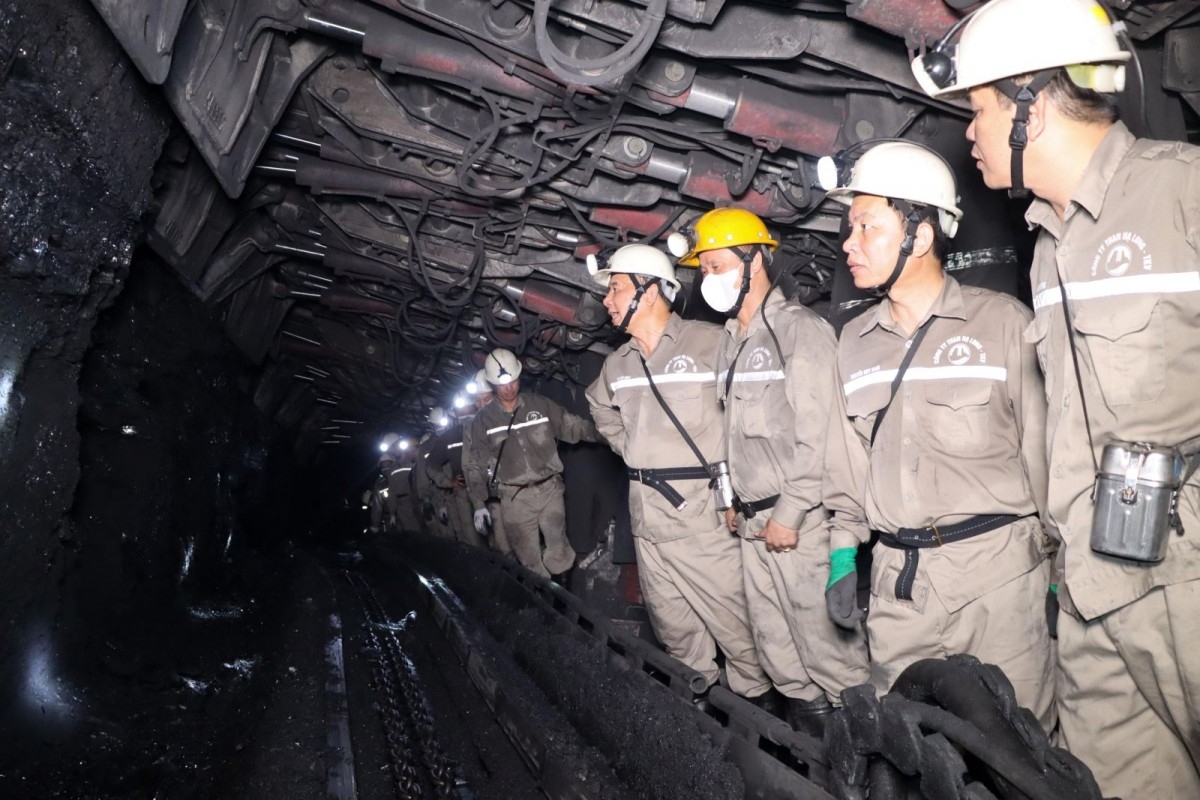
Leadership of Vietnam Coal and Mineral Industries Group Inspects Mining Operations at Ha Long Coal Company
In the morning of July 15, 2026, Mr. Nguyen Huy Nam, Deputy General Director of the Vietnam Coal and Mineral Industries Group (TKV) and simultaneously Director of the International Investment Cooperation and Production Center in Quang Ninh, conducted an on-site inspection of mining operations and held a working session with leadership from Ha Long Coal Company, a subsidiary unit of TKV.
Comprehensive Overview of the Inspection Visit
According to official information from TKV, this inspection aimed to evaluate the current production status, labor safety standards, and mining efficiency at the coal mines operated by Ha Long Coal Company. Mr. Nguyen Huy Nam dedicated significant time to directly observe the operational processes of mining machinery and equipment, while engaging in detailed discussions with workers at the mining site.
During the working session, TKV leadership received a comprehensive report from the Board of Directors of Ha Long Coal Company regarding production results for the first half of the year, challenges encountered during the mining process, and proposed solutions to enhance operational efficiency.
Profile of Ha Long Coal Company
Ha Long Coal Company stands as one of the primary coal production units under TKV, boasting a long history of development and making substantial contributions to Vietnam's national coal output. The company manages and operates coal mines in the Quang Ninh region, including the renowned Ha Long Mine, which has been a cornerstone of Vietnam's coal industry for decades.
| Key Information about Ha Long Coal Company | |
|---|---|
| Established | 1956 |
| Headquarters | Tổ 8, khu 7B, phường Cẩm Trung, thành phố Cẩm Phả, tỉnh Quảng Ninh |
| 2025 Coal Production Volume | 2.5 million tons |
| Workforce Size | Over 5,000 employees |
| Major Mining Areas | Quang Ninh Province, including Ha Long Mine |
Significance of Vietnam's Coal Industry in the National Energy Landscape
The coal and mineral industry in Vietnam, under the management of TKV, maintains a crucial position in the country's energy structure, particularly during the current energy transition phase. Coal supplies approximately 35% of Vietnam's total electricity output, playing a pivotal role in ensuring national energy security.
However, the coal industry faces numerous challenges, including pressure to reduce greenhouse gas emissions, increasing environmental protection requirements, and the growing demand to transition toward renewable energy sources. These factors necessitate a strategic reorientation of the industry's development trajectory.
Current Challenges and Opportunities
The coal mining sector in Vietnam confronts several critical challenges:
- Environmental concerns related to traditional mining methods
- Global pressure to reduce carbon emissions
- Technological obsolescence in some mining operations
- Workplace safety issues in underground mining environments
Simultaneously, the industry presents significant opportunities:
- Development of cleaner coal technologies
- Integration of digitalization and automation
- Expansion into value-added downstream products
- Transition toward sustainable mining practices
Strategic Development Orientation of TKV
According to TKV's development strategy through 2030, the organization is focusing on several key strategic directions:
- Modernization of mining technology, with increased emphasis on automation and digitalization
- Investment in cleaner coal mining solutions and processing technologies
- Development of new business sectors beyond coal, including renewable energy and construction materials
- Enhancement of mineral resource utilization efficiency
- Implementation of sustainable mining practices and environmental protection measures
Technology Transformation Initiatives
As part of its modernization efforts, TKV has been implementing several technology transformation initiatives:
- Deployment of IoT sensors for real-time monitoring of mining conditions
- Introduction of automated drilling and cutting systems
- Implementation of digital twin technology for mine planning and simulation
- Development of AI-powered safety monitoring systems
Outcomes of the Inspection Visit
The inspection visit by Mr. Nguyen Huy Nam acknowledged the significant efforts made by Ha Long Coal Company in maintaining stable production and improving working conditions for employees. At the same time, TKV leadership identified several areas requiring improvement, particularly in labor safety assurance and the application of new technologies.
Mr. Nguyen Huy Nam emphasized: "TKV is committed to continuing investment in the modernization of mining systems across its subsidiary units, including Ha Long Coal Company, with the objectives of enhancing productivity, improving efficiency, and ensuring absolute safety for workers."
Key Action Items Identified
Following the inspection, several key action items were identified for implementation:
- Accelerated adoption of modern mining equipment at Ha Long Mine
- Enhanced worker training programs on safety protocols and new technologies
- Implementation of advanced ventilation systems for improved underground air quality
- Development of a comprehensive digital transformation roadmap for the company
Broader Context: TKV's Supervision Framework
This inspection visit forms part of a comprehensive series of monitoring and production guidance activities conducted by TKV across its subsidiary units nationwide. These activities demonstrate the conglomerate's particular attention to coal mining operations—a cornerstone economic sector of Vietnam.
TKV's supervisory framework incorporates regular inspections, performance evaluations, and strategic planning sessions to ensure that all subsidiary units align with the organization's overall development objectives while meeting national production targets and safety standards.
Industry Outlook
Looking ahead, Vietnam's coal industry is expected to undergo significant transformation while maintaining its role in the national energy mix. The integration of advanced technologies, adoption of sustainable practices, and gradual diversification into complementary energy sectors will define the industry's trajectory in the coming decades.
As Vietnam continues its economic development while addressing environmental commitments, the coal industry—under TKV's leadership—must balance immediate production needs with long-term sustainability objectives, positioning itself as a responsible and modern component of the nation's energy landscape.