Iran Expands Global Oil Threat as Houthi Activities Escalate in Red Sea
Iran has directed Houthi forces in Yemen to prepare for sabotage operations against oil routes through the Red Sea, in potential retaliation if the United States attacks Iranian energy infrastructure. Reports indicate that missiles and drones have been deployed near the Bab el-Mandeb strait, with Houthi forces awaiting orders from Iran's Islamic Revolutionary Guard Corps (IRGC) to begin attacking vessels by the end of Thursday.
Tehran's Pincer Strategy
This represents a "pincer strategy" by Tehran targeting oil routes, building on their existing advantage at the Strait of Hormuz by bringing Houthi forces into play to threaten the southern entrance to the Red Sea and the Bab el-Mandeb strait, through which Saudi Arabia currently depends for the majority of its exports.
Recent Developments
July 13: Yemeni government forces attacked the runway at Sanaa International Airport to prevent Iranian aircraft carrying Houthi delegations from landing.
Houthi Response: The Houthis retaliated with ballistic missiles and drones against Abha International Airport in southern Saudi Arabia, breaking the relative peace that had existed since the 2022 ceasefire agreement.
July 16: Houthi leader Abdul Malik al-Houthi warned that Saudi oil facilities, seaports, airports, and other critical infrastructure would become targets of missiles and drones if Riyadh refuses to cease and desist.
Impact on Energy Security
This represents the deteriorating relations in the Gulf that both Iran and Israel have been waiting for. It presents a perfect opportunity to justify their naval pincer tactics, not merely as a response to Trump-era threats to Iranian power plants and bridges.
| Parameter | Saudi Arabia | Impact if attacked |
|---|---|---|
| Energy exports via Red Sea | 70% | Dependent on route through Bab el-Mandeb |
| Alternative capacity | Limited | Diversion via northern pipeline and Mediterranean terminals |
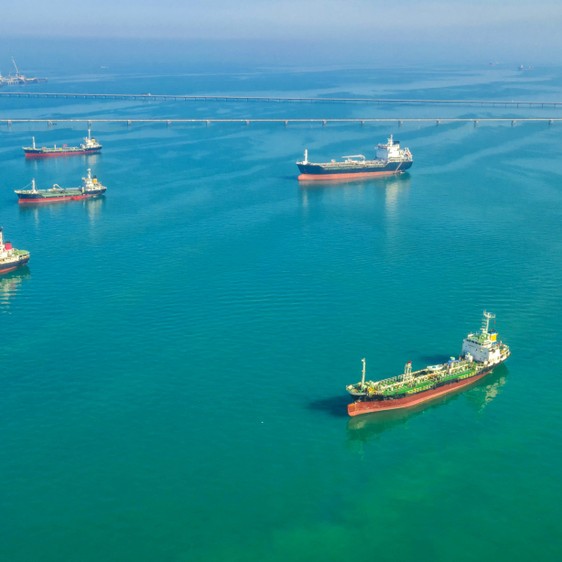
For Saudi Arabia, this means the threat to 70% of its energy exports being rerouted through the Red Sea, avoiding Hormuz. Oil tankers leaving the Red Sea port of Yanbu must pass through the Bab el-Mandeb strait to reach the Indian Ocean. Disruption at Bab el-Mandeb would force rerouting via the northern pipeline and Mediterranean terminals with limited capacity.
Iran's New Tactics
A Houthi campaign around Bab el-Mandeb would force Iran's enemies to protect merchant shipping in two separate maritime spaces over 1,000 miles apart. This also means Saudi Arabia would need to focus on new threats from the south while maintaining air defense in the northeast against Iran.
The Yemeni Situation
Houthi forces are not under direct command of Tehran. They make their own decisions, as they initially did by retaliating against Saudi attacks on the Houthi-controlled Sanaa airport. However, clear coordination is now occurring, with continuous weapons transfers as Iran takes advantage of this new opportunity.
And it's only a matter of time before the Houthis are brought into the game.
Historical Context
Yemen has been an active security concern for Saudi Arabia, despite a fragile ceasefire agreement since 2022 and tensions that have cooled, during which the Houthis have rebuilt and rearmed with Iranian support.
| Event | Timeline | Impact |
|---|---|---|
| Aramco attack | September 2019 | Loss of 5.7 million barrels/day (50% of Saudi output, 5% of global supply) |
| Oil prices | Post-attack | Largest single-day increase since the 1990 Gulf crisis |
Riyadh's Greatest Fear
What Saudi Arabia fears most is a repeat of 2019 on a larger scale with direct Iranian involvement and coordination. The Houthis claimed responsibility for the September 2019 drone and missile attack on the Abqaiq processing complex and Khurais oil field, eliminating 5.7 million barrels per day from production - more than half of Saudi Arabia's output and 5% of global supply. This led to the largest single-day oil price increase since the 1990 Gulf crisis. UN investigators later determined that the weapons were not launched from Houthi-controlled Yemen, while Saudi Arabia blamed Iran.
Conclusion
The recent escalation of tensions shows a calculated strategy by Iran to expand threats to regional energy security. By combining southern sea routes with existing pressure at the Strait of Hormuz, Tehran is creating a complex situation for regional adversaries, particularly Saudi Arabia and Western allies.
The increasing involvement of Houthi forces, while not entirely under direct Iranian control, shows Tehran's willingness to use proxy forces to achieve strategic objectives. This raises significant questions about regional stability and global energy security in the coming months.
The rearmed and reorganized Houthi forces during the ceasefire period have created a new threat that Riyadh must face while maintaining other security threats from the northeast. The balance of power is shifting in Iran's favor, creating a significant challenge to international diplomatic and security efforts.
#RedSea #Iran #Houthi #SaudiArabia #Energy #RegionalSecurity #YemenConflict #BabElMandeb