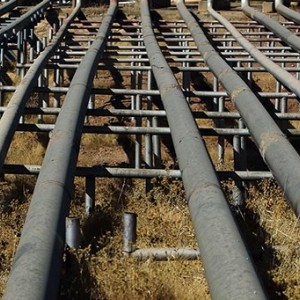
ConocoPhillips and BP Forge $25 Billion Partnership to Develop Kirkuk Oil Field
In a landmark deal reshaping Iraq's energy landscape, American energy giant ConocoPhillips (NYSE:COP) has agreed to acquire a 42% stake in a subsidiary of BP Plc (NYSE:BP) that covers four major oil fields in the Kirkuk region of northern Iraq. The collaboration aims to undertake a comprehensive redevelopment and production optimization initiative with a targeted investment of $25 billion, marking one of the most significant foreign investments in Iraq's energy sector in recent years.
ConocoPhillips' Strategic Return to Iraqi Energy Sector
This agreement marks ConocoPhillips' return to Iraq after more than a decade of absence from the country's oil industry. The move aligns perfectly with Baghdad's strategic objectives to expand American investment in its energy sector, diversifying its international partnerships beyond traditional relationships. The Development and Production Contract (DPC) specifically targets the initial phase of development, with ambitions to extract over 3 billion barrels of oil equivalent from the region.
Both companies anticipate that the joint venture will operate as a capital-contribution subsidiary, requiring no significant initial capital outlay from either corporation. Instead, profits will be structured to be proportional to increased production volumes and associated costs, creating a performance-based incentive model for both partners.
| Parameter | Details |
|---|---|
| Participating Companies | ConocoPhillips & BP Plc |
| Ownership Structure | ConocoPhillips: 42%, BP: 58% |
| Operational Area | Four major oil fields in Kirkuk, northern Iraq |
| Investment Commitment | $25 billion |
| Production Target | Over 3 billion barrels of oil equivalent |
| Contract Duration | 20 years (with potential extensions) |
Geopolitical Context and Iraq's Energy Strategy
The partnership emerges against a backdrop of Iraq's deliberate efforts to rebalance its international energy partnerships. Iraqi Prime Minister Ali Al-Zaidi has recently proposed major energy agreements with Western companies such as ConocoPhillips and Chevron Corp. (NYSE:CVX) to counterbalance the increasingly dominant presence of Chinese enterprises in Iraq's energy sector. This strategic realignment reflects Iraq's desire to maintain diverse international relationships while securing technological expertise and investment needed for modernizing its oil infrastructure.
The Kirkuk oil fields, with a history spanning over a century, have experienced prolonged production declines exacerbated by regional conflicts. This mega-project, valued at $25 billion and led by BP and ConocoPhillips, represents a significant effort to enhance recoverable resources and production capacity in one of the Middle East's most important oil-producing regions.
Historical Significance and Current Status of the Kirkuk Oil Field
Discovered in 1927 at Baba Gurgur, the Kirkuk super-giant oil field contains over 3 billion barrels of initially recoverable resources and remains the foundation of northern Iraq's oil production. The field once achieved historical production levels of 1 million barrels per day, but current output fluctuates between 285,000 to 330,000 barrels per day, primarily serving domestic consumption needs.
In a significant development for Iraq's export capabilities, the North Oil Company successfully resumed crude oil exports of 250,000 barrels per day via the Kirkuk-Ceyhan pipeline to Turkey in March 2026, following nearly three years of suspension. This restart represents a crucial step in Iraq's efforts to restore and expand its oil export infrastructure.
Infrastructure Development and Pipeline Modernization
Historically dependent on the Kirkuk-Ceyhan pipeline for northern exports, Iraq has been actively pursuing diversified transportation routes to navigate potential maritime bottlenecks such as the Strait of Hormuz. This strategic imperative has led to several multi-government initiatives supported by the United States to rehabilitate the 800 km Kirkuk-Baniyas pipeline, which has been inactive for an extended period. The proposed route would directly traverse Syria to reach the Mediterranean coast, offering an alternative export pathway that could significantly enhance Iraq's export flexibility.
| Kirkuk Oil Field Key Metrics | Historical | Current | Post-Development Target |
|---|---|---|---|
| Discovery Year | 1927 | - | - |
| Initial Recoverable Resources | - | 3+ billion barrels | - |
| Peak Production | 1 million barrels/day | - | - |
| Current Production | - | 285,000-330,000 barrels/day | - |
| Export Capacity | - | 250,000 barrels/day (Kirkuk-Ceyhan) | Significantly increased |
Strategic Implications for Regional Energy Dynamics
The ConocoPhillips-BP partnership extends beyond mere economic benefits, carrying significant geopolitical implications for Iraq's relationships with global energy powers. The redevelopment of Kirkuk, one of the Middle East's historically most significant oil fields, will substantially strengthen Iraq's position as a major oil exporter while diversifying its transportation options for crude oil deliveries to international markets.
The expansion of American oil company presence in Iraq reflects a broader trend in the Middle East energy landscape, where Western powers are seeking to enhance economic influence as a counterbalance to China's growing presence. The $25 billion agreement represents a pivotal moment in Iraq's oil industry development, promising to generate thousands of jobs, modernize aging infrastructure, and optimize production from historically significant oil fields.
Industry analysts suggest that this collaboration could serve as a model for future international partnerships in Iraq's energy sector, potentially attracting additional foreign investment and technological expertise to the country's vast but underdeveloped oil resources. The successful implementation of this project could position Iraq as a more competitive player in the global oil market while providing valuable lessons for large-scale energy development in complex geopolitical environments.