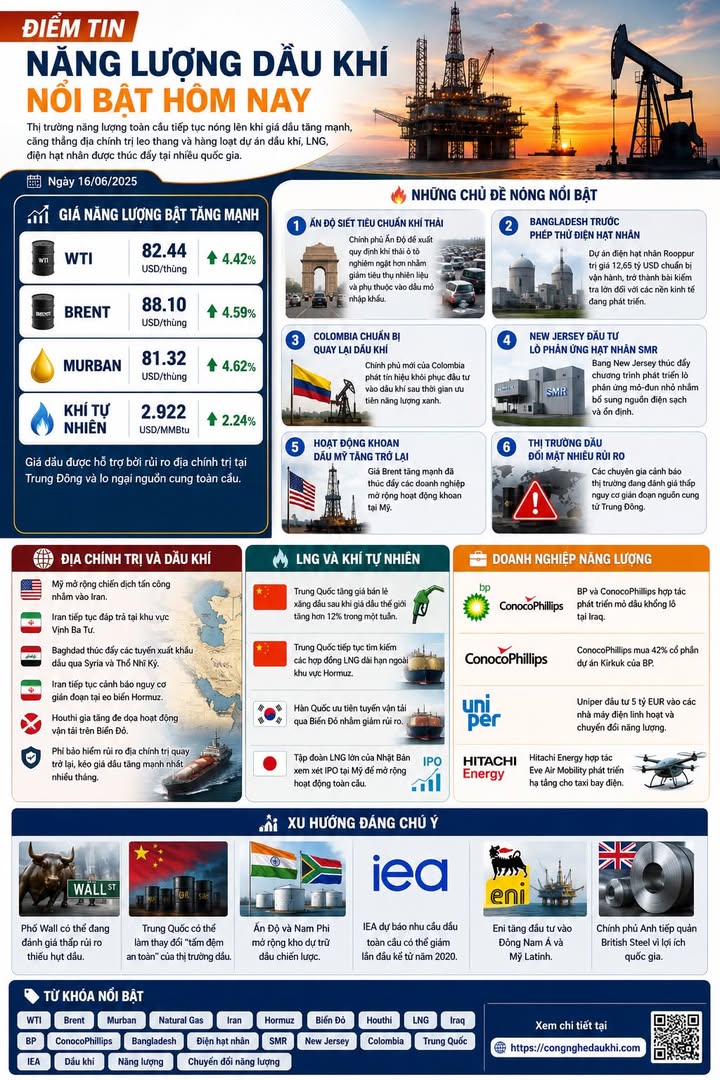
Global Energy Market Intensifies Amid Rising Prices and Geopolitical Tensions
The global energy landscape continues to heat up as oil prices surge, geopolitical tensions escalate, and numerous oil, LNG, and nuclear energy projects gain momentum across various nations. This confluence of factors is reshaping energy markets worldwide, creating both challenges and opportunities for producers, consumers, and investors alike.
Energy Prices Experience Significant Surge
Energy markets have witnessed a remarkable price surge across multiple commodities, with crude oil benchmarks reaching multi-month highs. The upward trajectory is attributed to growing geopolitical risks in critical energy-producing regions and persistent concerns about global supply constraints.
| Energy Commodity | Current Price | Daily Change |
|---|---|---|
| WTI Crude Oil | $82.44/barrel | +4.42% |
| Brent Crude Oil | $88.10/barrel | +4.59% |
| Murban Crude Oil | $81.32/barrel | +4.62% |
| Natural Gas | $2.922/MMBtu | +2.24% |
The price surge is particularly noteworthy given the already elevated base levels, with analysts pointing to several converging factors driving this momentum. Geopolitical risks in the Middle East, particularly around the Strait of Hormuz, have created significant supply concerns, while demand dynamics continue to evolve in key consuming regions.
Key Developments Across Global Energy Markets
Policy Shifts and Regulatory Changes
Several countries are implementing significant policy shifts that will impact their energy landscapes:
- India has proposed stricter vehicle emission regulations aimed at reducing fuel consumption and dependence on imported oil. This move aligns with the country's broader energy security objectives and environmental commitments.
- Bangladesh is preparing for the operation of its $12.65 billion Rooppur nuclear power project, representing a significant test for developing economies seeking to diversify their energy mix while ensuring reliability.
- Colombia's new government signals a return to oil and gas investment after a period prioritizing green energy. This reversal reflects the complex balancing act many nations face between environmental goals and economic realities.
- New Jersey is advancing a program to develop small modular reactor (SMR) technology, aiming to add clean and stable electricity generation to its energy portfolio.
Industry Response to Market Conditions
The rising price environment is prompting various industry responses:
- US drilling activity is increasing again as higher Brent prices incentivize companies to expand operations.
- Energy experts caution that markets may be underestimating the risk of supply disruptions, particularly from the Middle East region.
- India and South Africa are expanding their strategic petroleum reserves to enhance energy security amid volatile global markets.
- The International Energy Agency (IEA) forecasts that global oil demand could decrease for the first time since 2020, reflecting potential structural changes in consumption patterns.
Geopolitical Tensions and Energy Security
Geopolitical developments continue to exert significant influence on energy markets, with several critical developments requiring close monitoring:
| Region | Key Developments | Potential Impact |
|---|---|---|
| Middle East | US expanding attack campaign against Iran; Iran responding in Persian Gulf | Direct threat to oil production and shipping lanes |
| Strait of Hormuz | Iran warning of potential disruptions; Houthi threats increasing | 20% of global oil trade passes through this critical chokepoint |
| Red Sea | Houthi escalating threats to shipping; South Korea prioritizing alternative routes | Disruption to energy transportation and increased insurance costs |
| Middle East | Baghdad promoting oil export routes through Syria and Turkey | Potential alternative routing options for regional oil |
The heightened geopolitical risk environment has led to a resurgence in geopolitical risk insurance premiums, pushing oil prices to their highest levels in several months. The Strait of Hormuz remains particularly critical, as approximately 20% of global oil trade passes through this narrow waterway.
LNG and Natural Gas Market Dynamics
The natural gas sector is experiencing its own set of developments, with significant implications for global energy markets:
- China has raised retail fuel prices following a more than 12% increase in international oil prices over the past week. The country continues to seek long-term LNG contracts outside the Hormuz region to diversify supply sources.
- South Korea is prioritizing shipping routes through the Red Sea to mitigate potential disruptions, reflecting the growing importance of logistics security in energy trade.
- Japan's major LNG corporation is reportedly considering an IPO in the United States to facilitate global expansion and capital access.
Corporate Developments in the Energy Sector
Major energy companies are pursuing strategic initiatives to navigate the evolving market landscape:
- BP and ConocoPhillips have established a cooperation agreement to develop a giant oil field in Iraq, demonstrating continued international investment in Middle Eastern resources despite regional tensions.
- ConocoPhillips has acquired a 42% stake in BP's Kirkuk project, expanding its presence in the resource-rich region.
- Uniper is investing €5 billion in flexible power plants and energy transformation initiatives, reflecting the broader industry shift toward more adaptable and cleaner energy systems.
- Hitachi Energy is collaborating with Eve Air Mobility to develop infrastructure for electric air taxis, highlighting the intersection of traditional energy sectors and emerging mobility technologies.
- Eni is increasing investment in Southeast Asia and Latin America, focusing on regions with growing energy demand and favorable regulatory environments.
Strategic Market Shifts
Several significant trends are emerging that could reshape energy markets in the coming years:
- Wall Street may be underestimating the risk of oil shortage, with potential supply constraints more severe than current market pricing suggests.
- China's strategic decisions could significantly alter the oil market's traditional "safety cushion," potentially reducing global spare capacity.
- The IEA's projection of potential global oil demand reduction marks a notable shift, possibly indicating the beginning of structural changes in consumption patterns.
- The UK government's takeover of British Steel for national interest underscores the complex interplay between energy, industrial policy, and national security considerations.
Outlook and Implications
The current confluence of rising prices, geopolitical tensions, and strategic shifts suggests that energy markets will remain volatile in the near term. The interplay between traditional energy sources and emerging alternatives continues to evolve, creating both challenges and opportunities across the energy value chain.
For consuming nations, the current environment underscores the importance of diversifying energy sources, enhancing efficiency measures, and potentially accelerating the transition to cleaner energy alternatives. For producers, the market conditions present opportunities for investment but also require careful navigation of geopolitical complexities.
As the energy landscape continues to transform, stakeholders across the sector will need to remain agile, informed, and strategic in their decision-making processes to successfully navigate this period of unprecedented change.