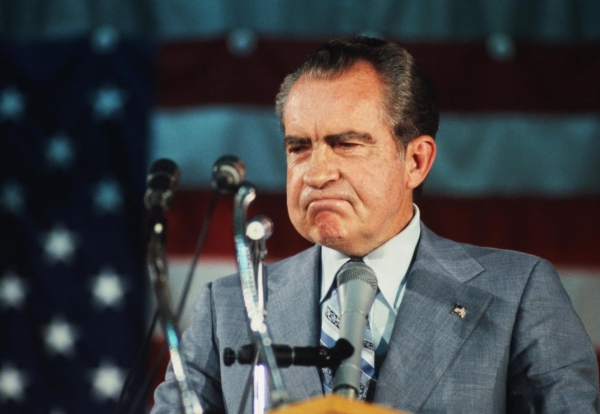
Richard Nixon and the Handling of the 1973 Oil Crisis
As the final months of 1973 unfolded, the world witnessed one of the most severe energy crises in modern history. Against this backdrop, President Richard Nixon faced a dual challenge: not only was he dealing with the escalating Watergate scandal, but he also had to respond to the global oil crisis that threatened the American economy. In November of that year, he delivered a historic address from the White House, addressing not only Watergate but also the fuel crisis menacing the American economy.
Historical Background: The 1973 Oil Crisis
On October 6, 1973, the Yom Kippur War erupted between Israel and Arab nations. In response to American support for Israel, the Organization of Petroleum Exporting Countries (OPEC) announced an oil embargo against countries supporting Israel, including the United States, the Netherlands, and Portugal.
This embargo created a significant shock to the global economy, particularly affecting industrial nations dependent on oil. Oil prices skyrocketed from approximately $3 per barrel to nearly $12 per barrel in a short period—a quadrupling of prices.
For the United States, this crisis occurred at the worst possible moment, as the nation was already grappling with rising inflation while Nixon became increasingly entangled in the Watergate scandal.
Nixon's Position When Facing the Crisis
Early in 1973, Nixon was at the peak of his power following a landslide victory in the 1972 presidential election. However, the Watergate scandal had begun to explode, and by late 1973, his political standing had significantly diminished.
Against this backdrop, the oil crisis created a dual challenge for Nixon. He needed to address not only the economic issues but also maintain his public image while the Watergate investigation deepened.
On November 7, 1973, Nixon delivered a historic address from the White House, in which he addressed not only Watergate but also outlined measures to respond to the oil crisis. This speech was viewed as an attempt to shift public attention from Watergate to more pressing national issues.
Nixon's Specific Measures
To address the oil crisis, Nixon implemented a series of aggressive measures:
- "Sunday Driving Ban" Campaign: Called on Americans to refrain from driving on Sundays to conserve fuel.
- Speed Limit Reduction: Established a national maximum speed limit of 55 miles per hour (approximately 88 km/h) to save fuel.
- Strategic Goods Placement Under Government Control: Allowed the government to allocate fuel based on priority needs.
- Energy Usage Restrictions in Government Buildings: Reduced heating temperatures in winter and increased air conditioning temperatures in summer.
- Promotion of Alternative Energy Development: Increased investment in nuclear energy, coal, and renewable energy sources.
- Establishment of the Federal Energy Agency (FEA): To coordinate national energy policies.
Public and Stakeholder Reactions
Nixon's measures received mixed reactions from the public and various stakeholders:
- Many Americans supported the conservation efforts, viewing them as a civic duty.
- However, oil producers and energy companies strongly opposed price controls and distribution regulations.
- Different states had varying levels of compliance with energy conservation regulations, causing chaos in the distribution system.
- The automotive industry faced pressure to develop more fuel-efficient vehicles.
Impacts and Consequences of the Policies
Nixon's measures had profound effects on the American economy and society:
| Sector | Short-term Impact | Long-term Impact |
|---|---|---|
| Economy | Slowed growth, reduced consumption | Accelerated transition to an economy less dependent on oil |
| Energy | Temporary reduction in oil consumption | Increased investment in nuclear and renewable energy |
| Society | Increased awareness of energy conservation | Changed consumption habits and lifestyles |
| Politics | Enhanced Nixon's image as a decisive leader | Established precedent for national energy policy |
Statistics on the Crisis
Here are some notable statistics regarding the 1973 oil crisis:
| Indicator | Pre-crisis | During crisis | Post-crisis |
|---|---|---|---|
| Oil price/barrel (USD) | ~3 | ~12 | ~10 |
| U.S. weekly vehicle miles (millions) | ~110 | ~90 | ~95 |
| U.S. inflation rate (%) | ~3.6 | ~8.8 | ~9.1 |
| U.S. GDP growth (%) | ~5.6 | ~0.5 | ~5.4 |
Legacy and Lessons from the Crisis
The 1973 oil crisis and Nixon's handling of it left several important lessons:
- Dependence on imported energy is a national security risk: The crisis highlighted the vulnerability of the American economy to foreign oil supplies.
- Need for comprehensive national energy policy: The establishment of the Federal Energy Agency was an important step toward creating a systematic energy policy.
- Importance of alternative energy: The crisis spurred research and development of alternative energy sources.
- Energy conservation education is crucial: Nixon's campaigns contributed to public awareness about energy conservation.
- Crisis leadership capabilities: Despite being surrounded by the Watergate scandal, Nixon demonstrated leadership when facing a national crisis.
Comparison with Other Oil Crises
The 1973 oil crisis is often compared to other energy crises in history:
| Year | Cause | Oil Price Increase | Main Impact |
|---|---|---|---|
| 1973 | OPEC Embargo | 4x | Inflation, Recession |
| 1979 | Iranian Revolution | 2x | Unemployment, Stagflation |
| 1990 | Gulf War | 1.5x | Short-term, Well-controlled |
| 2008 | Increased Demand, Speculation | ~3x | Global Financial Crisis |
Conclusion
The 1973 oil crisis was one of the most significant challenges faced by President Richard Nixon during his presidency. Amidst the escalating Watergate scandal, Nixon implemented a series of aggressive measures to address the energy crisis, from calling on Americans to conserve energy to establishing control mechanisms and promoting alternative energy development.
Although these measures could not completely prevent the negative impacts of the crisis, they helped limit the damage and shaped American energy policy for decades to come. The crisis also left important lessons about the dangers of dependence on imported energy and the importance of diversifying energy sources.
More than 40 years later, the 1973 oil crisis remains relevant as a testament to the vulnerability of modern economies to energy supply disruptions and the importance of having a comprehensive national energy policy based on reserves, conservation, and alternative energy development.