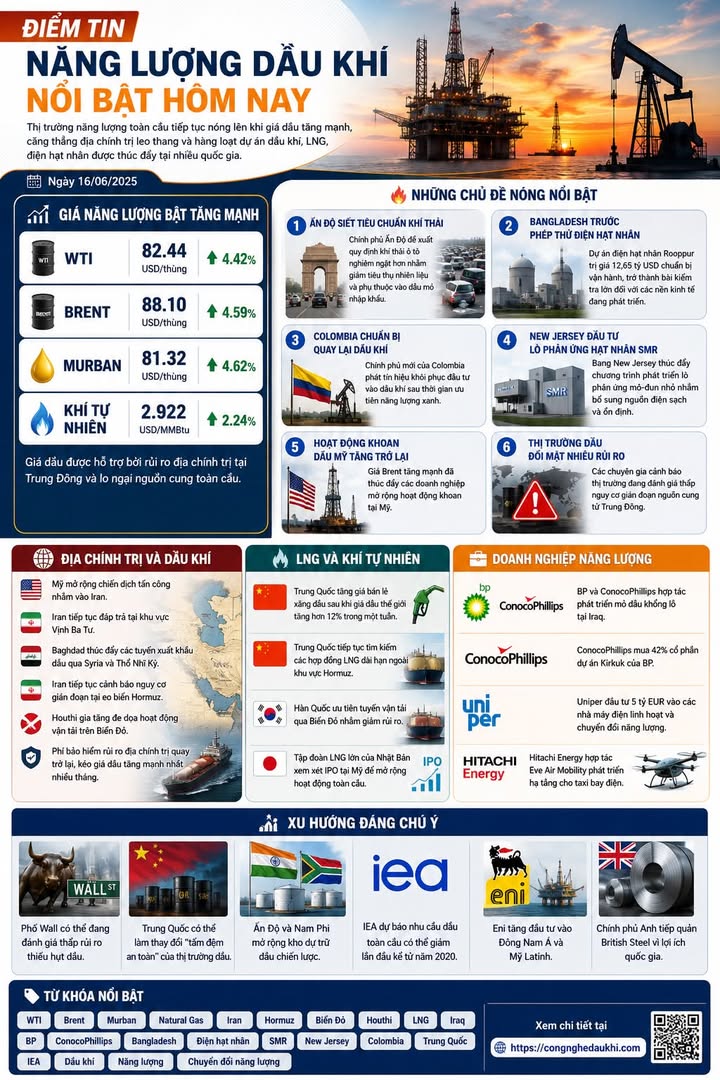
Global Energy Market Heats Up as Oil Prices Surge Amid Geopolitical Tensions
The global energy market continues to intensify as oil prices experience significant increases, geopolitical tensions escalate, and numerous oil and gas, LNG, and nuclear power projects are accelerated across various countries. This confluence of factors is reshaping energy landscapes worldwide, creating both challenges and opportunities for producers, consumers, and investors.
Energy Prices Experience Significant Surge
Energy markets have seen remarkable price increases across multiple commodities, driven by a combination of supply concerns and geopolitical risks. The upward trend is particularly pronounced in crude oil markets, with benchmark prices reaching multi-month highs.
| Commodity | Price | Daily Change |
|---|---|---|
| WTI Crude | $82.44/barrel | +4.42% |
| Brent Crude | $88.10/barrel | +4.59% |
| Murban Crude | $81.32/barrel | +4.62% |
| Natural Gas | $2.922/MMBtu | +2.24% |
These price increases are being supported by geopolitical risks in the Middle East and global supply concerns. The market is particularly sensitive to developments in strategic regions that could potentially disrupt oil flows, with traders pricing in various risk premiums.
Key Developments in the Energy Sector
1. India Tightens Vehicle Emission Standards
The Indian government has proposed stricter vehicle emission regulations aimed at reducing fuel consumption and dependence on imported petroleum products. This policy shift reflects India's commitment to environmental protection while simultaneously addressing energy security concerns. The new standards are expected to drive innovation in automotive technology and potentially reshape the domestic fuel demand trajectory.
2. Bangladesh Approaches Nuclear Power Test
The Rooppur nuclear power project, valued at $12.65 billion, is nearing operational readiness, representing a significant milestone for developing economies. This ambitious undertaking serves as a critical test case for nuclear energy adoption in nations with growing electricity demands. The project aims to diversify Bangladesh's energy mix and reduce reliance on fossil fuels, though it also raises questions about long-term waste management and safety protocols.
3. Colombia Prepares Return to Oil and Gas
Colombia's new administration has signaled a renewed focus on oil and gas investment following a period prioritizing green energy. This policy reversal suggests a pragmatic approach to balancing environmental goals with economic realities, particularly important given Colombia's position as a significant hydrocarbon producer in Latin America. The shift is expected to attract new exploration and production investments in the coming years.
4. New Jersey Invests in Small Modular Reactors
The state of New Jersey is advancing initiatives to develop small modular reactor (SMR) technology as part of its strategy to add clean and stable electricity sources to its grid. This approach represents a modern take on nuclear power, offering potential advantages in terms of scalability, reduced capital requirements, and enhanced safety compared to traditional large-scale nuclear facilities.
5. US Drilling Activity Rebounds
The significant increase in Brent crude prices has incentivized energy companies to expand drilling operations across the United States. This resurgence in activity is particularly notable in shale formations, where improved technology and operational efficiencies have enhanced productivity. The drilling uptick is expected to contribute to increased US oil production in the coming quarters.
6. Oil Market Faces Multiple Risks
Industry experts caution that the market may be underestimating the potential for supply disruptions from the Middle East. This assessment comes against a backdrop of heightened regional tensions and multiple threat vectors that could impact global oil supplies. The market's current pricing may not fully incorporate the potential magnitude of geopolitical risks.
Geopolitical Factors Impacting Oil and Gas Markets
| Region | Development | Market Impact |
|---|---|---|
| Middle East | US expands military operations against Iran | Increased risk premium |
| Persian Gulf | Iran continues retaliatory actions | Straight of Hormuz concerns |
| Iraq/Syria/Turkey | Baghdad promotes alternative oil export routes | Supply diversification |
| Red Sea | Houthi threats to maritime traffic intensify | Shipping disruptions |
Geopolitical tensions continue to exert significant influence on energy markets, with multiple flashpoints potentially disrupting global supply chains. The Strait of Hormuz remains particularly critical, as approximately 20% of global oil trade passes through this strategically vital waterway. Meanwhile, escalating threats to shipping in the Red Sea are prompting rerouting decisions and increased insurance costs.
LNG and Natural Gas Developments
The liquefied natural gas (LNG) sector is experiencing significant shifts as market participants adapt to changing geopolitical dynamics and price volatility. China, the world's largest energy consumer, has recently increased retail fuel prices following more than a 12% weekly increase in global oil prices. This adjustment reflects the government's efforts to balance market forces with inflation concerns.
In response to supply security challenges, China is actively seeking long-term LNG contracts outside the volatile Hormuz region, diversifying its import sources to reduce geopolitical risks. Similarly, South Korea is prioritizing alternative shipping routes through the Red Sea to minimize potential disruptions to its energy imports.
Meanwhile, major Japanese LNG conglomerates are exploring initial public offerings (IPOs) in the United States to facilitate global expansion. This strategic move reflects the growing importance of LNG in global energy markets and the competitive dynamics among Asian importers.
Energy Business News and Partnerships
The corporate energy sector is witnessing significant strategic developments as major companies adjust to the evolving market landscape. British energy giant BP has entered into a partnership with ConocoPhillips for the development of a massive oil field in Iraq, demonstrating continued international interest in the region's resources despite ongoing challenges.
In a related move, ConocoPhillips has acquired a 42% stake in BP's Kirkuk project, further consolidating its presence in the Iraqi oil sector. This transaction underscores the value major international companies place on Iraqi resources and their willingness to invest in the country's energy infrastructure.
German energy company Uniper has announced a €5 billion investment in flexible power plants and energy transition initiatives, reflecting the broader industry shift toward more adaptable and sustainable energy systems. This investment aims to enhance grid stability while supporting the transition to cleaner energy sources.
In a more innovative development, Hitachi Energy has partnered with Eve Air Mobility to develop infrastructure for electric air taxis, representing a forward-looking approach to urban mobility and the potential convergence of traditional energy sectors with emerging transportation technologies.
Notable Market Trends
Several emerging trends are reshaping the global energy landscape, with significant implications for market dynamics and future developments. Financial markets may be underestimating the risk of oil shortages, with potential supply disruptions potentially more severe than current pricing suggests.
China's strategic decisions regarding energy imports could fundamentally alter the global oil market's "safety buffer," potentially tightening supply conditions even without major disruptions. Meanwhile, India and South Africa are expanding their strategic oil reserves, reflecting a growing emphasis on energy security among emerging economies.
The International Energy Agency (IEA) has forecast that global oil demand could decline for the first time since 2020, potentially signaling a structural shift in consumption patterns. This projection, if realized, would represent a significant inflection point for the oil industry.
Italian energy company Eni is increasing its investments in Southeast Asia and Latin America, focusing on regions with growing energy demand and favorable investment climates. Similarly, the British government has taken control of British Steel for national interest reasons, highlighting the intersection of energy policy and industrial strategy.
Conclusion: A Transforming Energy Landscape
The current confluence of rising energy prices, geopolitical tensions, and technological innovation is creating one of the most dynamic periods in recent energy history. Market participants must navigate a complex set of challenges while simultaneously capitalizing on new opportunities presented by the energy transition.
As the global energy system continues to evolve, the interplay between traditional hydrocarbons and emerging clean technologies will define the industry's trajectory for decades to come. The developments outlined in this report represent just the beginning of what promises to be a transformative period for global energy markets.