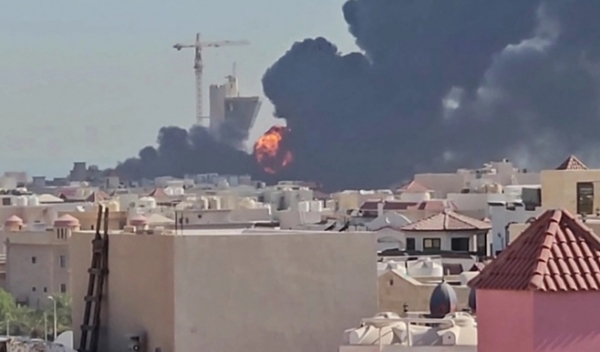
US Military Strike on Iranian Nuclear Facility Construction Site Escalates Middle East Tensions
In a significant escalation of tensions in the already volatile Middle East region, the United States conducted a military strike targeting a construction site for a nuclear power plant in Iran on July 20, 2023. The operation, carried out under the cover of darkness, has raised profound concerns about regional stability, the future of Iran's nuclear program, and the broader geopolitical landscape of the Middle East.
Background and Context
The strike represents the most serious military confrontation between the United States and Iran in recent years, occurring against a backdrop of deteriorating relations that have persisted since the US withdrawal from the Iran Nuclear Deal in 2018. The Joint Comprehensive Plan of Action (JCPOA), which had temporarily curbed Iran's nuclear activities in exchange for sanctions relief, collapsed following the American withdrawal and subsequent reimposition of harsh economic sanctions.
Iran has consistently maintained that its nuclear program is for peaceful purposes, but Western intelligence agencies and their allies have expressed concerns about Tehran's ambitions to develop nuclear weapons capabilities. The International Atomic Energy Agency (IAEA) has periodically reported on Iran's advancing nuclear activities, including enrichment of uranium to levels closer to weapons-grade material.
Details of the Military Operation
According to multiple sources with knowledge of the operation, the US strike was launched in the early morning hours of July 20, targeting a facility approximately 120 kilometers southeast of Tehran, identified by intelligence as a construction site for a new nuclear power plant. The operation reportedly involved precision-guided munitions launched from both aerial platforms and naval assets in the Persian Gulf.
A senior US official, speaking on condition of anonymity, stated that the operation was intended to "disrupt Iran's illicit nuclear ambitions" and prevent the proliferation of nuclear technology in the region. The official emphasized that the strike was a proportional response to what Washington described as "Iran's continued violations of multiple UN Security Council resolutions and its non-compliance with international nuclear non-proliferation norms."
However, details regarding the extent of damage to the facility and whether any casualties occurred remain disputed. Initial reports from Iranian media described the attack as "limited" and causing "only superficial damage," while US officials claimed "significant disruption" to the construction activities.
Iran's Official Response
The Iranian government reacted swiftly and forcefully to the attack. In an emergency press conference held at the Foreign Ministry in Tehran, spokesperson Nasser Kanaani condemned the strike as "an act of international terrorism" and a "grave violation of Iran's sovereignty."
"This cowardly attack demonstrates the desperation of the American administration to contain Iran's scientific and technological progress," Kanaani stated. "We reserve the right to respond proportionally to this aggression, and the Islamic Republic will not allow its legitimate right to peaceful nuclear technology to be denied."
In a subsequent address to the nation, Iranian President Ebrahim Raisi announced that the Islamic Revolutionary Guard Corps (IRGC) had been placed on high alert and that all necessary measures were being taken to protect Iran's nuclear facilities. He also announced that Iran would formally raise the issue at the United Nations Security Council and through diplomatic channels with other international bodies.
Domestically, the attack appears to have temporarily united various political factions in Iran, with both conservative and moderate figures expressing solidarity in the face of what they described as American aggression. However, analysts note that the incident could also provide hardline elements with additional leverage to push for further advancement of the nuclear program.
Regional and International Reactions
The strike has triggered a wave of reactions across the international community, with nations and organizations expressing varying degrees of concern, support, or condemnation.
European Powers:
The foreign ministers of France, Germany, and the United Kingdom issued a joint statement expressing "deep concern" about the escalation and calling for "maximum restraint" from all parties. The statement emphasized the importance of preserving the JCPOA framework and urged a return to diplomatic negotiations.
Russia and China:
Both Moscow and Beijing strongly condemned the US action, with Russian Foreign Minister Sergey Lavrov describing it as "a flagrant violation of international law" and Chinese spokesperson Wang Wenbin calling it "unacceptable interference in the internal affairs of a sovereign state."
Middle Eastern Neighbors:
Regional reactions were mixed. Israel, which has consistently opposed Iran's nuclear program, issued a statement neither confirming nor denying involvement but expressed understanding of the operation's objectives. Saudi Arabia, meanwhile, called for de-escalation and expressed concern about the potential destabilizing effects of increased military activity in the region.
United Nations:
UN Secretary-General António Guterres expressed alarm at the developments and urged all parties to "exercise maximum restraint to avoid any action that could lead to a wider conflict in the region." The Security Council scheduled an emergency meeting to discuss the situation, though no immediate resolution was expected.
Geopolitical Implications
The strike occurs at a particularly sensitive time in Middle Eastern geopolitics. The region is already grappling with multiple conflicts, including the ongoing war in Gaza and tensions in the Red Sea affecting global shipping routes. The attack on Iran's nuclear facility adds another layer of complexity to an already volatile security environment.
Energy markets have reacted to the heightened tensions, with oil prices increasing by approximately 5% in the immediate aftermath of the strike. Analysts suggest that if the situation escalates further, global energy supplies could be significantly disrupted, particularly if Iran responds by threatening or attempting to close the Strait of Hormuz, through which approximately 20% of global oil shipments pass.
Militarily, the strike demonstrates a significant shift in US policy toward Iran, moving away from the previous administration's maximum pressure campaign toward more direct, kinetic actions targeting specific facilities. This approach carries considerable risks, including the potential for unintended escalation and retaliation against US interests or allies in the region.
Historical Context: US-Iran Nuclear Relations
The current situation must be understood within the broader historical context of US-Iran relations regarding nuclear development. The following table outlines key milestones in this complex relationship:
| Year | Key Event |
|---|---|
| 1979 | Iranian Revolution; US-Iran relations deteriorate |
| 2002 | Existence of undeclared nuclear facilities revealed |
| 2006 | First UN sanctions imposed on Iran over nuclear program |
| 2010-2012 | Multiple rounds of intensified international sanctions |
| 2015 | JCPOA signed, limiting Iran's nuclear activities |
| 2018 | US withdraws from JCPOA, reimposes sanctions |
| 2019-2021 | Iran begins advancing nuclear program beyond JCPOA limits |
| 2022 | IAEA reports Iran enriching uranium to 60% purity |
| 2023 | US military strike on nuclear facility construction site |
Analysis and Future Scenarios
Military and geopolitical analysts are divided on the potential outcomes of this latest development. Some view the strike as a calculated, limited action designed to set back Iran's nuclear program without triggering a full-scale war. Others warn that it could mark the beginning of a more intense cycle of retaliation and counter-retaliation.
Potential scenarios include:
- Limited Response: Iran responds with symbolic actions, such as increasing uranium enrichment levels or conducting military exercises near the Strait of Hormuz, without direct attacks on US interests.
- Escalation Cycle: Iran conducts retaliatory strikes against US military assets or allies in the region, leading to further US responses and potentially broader conflict.
- Diplomatic Path: International pressure leads to renewed negotiations, potentially with a modified version of the JCPOA or a new framework addressing broader security concerns.
- Nuclear Breakout: Iran accelerates its nuclear program in response, potentially moving toward weapons capability, which could trigger further military action from Israel or the US.
The international nuclear non-proliferation regime now faces its most significant challenge in decades. The strike sets a concerning precedent where military force is used to preemptively address perceived nuclear threats, potentially encouraging similar actions by other states and undermining diplomatic efforts to control the spread of nuclear weapons.
Conclusion
The US strike on an Iranian nuclear facility construction site represents a dangerous escalation in the already tense relationship between Washington and Tehran. While the immediate impact on Iran's nuclear program remains unclear, the long-term consequences for regional stability and global security could be profound.
The international community now faces the urgent challenge of preventing further escalation while addressing legitimate concerns about Iran's nuclear ambitions. The path forward will require careful diplomacy, creative statecraft, and a renewed commitment to multilateral solutions to what has become one of the most pressing security challenges of our time.
As the situation continues to evolve, the world watches with apprehension, mindful that the Middle East stands at a critical juncture where miscalculations could have far-reaching consequences for international peace and security.